On Friday 13th March we planned to meet our friends at King Street Wharf number 3 and board the MV Bennelong for a Naval Historical Society Cruise of Port Jackson, west of the Sydney Harbour Bridge. This was first discussed and booked well before my diagnosis but was to happen three weeks after my last chemo so I hoped I would be well enough to enjoy it.
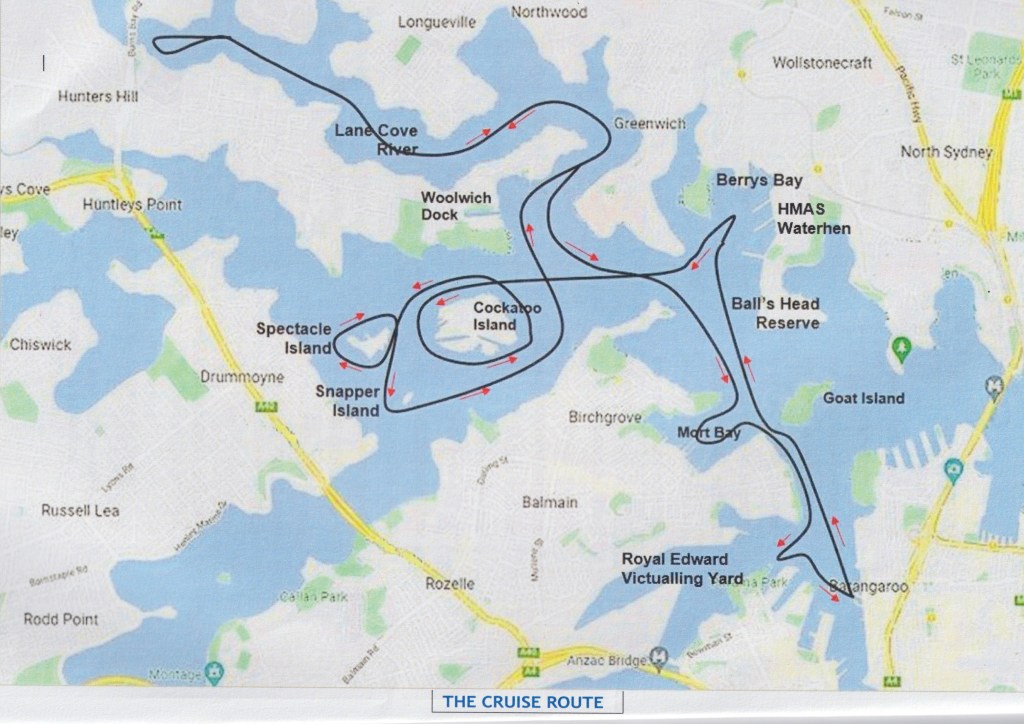
Naval Cruise of Port Jackson west of the Sydney Harbour Bridge
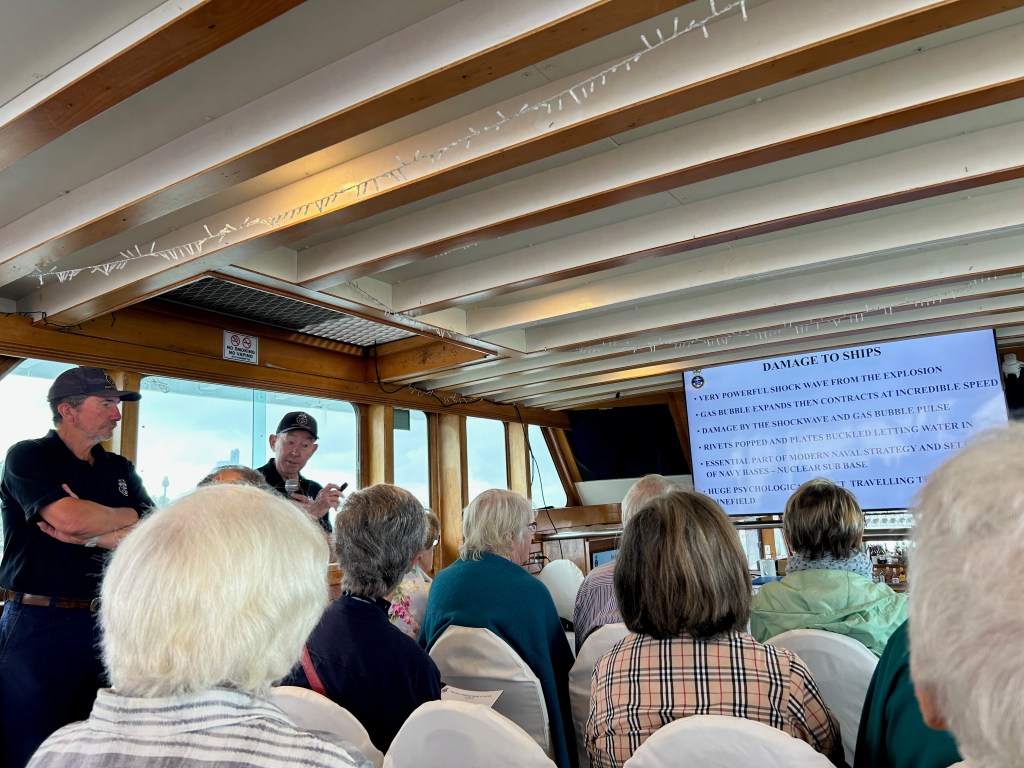
Unfortunately, one of our friends was ill and his wife came alone, understandably disappointed with having to do so. We were soon settled in the main cabin with a huge crowd of people, a screen in front of us and a couple of volunteers narrating. I grew increasingly uncomfortable as I considered the stuffy air I was breathing, so when the announcement was made for morning coffee and masses of people headed for the tables, I escaped to the top deck. Here the air was fresh and the view was spectacular.
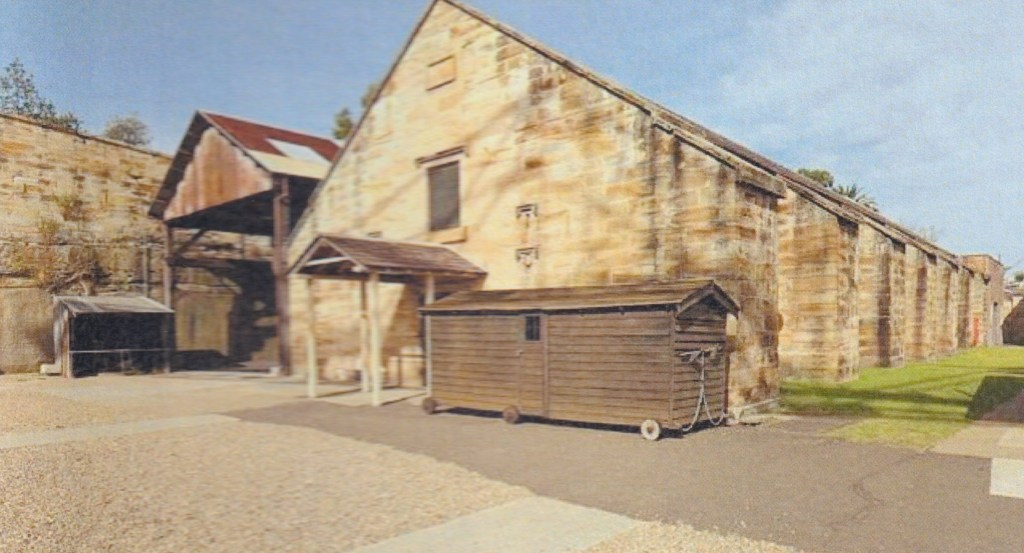
The tour visited four islands and HMAS Waterhen. After leaving Barangaroo we passed Goat Island. In 1831 a quarry was established here to supply sandstone for the Sydney settlement. Convicts were housed on the island to mine the sandstone. In 1839 storerooms were built on the island to house gunpowder.
As we approached Balls Head we were told the cliff face was once a quarry which was opened in 1940 to rebuild a graving dock at Garden Island. I couldn’t take a photo because I was still trapped on the downstairs deck.
A graving dock is a permanent, reinforced concrete basin built at the edge of a waterway used to construct, repair, or maintain ships below the waterline. It operates by flooding the dock to float a vessel in, sealing it with a watertight gate, and pumping out the water to leave the ship supported on keel blocks.
We sailed on to HMAS Waterhen which had once been the name of a ship but in 1962 was established as a support base for six mine sweepers. Waterhen is now the Navy’s lead establishment for mine warfare. The base is occupied by professional sailors and home to mine countermeasure equipment and technology.
We circumnavigated Cockatoo Island which became a convict prison in 1839. The Fitzroy Dock was built by convicts and completed in 1857. The dockyards were the home of ship building, with the last ship, HMAS Success, completed in 1984. It closed in 1992, the last project being the refit of the submarine HMAS Orion.
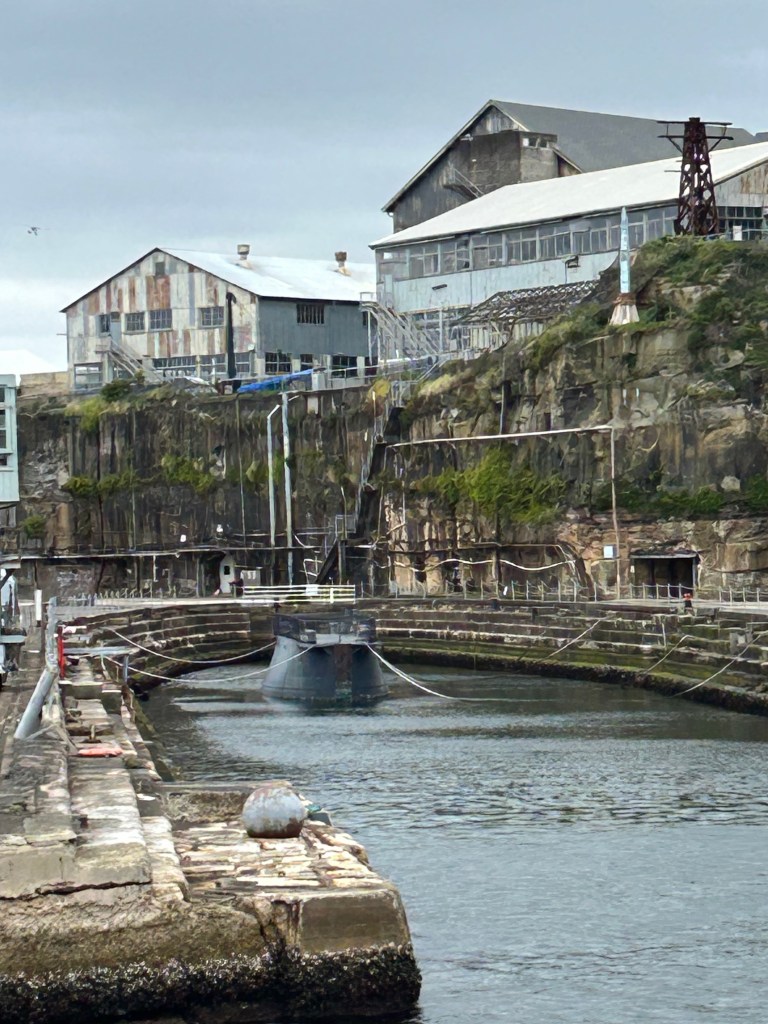
Aeroplanes were also designed and built here between 1929 and 1934, including for Charles Kingsford Smith, who is famous for completing the first transatlantic flight from the USA to Australia in 1928. Two of the cranes on Cockatoo Island have been restored and operate for public viewing. The rest have disappeared or are unused.
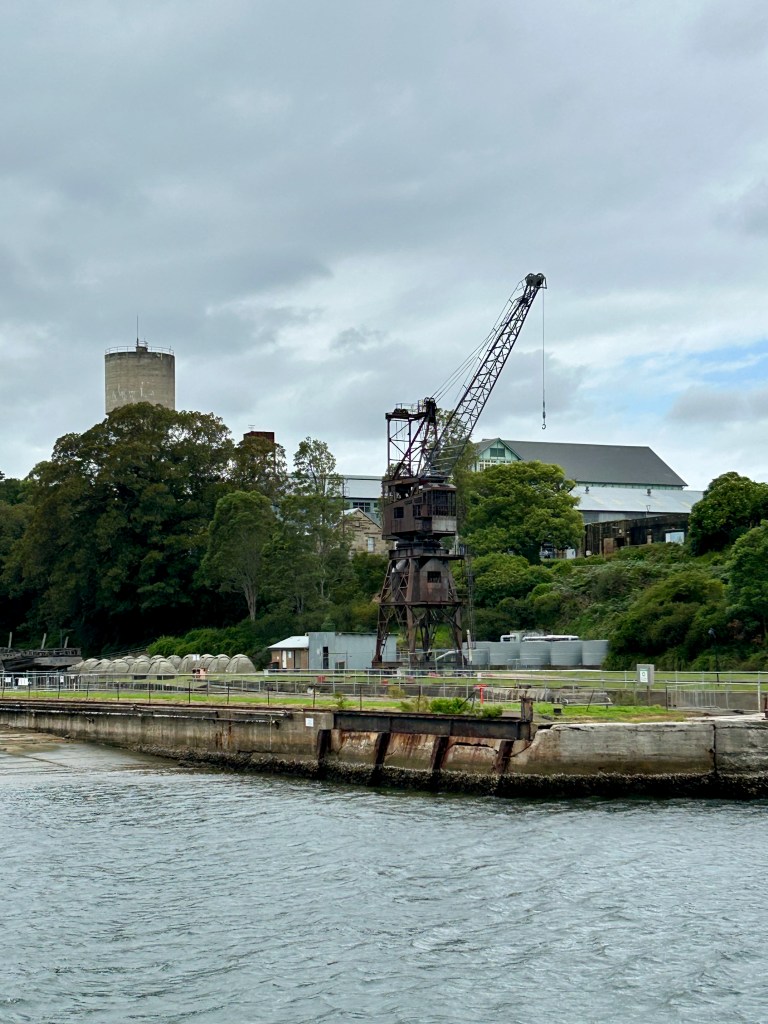
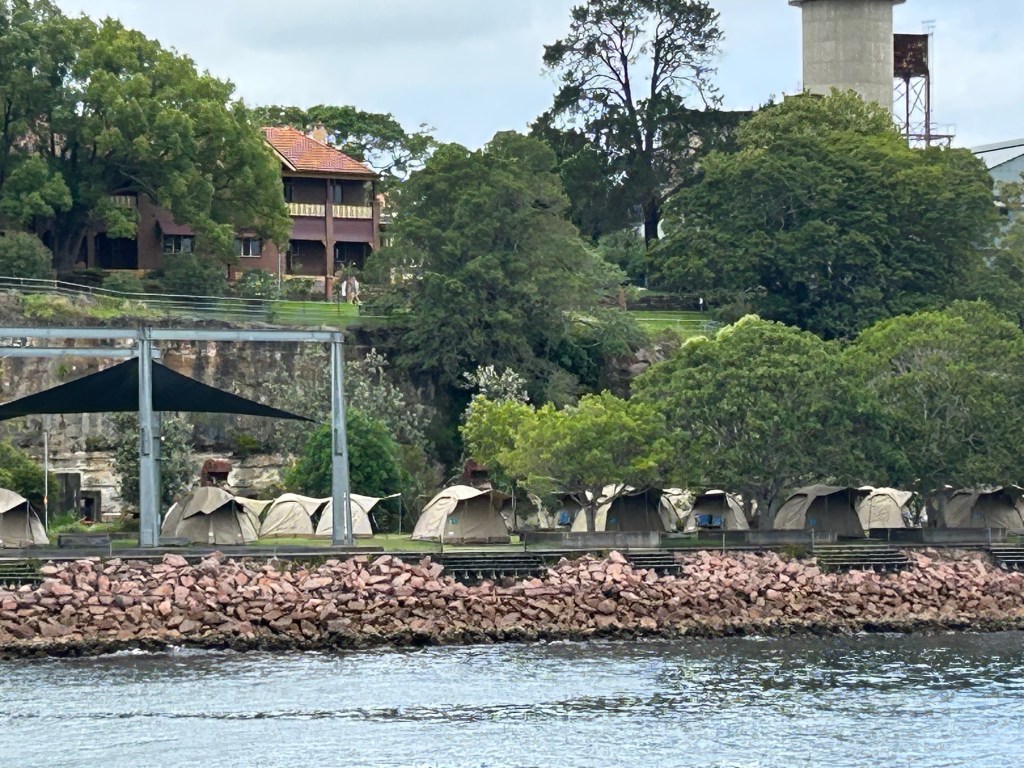
Rows of Glamping Tents overlooked the water. We had planned to stay here with friends a little over a year ago but contracted Covid the day before we were to go. At least today’s excursion on the water was happening and nothing prevented us from enjoying it.
A small island named Dawes Island and renamed Spectacle because of its similarity to a pair of opera glasses captured our imaginations as it is for sale by the Navy. A number of historic buildings cover the small densely built island where spoil from the old Balmain Coalmine enlarged it considerably. Buildings include the magazine, built 1856, cooperage, barracks, residence and a railway line. The island is the oldest naval explosives manufacturing and storage complex in Australia. Originally built to store gunpowder, the complex was converted to store naval munitions in 1893. It was used for shell filling in WW1, making small calibre ammunition in WW2 but has not been active since then except for storage. Until recently it housed the Naval Repository, a collection of relics and artefacts and was open for inspection but we were told that everything has been moved to another location and the island is waiting for a new owner.
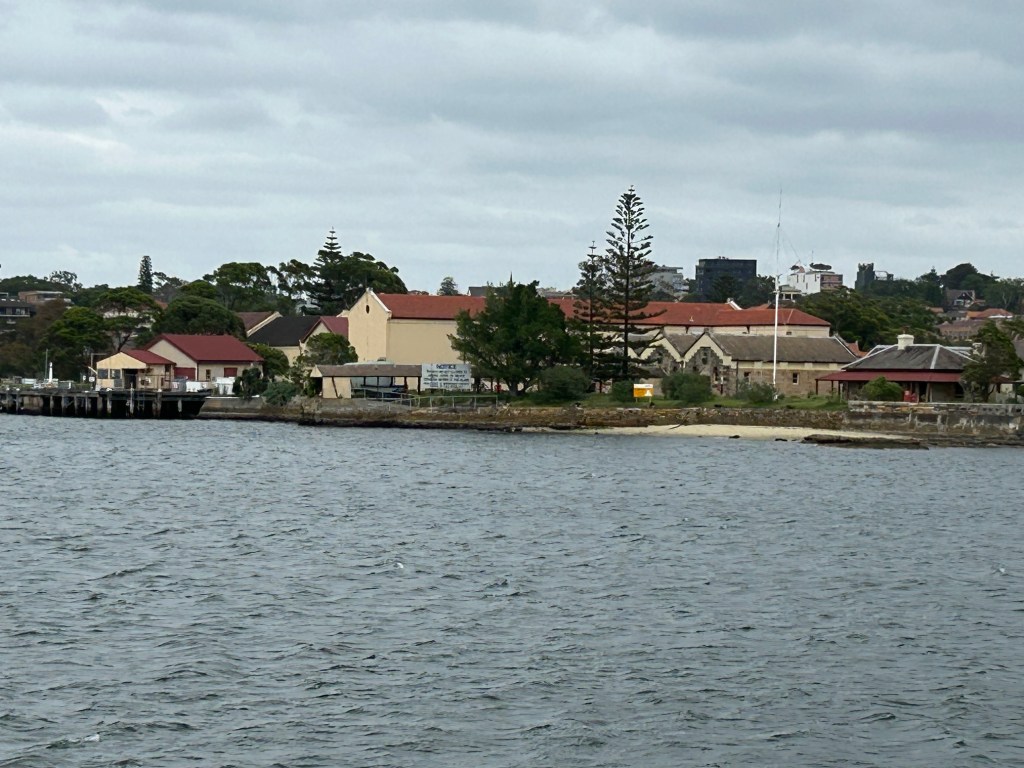
A friend of mine suggested that a number of us from our aqua group should buy it and turn it into a retirement resort for ourselves.
“Only if it has a helicopter for hospital visits,” said I, thinking of all those trips to hospital I have made in the last few months.
The smallest harbour island is Snapper Island. As it was so small it was rarely visited although in WW1 it was used to store ship’s parts. In the 1930s the island was levelled and made into a ship shape with mining spoil. It became a base for training sea cadets but in WW2 it was used by the US Military and the Royal Navy. It returned to the Sea Cadets until the 1960s. A friend of mine told me she went there to a Scout Camp with her son in the 1980s and would prefer to forget the experience.
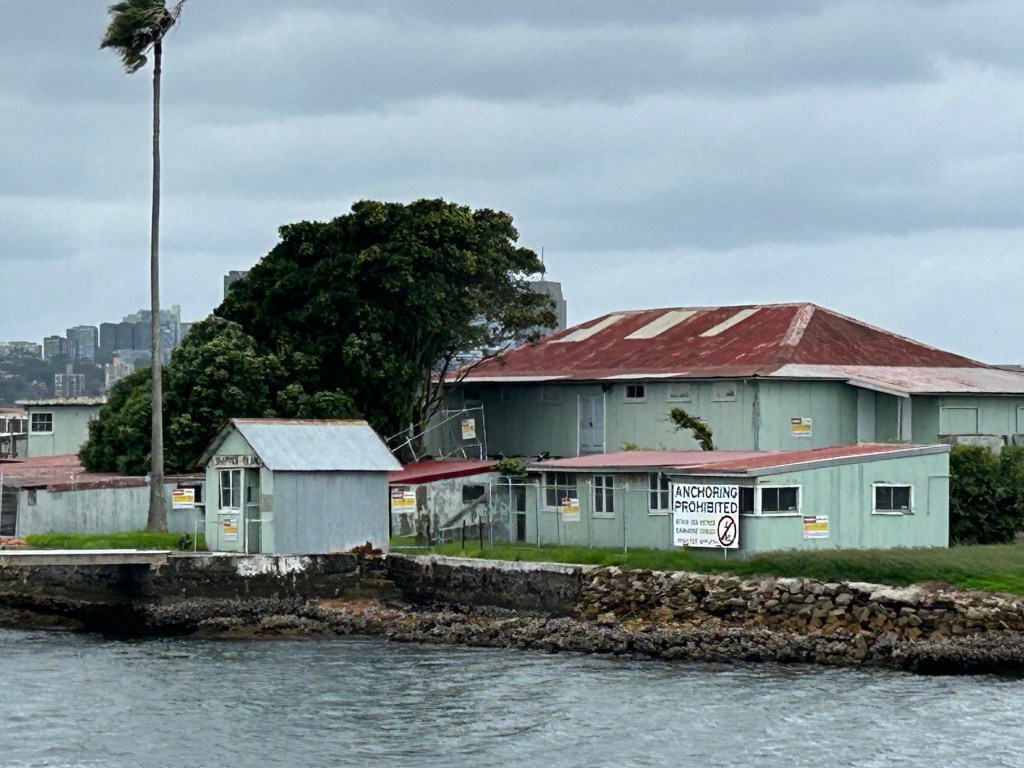
As we returned to Barangaroo we passed Mort Bay where Sydney’s first graving dock was built in 1855. During WW2 14 Bathurst Class Minesweepers and 4 River Class Frigates were built here. There were shipyards at what is now Pyrmont, Barangaroo and Darling Harbour. These places are now home to offices, restaurants and high-rise accommodation.
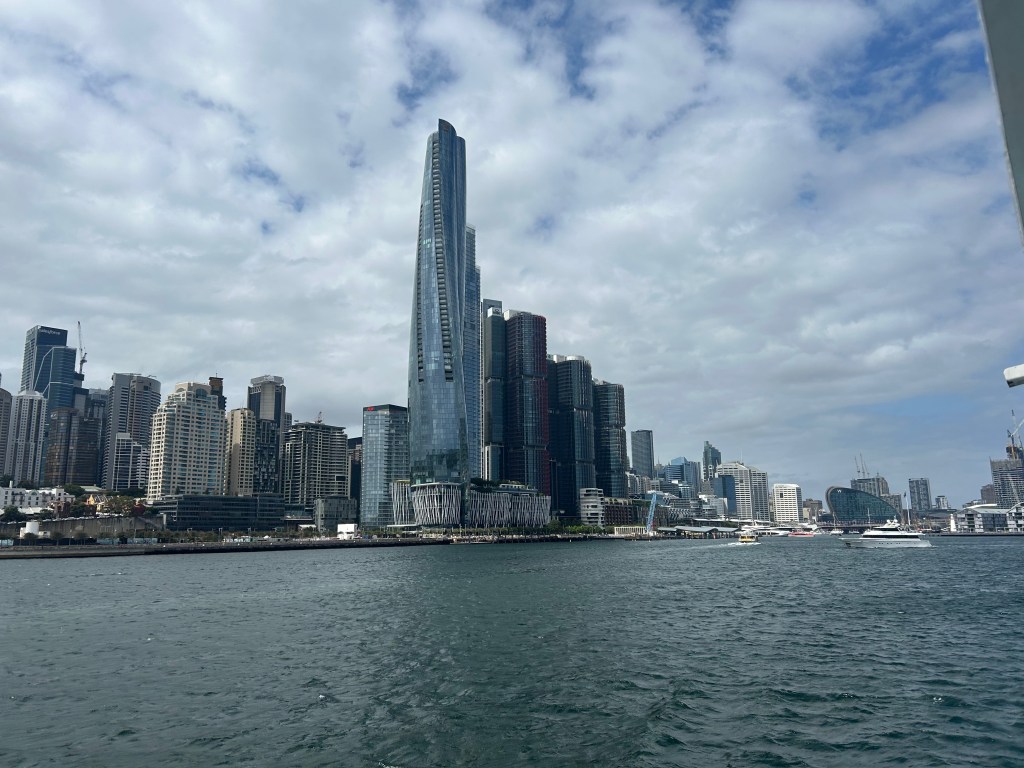
So ended our day on western Sydney Harbour. We considered visiting the Maritime Museum at Darling Harbour but I was flagging and looking forward to a rest at the hotel so we walked the 1.5 kilometres back.
We thought we would eat at one of the many restaurants near the hotel but forgot it was a Friday night. At 6.30 pm there were long queues of people outside most of the eateries. Still very conscious of people and germs I wasn’t keen to join them. Just near our hotel we found two spare seats in an Indonesian Restaurant called D’Penyetz & D’Cendol (a chain with over 100 outlets worldwide) where we were relieved to sit and eat tasty food.
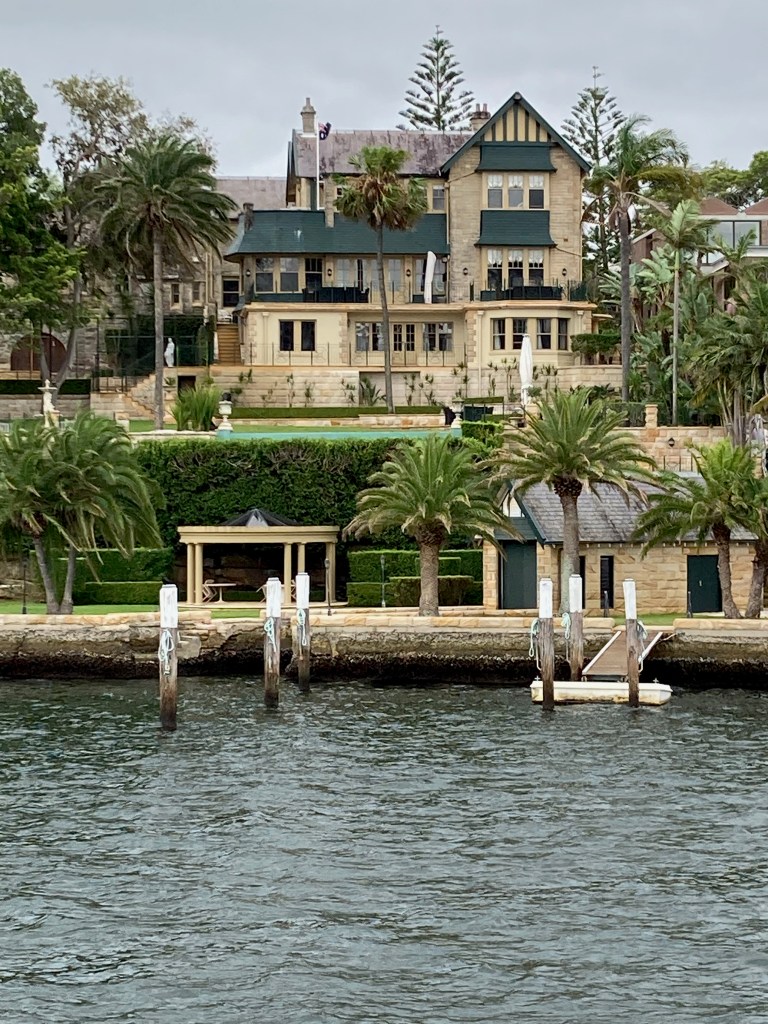
Just so you can see how the other half lives here is a fantastical waterfront house.

 The Curry Apple Orchard