U for Under the Bridge

On Friday 13th March we planned to meet our friends at King Street Wharf number 3 and board the MV Bennelong for a Naval Historical Society Cruise of Port Jackson, west of the Sydney Harbour Bridge. This was first discussed and booked well before my diagnosis but was to happen three weeks after my last chemo so I hoped I would be well enough to enjoy it.
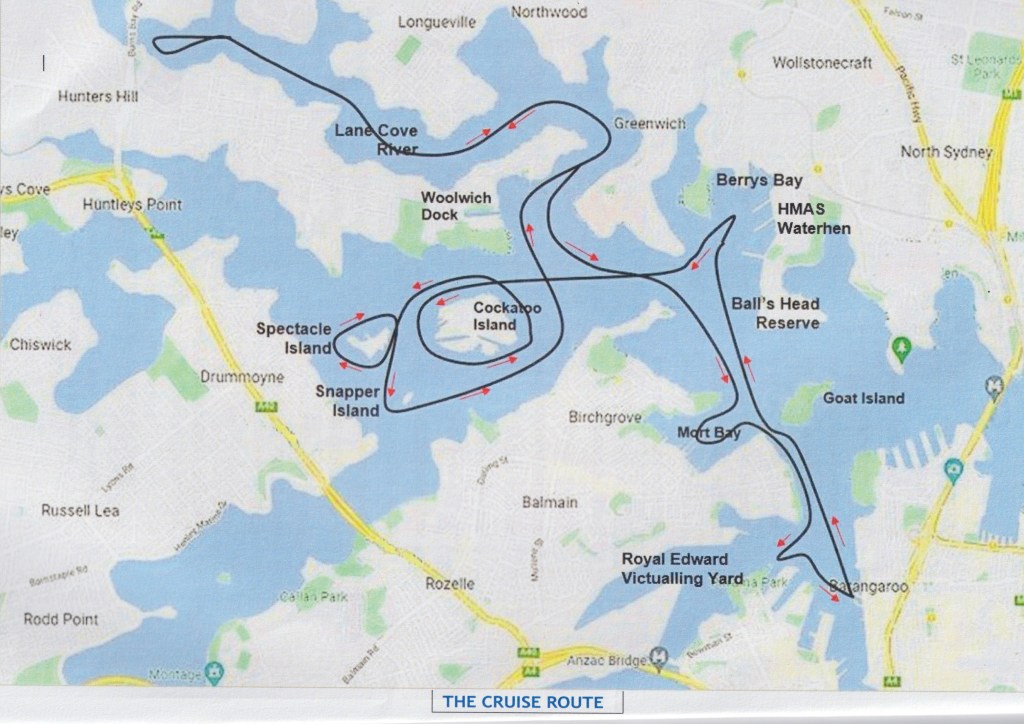
Naval Cruise of Port Jackson west of the Sydney Harbour Bridge

Unfortunately, one of our friends was ill and his wife came alone, understandably disappointed with having to do so. We were soon settled in the main cabin with a huge crowd of people, a screen in front of us and a couple of volunteers narrating.  I grew increasingly uncomfortable as I considered the stuffy air I was breathing, so when the announcement was made for morning coffee and masses of people headed for the tables, I escaped to the top deck.  Here the air was fresh and the view was spectacular. 
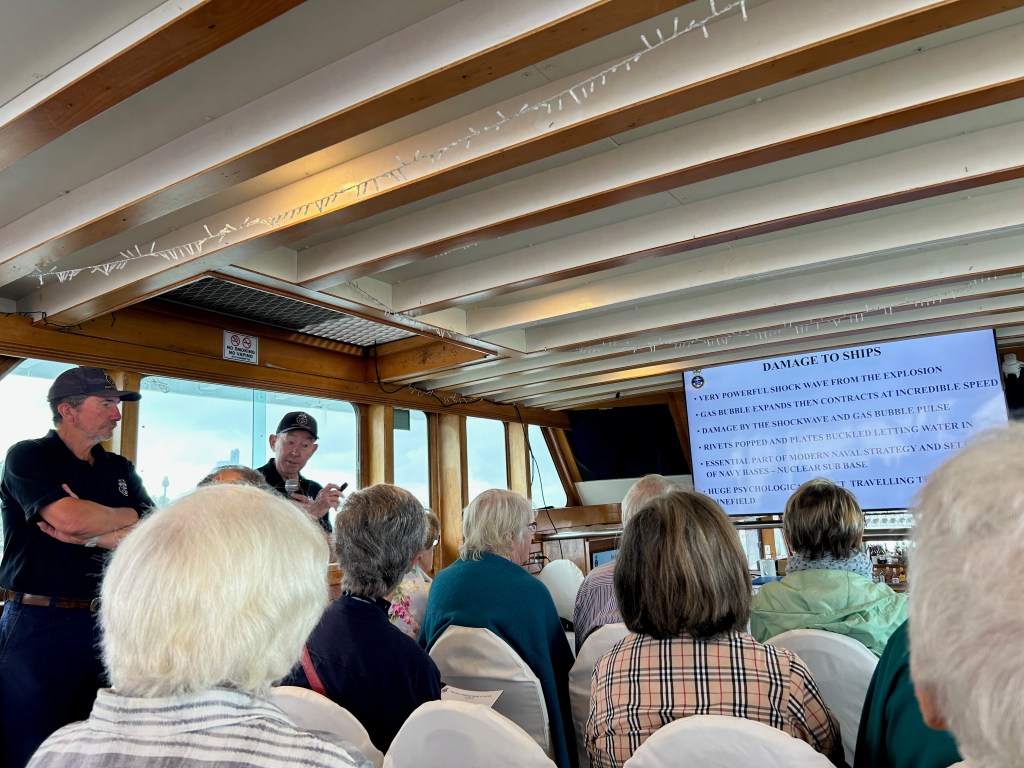
Trapped in a stuffy cabin

The tour visited four islands and HMAS Waterhen.  After leaving Barangaroo we passed Goat Island. In 1831 a quarry was established here to supply sandstone for the Sydney settlement. Convicts were housed on the island to mine the sandstone. In 1839 storerooms were built on the island to house gunpowder. 
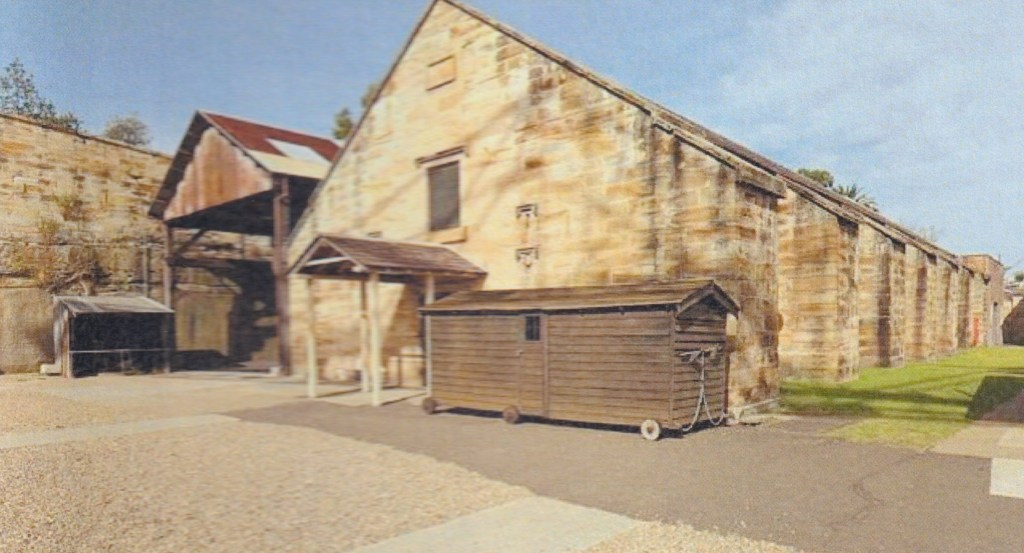
Specially vented store rooms were built by the convicts to house naval and general gunpowder Photo from Naval Historical Society of Australia

As we approached Balls Head we were told the cliff face was once a quarry which was opened in 1940 to rebuild a graving dock at Garden Island. I couldn’t take a photo because I was still trapped on the downstairs deck.

A graving dock is a permanent, reinforced concrete basin built at the edge of a waterway used to construct, repair, or maintain ships below the waterline. It operates by flooding the dock to float a vessel in, sealing it with a watertight gate, and pumping out the water to leave the ship supported on keel blocks.

We sailed on to HMAS Waterhen which had once been the name of a ship but in 1962 was established as a support base for six mine sweepers. Waterhen is now the Navy’s lead establishment for mine warfare. The base is occupied by professional sailors and home to mine countermeasure equipment and technology.

We circumnavigated Cockatoo Island which became a convict prison in 1839.  The Fitzroy Dock was built by convicts and completed in 1857.  The dockyards were the home of ship building, with the last ship, HMAS Success, completed in 1984.  It closed in 1992, the last project being the refit of the submarine HMAS Orion. 
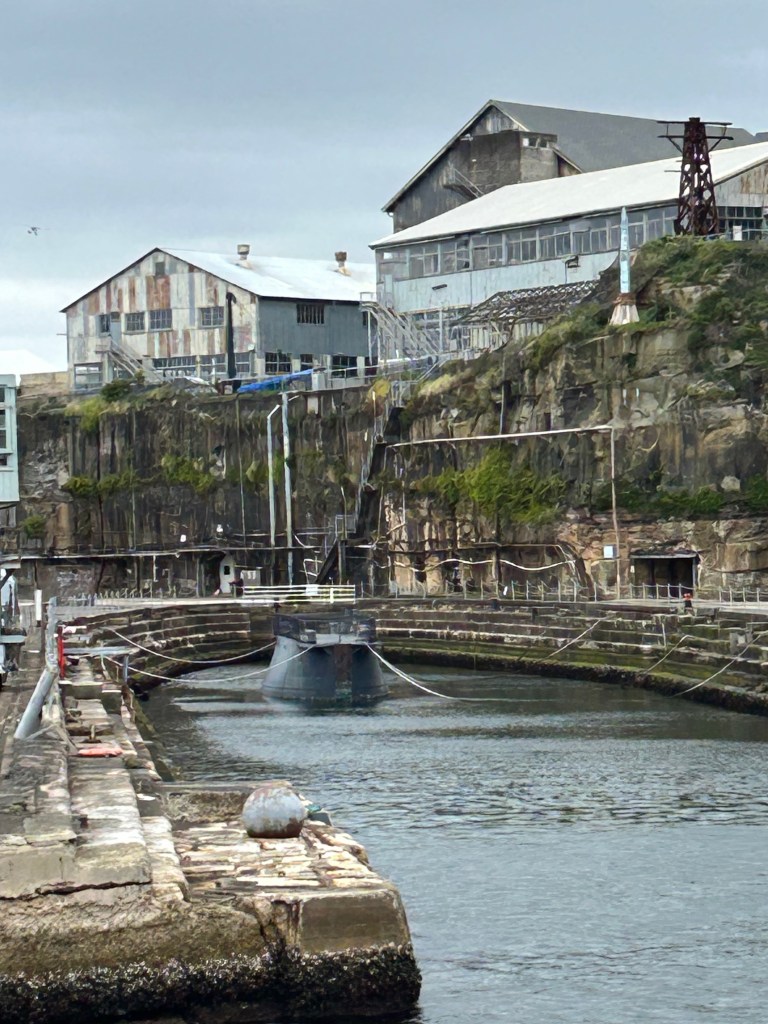
Cockatoo Dockyards

Aeroplanes were also designed and built here between 1929 and 1934, including for Charles Kingsford Smith, who is famous for completing the first transatlantic flight from the USA to Australia in 1928. Two of the cranes on Cockatoo Island have been restored and operate for public viewing.  The rest have disappeared or are unused.
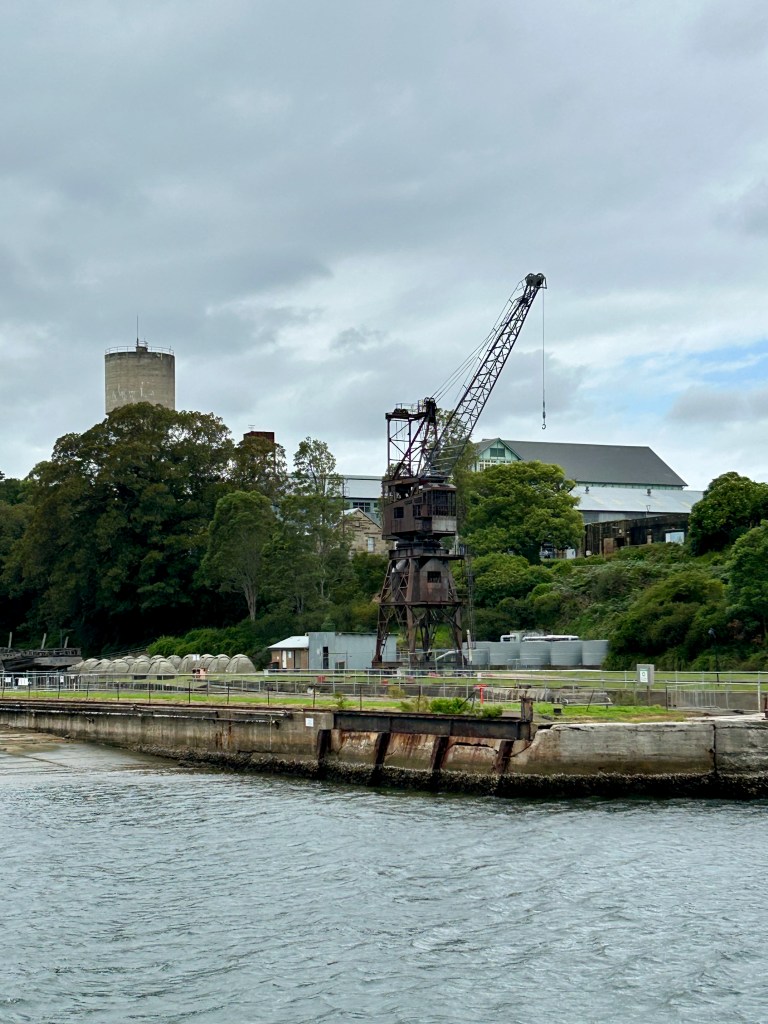
A working crane with glamping tents on the left hand side

Rows of Glamping Tents overlooked the water.  We had planned to stay here with friends a little over a year ago but contracted Covid the day before we were to go.  At least today’s excursion on the water was happening and nothing prevented us from enjoying it.
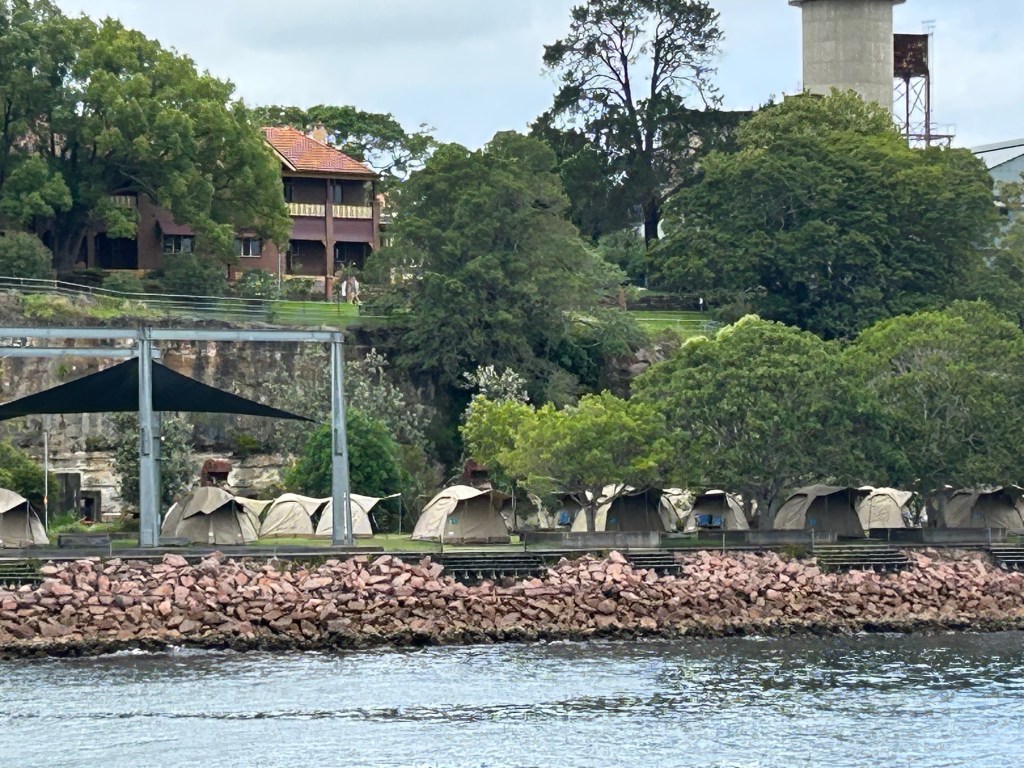
Glamping tents on Cockatoo Island

A small island named Dawes Island and renamed Spectacle because of its similarity to a pair of opera glasses captured our imaginations as it is for sale by the Navy.  A number of historic buildings cover the small densely built island where spoil from the old Balmain Coalmine enlarged it considerably. Buildings include the magazine, built 1856, cooperage, barracks, residence and a railway line. The island is the oldest naval explosives manufacturing and storage complex in Australia. Originally built to store gunpowder, the complex was converted to store naval munitions in 1893.  It was used for shell filling in WW1, making small calibre ammunition in WW2 but has not been active since then except for storage. Until recently it housed the Naval Repository, a collection of relics and artefacts and was open for inspection but we were told that everything has been moved to another location and the island is waiting for a new owner.
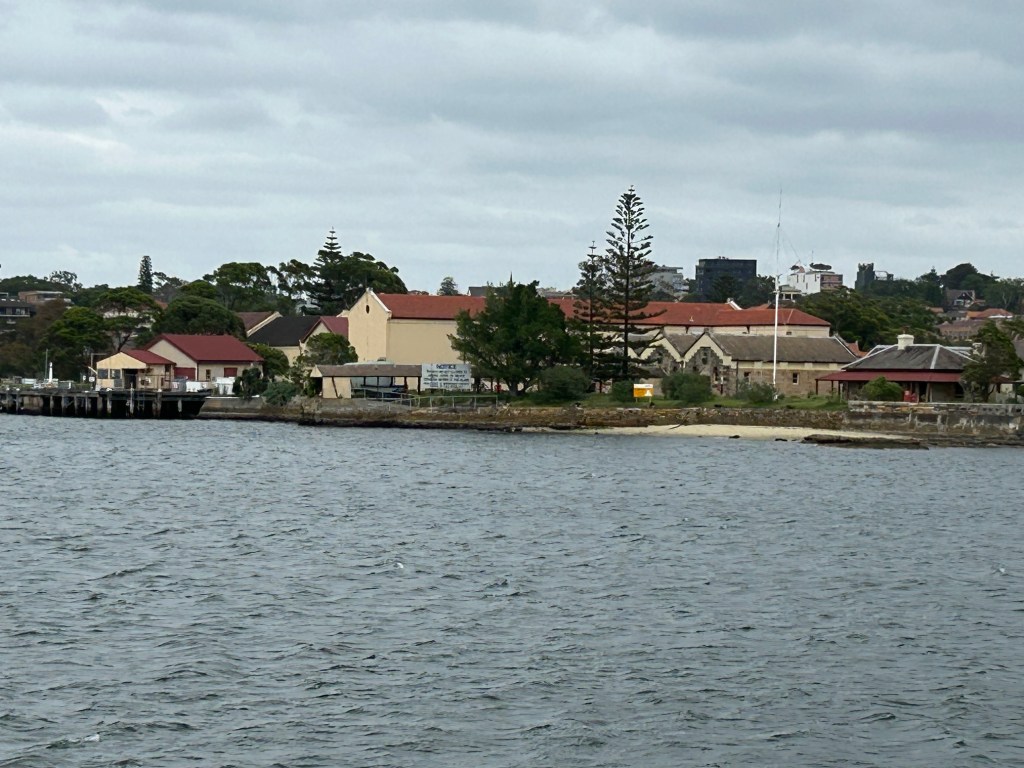
Spectacle Island

A friend of mine suggested that a number of us from our aqua group should buy it and turn it into a retirement resort for ourselves. 

 “Only if it has a helicopter for hospital visits,” said I, thinking of all those trips to hospital I have made in the last few months.

The smallest harbour island is Snapper Island.  As it was so small it was rarely visited although in WW1 it was used to store ship’s parts. In the 1930s the island was levelled and made into a ship shape with mining spoil.  It became a base for training sea cadets but in WW2 it was used by the US Military and the Royal Navy. It returned to the Sea Cadets until the 1960s.  A friend of mine told me she went there to a Scout Camp with her son in the 1980s and would prefer to forget the experience.
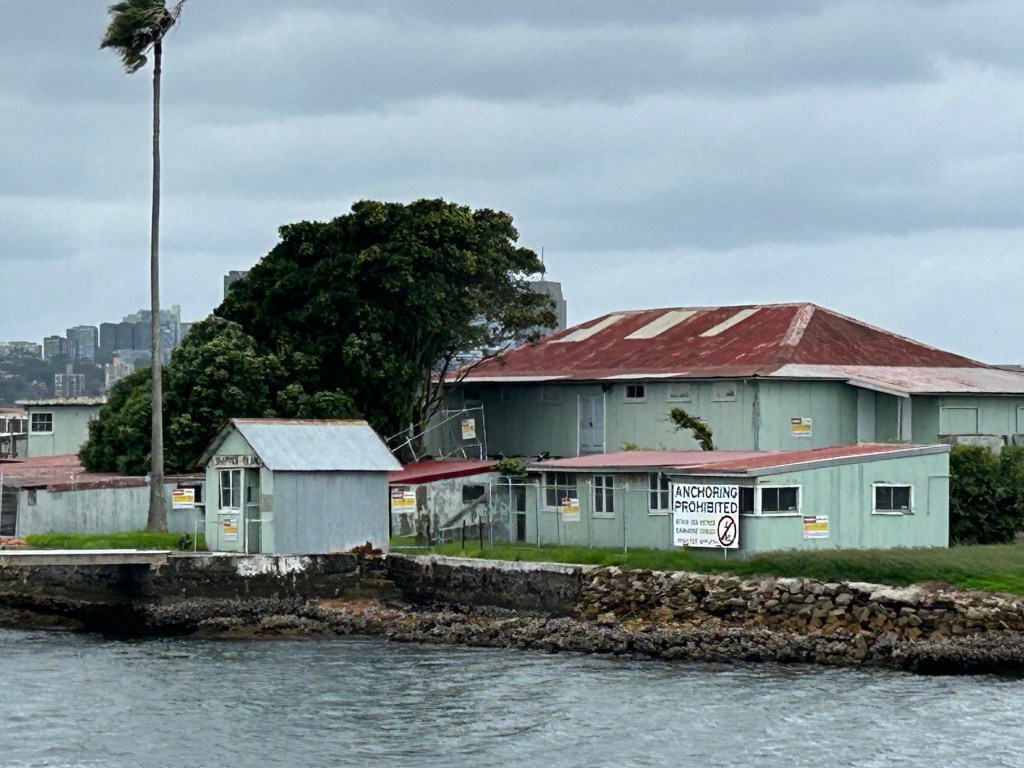
Snapper Island

As we returned to Barangaroo we passed Mort Bay where Sydney’s first graving dock was built in 1855. During WW2 14 Bathurst Class Minesweepers and 4 River Class Frigates were built here. There were shipyards at what is now Pyrmont, Barangaroo and Darling Harbour.  These places are now home to offices, restaurants and high-rise accommodation.
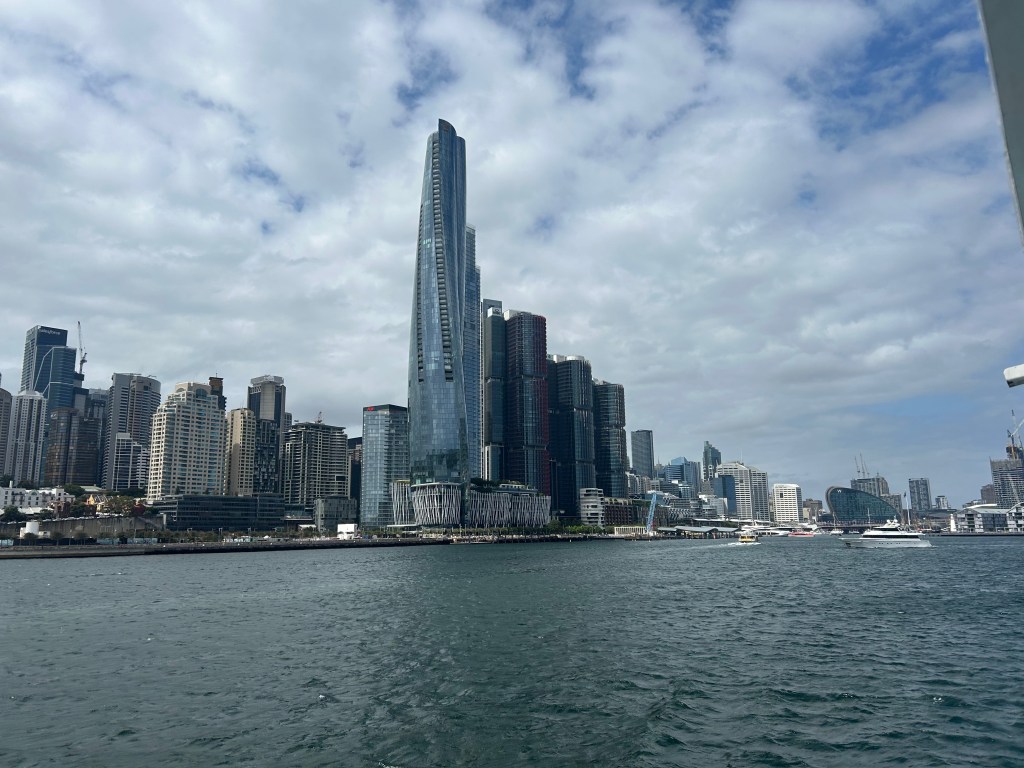
Heading back to Barangaroo

So ended our day on western Sydney Harbour.  We considered visiting the Maritime Museum at Darling Harbour but I was flagging and looking forward to a rest at the hotel so we walked the 1.5 kilometres back.

We thought we would eat at one of the many restaurants near the hotel but forgot it was a Friday night.  At 6.30 pm there were long queues of people outside most of the eateries.  Still very conscious of people and germs I wasn’t keen to join them.  Just near our hotel we found two spare seats in an Indonesian Restaurant called  D’Penyetz & D’Cendol  (a chain with over 100 outlets worldwide) where we were relieved to sit and eat tasty food.

Just so you can see how the other half lives here is a fantastical waterfront house.
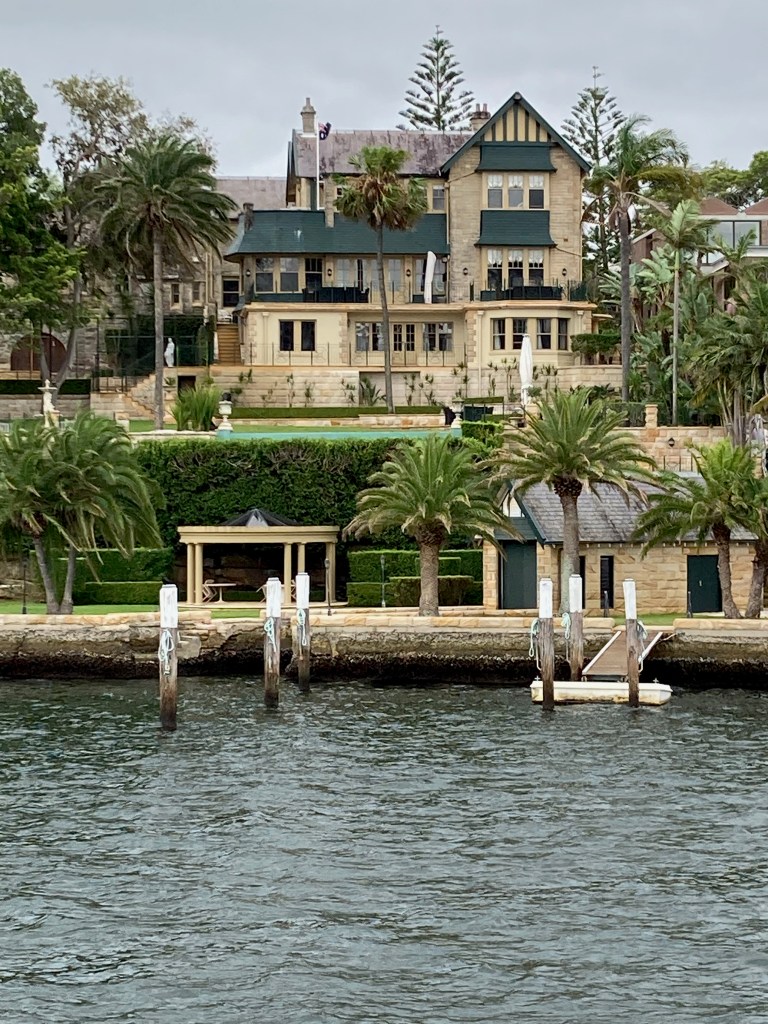
Imagine cleaning all those windows!

B for Bargaining in Singapore

This is the story of a young man and his two friends who sailed to England in 1967 to see the world. Aerogrammes. letters, diaries and postcards help to tell the adventures of “Will” and his friends in this A to Z.

#AtoZChallenge 2025 badge B
“World”   Bee Gees   •   1967
Now, I found that the world is round
And of course it rains everyday
Living tomorrow, where in the world will I be tomorrow?
How far am I able to see?
Or am I needed here?

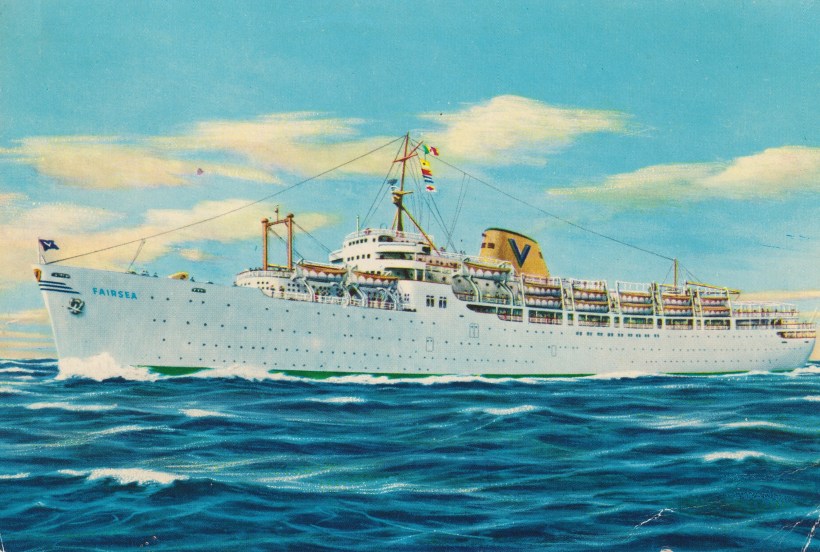
Fairsea, Colombo, Wednesday, 25th January 1967

I am now seated on the fore lounge, and we are 100 miles South East of Ceylon at 12 noon.  We will arrive in Colombo at 5 am where this letter will be posted.  We have a conducted tour arranged for $3 and should get a good chance to see the place.  

Since I last wrote we have been to Singapore.  Although life on board is tremendous, excitement was running high as we entered Singapore Straits with our first chance to walk ashore in a fortnight.  We were running a day behind schedule due to gale force headwinds and engine trouble and as we entered the harbour at 5 pm Saturday the rain was teeming down in a typical afternoon tropical storm.  But it cleared quickly and we had a good view of the harbour, the world’s 4th largest – ships everywhere.  We docked at 6.30 pm and walked ashore at 7 pm.

Taj, our Malaysian mate, had a guide arranged and six of us boarded a Chev Impala for a good look at Singapore.  What a fascinating place! We could have spent a couple of weeks there! Two million people are living on an island 285 square miles in size. The atmosphere is so exciting and it is different to anything we have ever experienced. The people are about 76% Chinese, 20% Malay and 3% Indian. 

We went shopping and you, Mum, would love it. The bargaining is hectic. You tell them you’ll take about half their price and even a third in some things.  I bought a National 10 radio (bigger and better model than I had) for $10, a watch, Swiss brand Titus for $5, an Instamatic 104 Camera (they didn’t have any 304s) for $11.00, Sunaroid sunglasses for $2. We were shown through many sights and ate at the food stalls where food is cooked in the streets.  There were sautés and cuttlefish, chop suey and sweet and sour pork. Delicious.  People everywhere kept trying to sell us everything and are they persistent!  “You want to see blue movie?”  

We were taken for a tour of the red-light area.  There are dozens in Singapore but don’t worry we didn’t go in.  We saw a short performance of Chinese Opera and then moved on to a cabaret where Archipelago beer was a $1 a bottle.  What you could do in Singapore with $500 to spend!  Everything is generally very cheap and apart from the goods I bought it only cost $5 for the car, the food and the beer. 

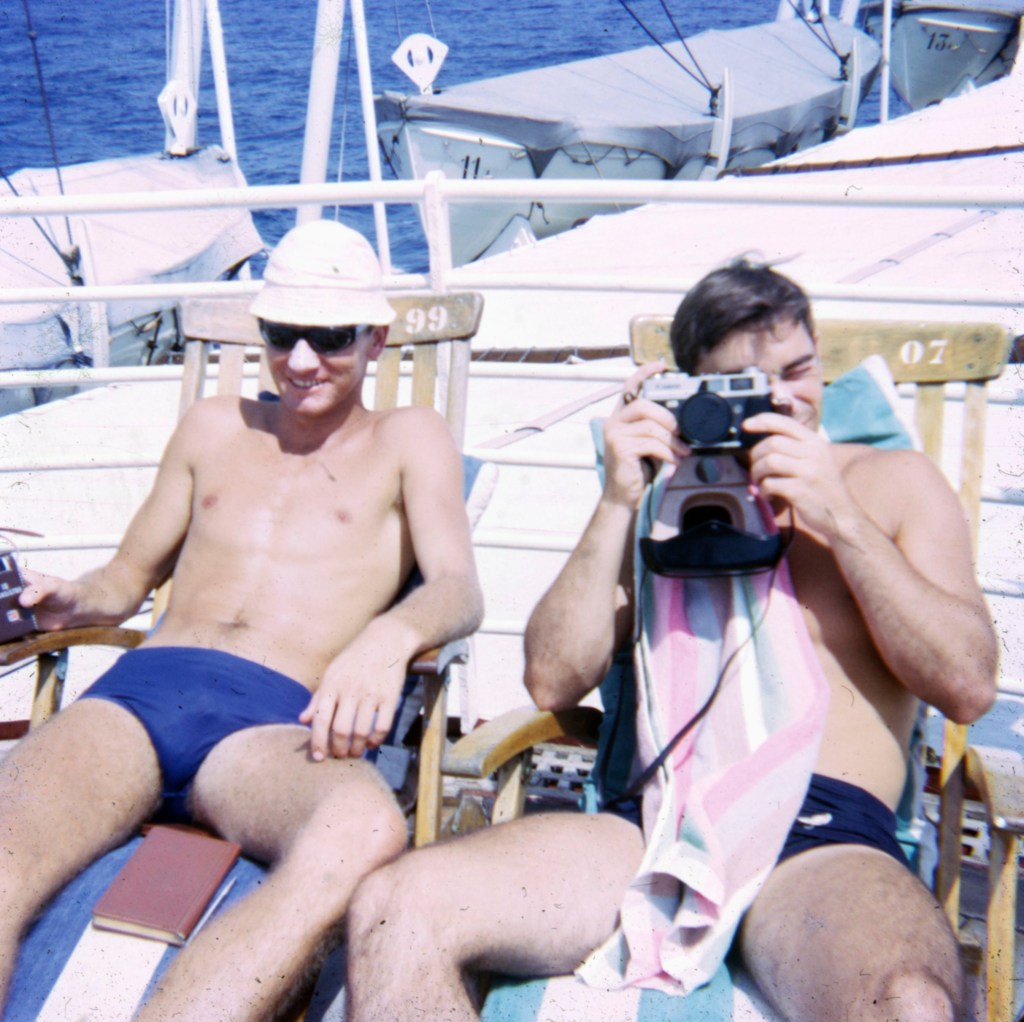
Keith and Phil both bought Canonet cameras for $26 each.  I’m clicking away while they are still reading the instructions.  We returned to the ship at 4 am.  Singapore was still seething with life.  The ship sailed at 6 am and since then the weather has been fabulous.  

Will seated next to Phil who is trying out his new camera

We could see Sumatra and the Malay Peninsula as we passed through the Malacca Straits with hundreds of ships going by. We saw our first Chinese junk under full sail and lots of fishing boats quite close, visited the bridge and have put the camera to good use. 

On my radio yesterday I heard “Over the Rainbow” sung in Chinese!  The ship is now making excellent time.  Yesterday we had a run of 407 miles and 405 miles today which is the best yet.  The sun is still warm to hot even considering it’s winter in the Northern Hemisphere. We are meeting lots of people on board and now I have a girlfriend from Tasmania who is a French teacher (Michelle).  Will close hoping you are all well and will hear from you at Naples if not before.  All the best.  Having a ball.

Monday, 30th January, 1967, Arabian Sea

Hello again!  I hope you are getting all my mail and I am looking forward to seeing a letter from home sometime (Naples or Southampton or Overseas Visitors Club, 180 Earls Court Road, London).  This letter will be posted tomorrow night in Aden, South Arabia.  There is a 7 pm curfew there because of all the people getting killed in the streets with grenades etc. so we won’t be allowed off the ship as we arrive at 8 pm.  A bit of bad luck but I’d rather be alive than see Aden.  All the cheap buys will be available however as the boats come out to the ship and the bargaining is on again.  I intend to buy a chess set with case (magnetised) for $3 or less but that’s all. 

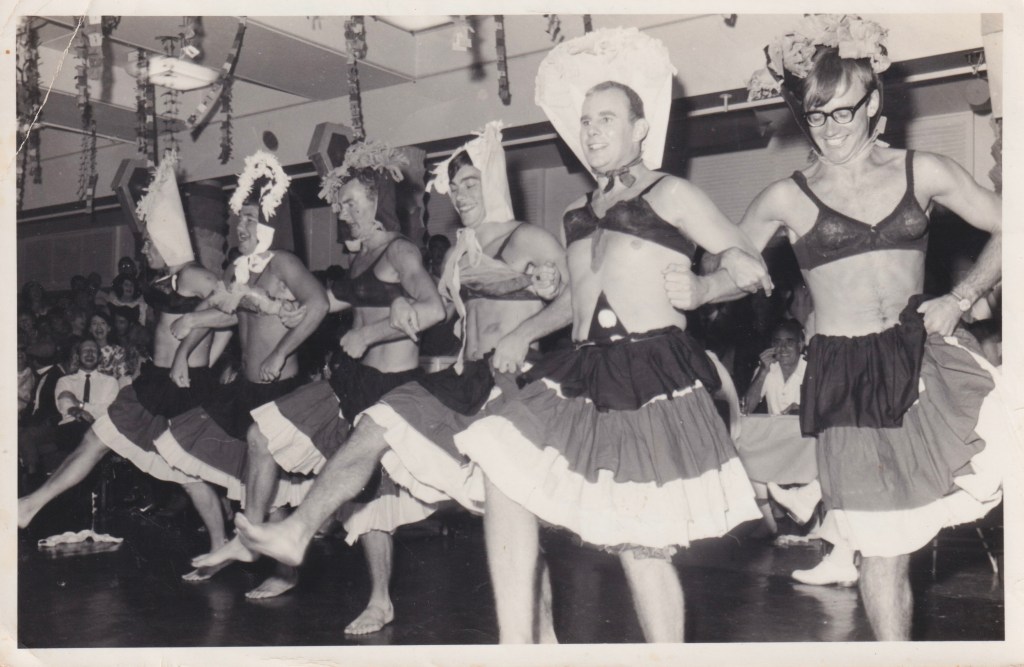
Ship life is as good as ever with lots of food, sleep, beer, parties, entertainment, girls, sport, table tennis, swimming, water polo, deck tennis and the sun has us all very tanned.  Today the rest of the cabin is flaked at 3 pm (although we got up for lunch at 11.30 am) after a hectic “Roaring Twenties Night” in which six of us played Can-Can girls and really brought the house down. The ship shouted us free beer afterwards.

Roaring Twenties Night

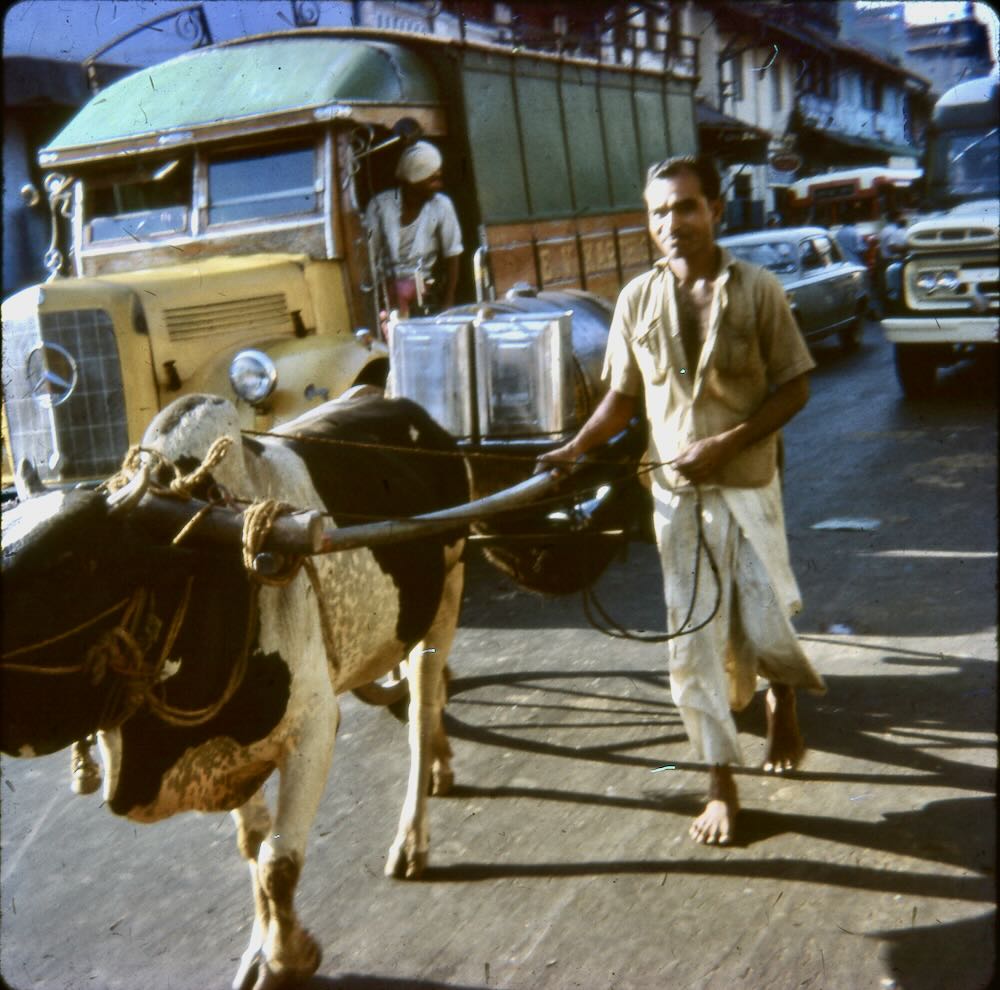
Since I last wrote, the day before Colombo, Ceylon, we have visited our second foreign port.  The ship moved in the harbour at 5 am and I was up to see her tie up. After 6 am breakfast we headed ashore at 7.30 am by launch and to a bus for a conducted tour of Colombo.  The streets were swarming with people wearing not so clean saris (including the men). Colombo is very poor with old buildings and very smelly. It was completely different to Singapore, much poorer with fewer cars and fewer good buildings.  Red London buses are jammed with people who wait patiently in long queues. There were a lot of ox-carts around.  

Old and new in Colombo

We visited a Buddhist temple, removed our shoes and took some photos.  We visited a museum and since it was Australia Day we raced over to the Embassy and shouted “Cooee Cobber”. Two girls (Australian) came out and said it was good to hear Australian accents again.  They were having a party with 700 guests to celebrate the occasion but we were leaving so we couldn’t go. I took a photo of a snake charmer with a live cobra in the streets.  

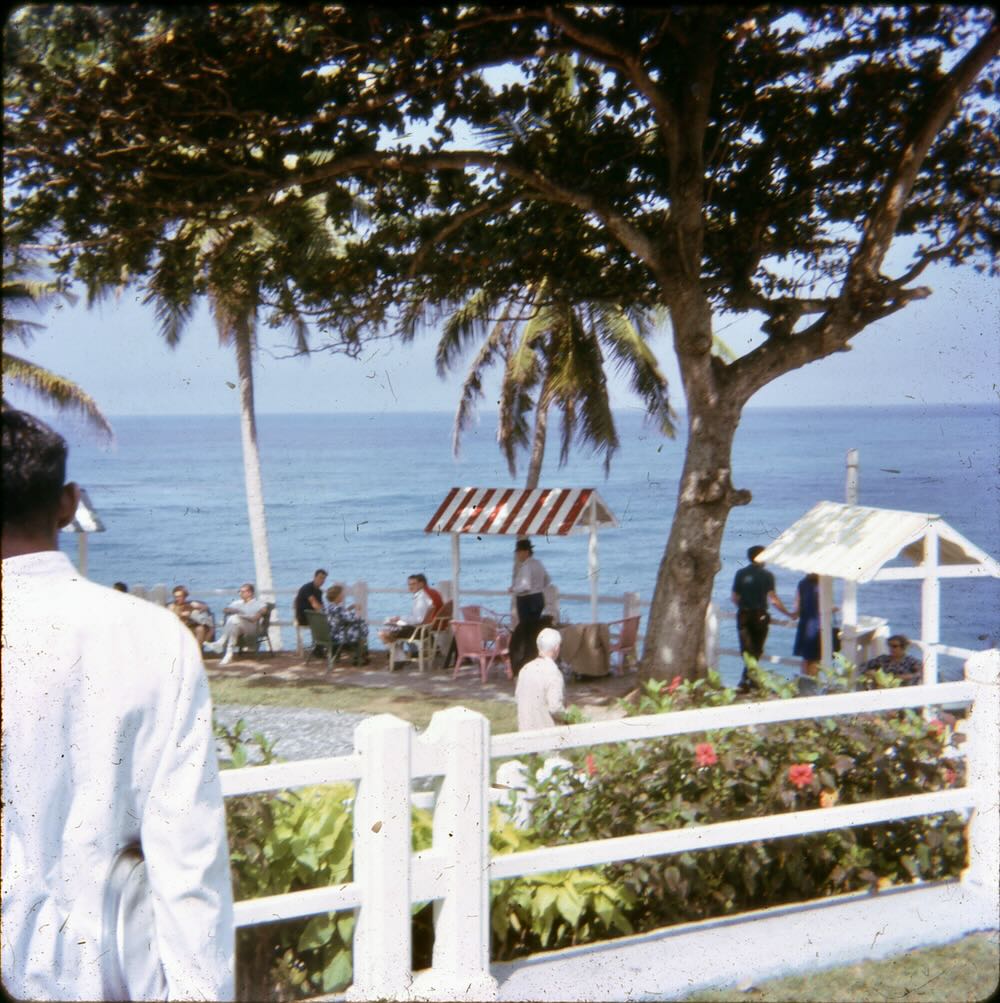
View from Hotel Colombo, Mt Lavinia. We lunched here.

The bus took us to Mount Lavinia where there is a grand English hotel. I ate hot, hot curry and rice and pineapple etc plus beer.  The pineapples are very juicy and very sweet.  It was the only thing that put out the heat of the curry.  Souvenirs were mostly quite expensive except for jewellery for which Ceylon is quite famous. Michelle bought a cat’s eye moonstone for £10 sterling.  Boats were alongside the ship selling all sorts of artefacts like bongo drums and carved elephants and one even wanted to swap my Singapore sunglasses for one.  “No dice”, said I.  I spent very little here (a change after Singapore) but lost a little money changing into rupees as the people wanted Australian money.

Boats coming to ship in Colombo Harbour

We passed the Cannibal Islands (off the coast of India) a few days ago where 3,500 people live. There is a leper settlement one mile from the town. 

Today is Resignation Day.  We officially are unemployed schoolies at 12 pm.  Tonight, is another party.  It was the fastest six-week holiday I ever had.  Glad there’s no school for us tomorrow.

Last night a baby boy (Adam) was born in the ship’s hospital.

(Editors note: This baby and the ship’s captain were photographed on arrival in Southampton and appeared on the front page of a London newspaper.)