
Q for Questions About the Future

As Time Goes By

Sung by my favourite singer, Rudy Vallee 1931

You must remember this
A kiss is still a kiss
A sigh is just a sigh
The fundamental things apply
As time goes by

And when two lovers woo, they still say, “I love you”
On that you can rely
No matter what the future brings
As time goes by

It is the 25th August, 1933 and it is my 16th birthday.  My name is Elsa May Hall although my birth certificate says Elsie Mary Hall.  The woman who registered my name made a mistake with my middle name and I don’t like Elsie.  Elsa is much more grown up.
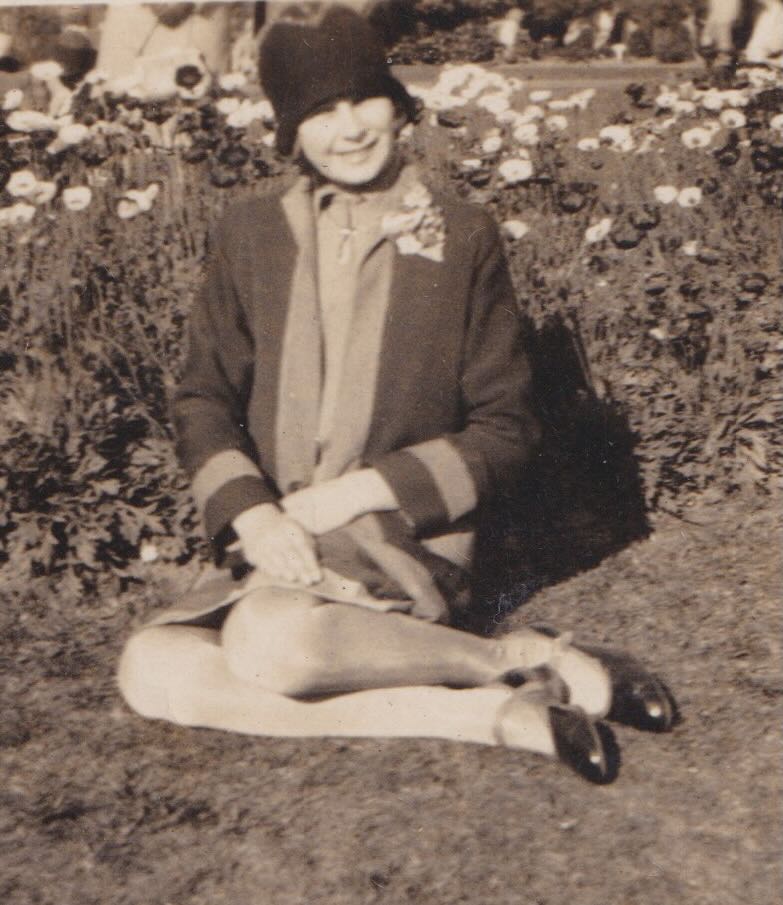
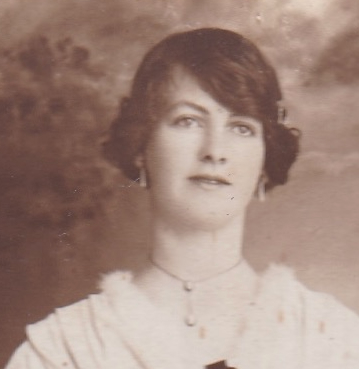
This is me when I was younger. I can’t find any recent photos.

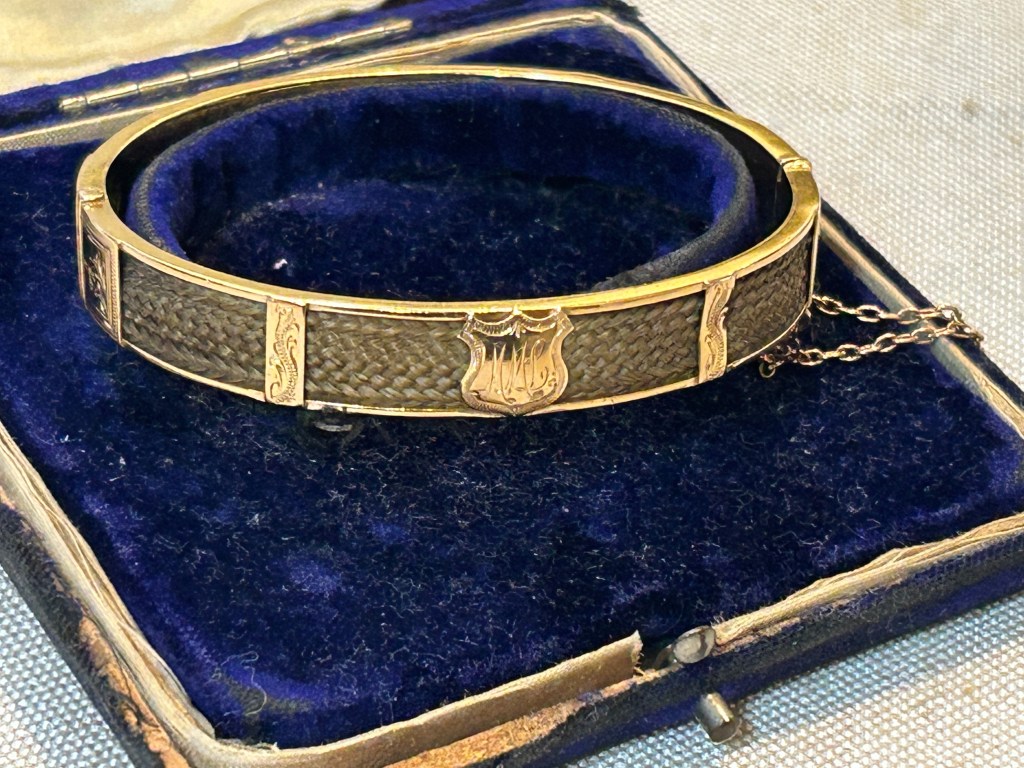
My mother gave me a gold bracelet for my 16th birthday.  She wants to start a family tradition of passing it down to the firstborn girl in each generation of the family.  I wonder will I have a daughter to give it to?  I find it a bit unusual as it has her hair plaited inside it.  Apparently, some admirer of hers gave it to her but she didn’t marry him.  When she was 20 she ran away with a much older man (my father) and they were married in Melbourne. I was born in 1917 in a little railway cottage in Williamstown.  My mother was very sick afterwards and nearly died.  I started school in Williamstown when I was six so I was much older than the other children.  I was only at the school a short while when my mother said, “We are leaving on a train to go to Sydney today.” I didn’t ever see my father again.

Mother rented a house in Glebe and I started school at Forest Lodge.  I was happy there, as I made one very close friend called Ruth.  My favourite thing to do when I got home from school was to ride my scooter down the gently sloping path in Jubilee Park.  Ruth told me I was too old to ride a scooter but I loved the feeling of speed and the wind in my hair. I remember one day when I was in sixth class rushing in the front door, telling my mother excitedly about my promotion in the netball team.  She told me to sit down and listen.  She said that times were hard and dressmaking jobs were scarce so we were moving to Queensland.  She had a job at a cattle station as a housekeeper and cook so there would be food, accommodation and some money as well.  I didn’t realise that the cattle station was a long way from the nearest town of Charleville.  Nor did I realise the nearest high school was in Roma, hundreds of miles away.

It took several days to travel to Roma by train.  Instead of going to the cattle station, Mother took me to a hostel for students whose homes were a long way from the school.  I hated it.  I didn’t make friends and the food was awful.  I started school at Roma High School but was very unhappy.  In fact, I thought about running away but where would I go? I sent so many letters to Mother she must have realised that something needed to be done.  One weekend she arrived and took me to a house near the school.  The owner had a spare bedroom and said she would treat me like her own daughter.  At least now I had my own room but I didn’t like the woman at all.  She would make notes if I did anything to displease her and then she would send letters to my mother.  She also expected me to do housework the minute I got home from school and I didn’t think that was part of the agreement so we argued a lot.

It all came to an end when I made a friend.  Like me, he was an outsider.  His parents were Greek and ran the local fish and chip shop. We would walk home from school together and one day the snoopy landlady saw us.  Of course, she wrote to Mother straight away and said I was “boy mad”.  Mother arrived next weekend and decided that as I was almost 15, it was time to leave school and start dressmaking.

I thought I might be living with Mother at the station but a letter arrived to say my father had died and his sister (my aunt) was offering me accommodation while I did my training as a dressmaker.  Before I knew it, I was travelling by train to Williamstown, which I had left nearly ten years earlier.

I am now working at Lucy Secors.  It is a dressmaking firm which employs hundreds of girls, training them from the ground up.  I spend two or three months perfecting each part of a garment.  Starting with seams I progressed to collars and then to sleeves and buttonholes.  It is all very boring.  My aunt and uncle are quiet people, and my cousin is not at all exciting.  
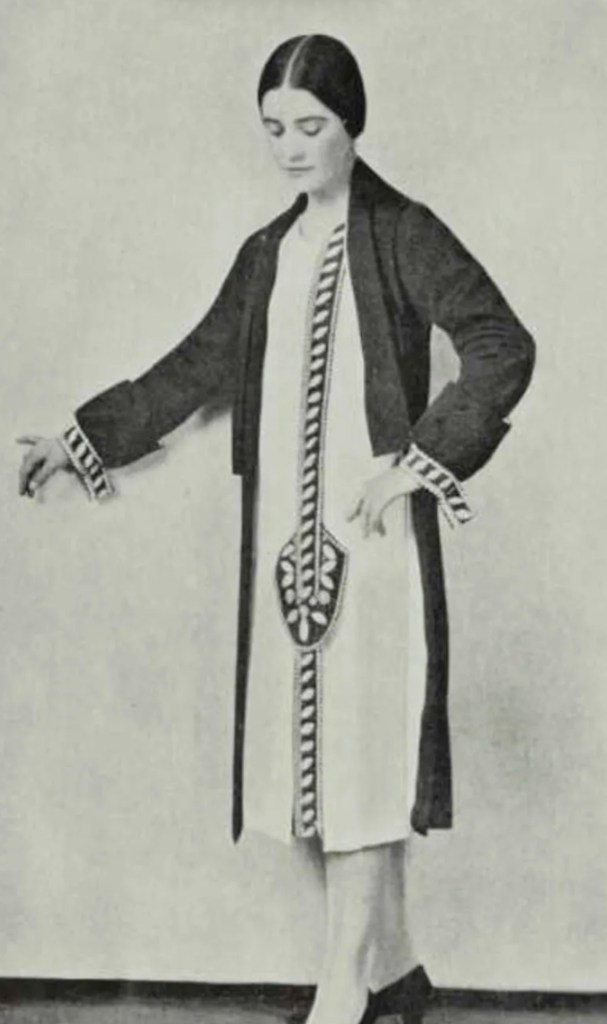
1927 advertisement in “The Home” magazine for Lucy Secor from Circa Vintage Clothing Archive 4th June 2015

So here I am.  Everyone expects me to work my way up through the ranks at Lucy Secors until I become a manager or get married.  I have a good mind to pack it in at the end of the year and go back up to Queensland.  Maybe I can get a job dressmaking with what I have learnt. What does my future hold? I hope it’s a bit more exciting than my life has been so far.  Things have got to get better.

P for Plaiting a lock of my long fair hair

When You Were  Sweet Sixteen

I love you as I never lov’d before,

Since first I met you on the village green

Come to me, or my dream of love is o’er.

I love you as I lov’d you

When you were sweet, when you were sweet sixteen.

Written by James Thornton 1896 

It is August the 8th, 1913 and I have just turned 16.  My name is Myrtle May Lock but everyone calls me Tillie because I hate my name.  I have a sister called Ruby (she hates her name too) who is 12, a brother called Charles (known as Charlie) aged 10 and a little brother called Claude, aged 7. Claude fell off the bed on his head when he was a baby and has never been quite right since.  He is always sick and misses so much school.  As a result, I missed a lot of school too, looking after him as Mother is often unwell.  I left as soon as I could at the age of 13 so did not ever go to high school.

Father said I had to have a trade as I should not have to depend on the family or a husband to provide for me.  I had the choice of dressmaking or millinery.  I decided that dresses were more important than hats and liked the idea of working with clean, soft material instead of my parent’s job running a smelly fish shop. At least Father now sells second hand goods and Mother can rest a bit more.

As the oldest in the family, I am always expected to do most of the work.   My sister Ruby avoids it when possible and is very demanding. When Father bought a cow everyone wanted to learn to milk it.  Everyone but me.  I knew that when the novelty wore off, I would be the one getting up early in the morning to milk the cow. I can’t avoid the weekly silver polishing, however.  Every Saturday morning, we four children must sit at the table and polish all the cutlery, the teapot, coffee pot, sugar bowl and milk jug.  When I have my own home, I’m not having anything made of silver.  Why make work for yourself?

As it is I work long hours five days a week at the dressmakers, measuring the ladies and drafting patterns for their gowns. I do most of the stitching by hand although we have a Singer treadle sewing machine for making linings in some of the dresses. We receive copies of the latest European fashions in magazines like “Gazette du Bon Ton” from France and “Harpers Monthly” from America.

That reminds me.  I was reading a magazine a few days ago and it went into great detail about the “unsinkable ship”, the Titanic, which hit an iceberg travelling from England to America. Over a thousand people drowned.  I have decided I am never going on a ship, ever.

Have you seen my birthday present?  Oh, I know I received the usual handkerchiefs, combs and linen for my glory box but wait until you see what else I have.  

I have an admirer!  He is much older than me and isn’t all that good looking, but he is very kind and has a lovely big house.  My father doesn’t approve of him so all I will say is that his initials are S.B. He asked for a lock of my hair!  In fact, he said, “Please may I have a lock from Miss Lock”.  I didn’t know what he was going to do with it but I snipped a long strand for him to take away with him.  Today he presented me with a blue velvet box.  I opened it carefully and inside was a gold bracelet!  It looked as though some plaited leather was threaded through the gold but it turns out, it was my hair.  On the inside is inscribed “From S.E.B. 9-8-13” and on the outside, in a gold shield, are my initials, MML. I shall wear it all the time.

I think my father thinks if I leave home and marry S.B there will be no one to help my mother but then it will be Ruby’s turn.  It’s time she did her share!

Father has stopped me from doing many exciting things.  Just recently a new photographic shop opened in the main street of Stawell.  I was looking at the pictures in the window when the owner came outside and asked if I would like to have my photograph taken.  He said he would put it in the front window to show people what he could do.  I had to wrap a sheet around my shoulders and let my hair down to my waist.  You should have heard the gossips when my photograph appeared in the window. The photographer told me a week or so later that a friend from Melbourne had seen the picture and thought I should try out to be a model for the big department store Myer. My father said no way would he let me go and model in Melbourne so I am doomed to spend my life in Stawell sewing dresses for wealthy ladies who seem to have a lot more fun than I do.

I wonder what the future holds?   Will I marry S.E.B.?  Will I leave Stawell and live somewhere more exciting, like Melbourne?  Will I have children and grandchildren? Will I be happy? Only time will tell.

O for Occupying Myself During Treatment

The New Zealand actor, Sam Neill, wrote his memoir “Did I Ever Tell You This” while steroids kept him awake at night. He was diagnosed with angioimmunoblastic T-cell lymphoma, a rare, aggressive type of non-Hodgkin’s lymphoma. He is currently in remission but with infusions every two weeks to keep it at bay. His memoir is not about cancer as that is something he wants to put at the back of his mind. Such an inspiration and role model!

It would be good if I could say I learnt a new skill or wrote the great novel during my self-enforced hibernation.

The piano lay untouched when I could have been practising.  The Swedish Death Cleaning which I so enthusiastically started, lapsed into apathy. My days followed a regular rhythm of meal prep, cleaning up and washing and drying clothes.  The rest of the time was spent reading or listening to audio books.  I attempted to complete Sudokus, enjoyed Wordle and Quordle and Octordle. Pilfer had me playing against the computer and winning (on level 1). Watching TV took place mainly in the evenings and occasionally at lunchtime, when I enjoyed Escaping to the Country and drooling over beautiful houses.  The summer drifted by, largely spent indoors with the air conditioning on.

Writing my daily journal was a ritual before bed each night, listing my side effects and comparing them with the previous cycle. Not exactly a memoir!

There was something I needed to complete before March as my granddaughter’s 16th birthday was approaching.  It is a family tradition to pass on to the next generation a gold bracelet belonging to my grandmother.  She had been given the bracelet when she turned 16, in 1913.  She gave it to my mother when she turned 16.  In turn it was passed on to me at the same age.  When my daughter’s turn came she asked if I would look after it as she went travelling all over the world. It was still in my care as the time came again to pass it on to the next generation.

The owner of the bracelet, Myrtle May Lock

I came up with a plan to write a series of stories called “When I was 16”, showing how life has changed for teenagers over the past hundred years.  I was fortunate to have some lovely photographs of my grandmother around that age but only younger ones of my mother so that would have to do.  I looked back to my own life at 16 and asked my daughter to write about her life at that time as well.  There was such a contrast in the lives of the four women in the stories.  For my granddaughter the significance of the bracelet would be multiplied by the stories of its owners.

In the next post you will go back in time to 1913 and find out the origin of the gold bracelet.