When I first came home from hospital, I was given a hand-written chart with all my medications, their purpose and when to take them. Some days, especially early in the cycle, involved many more tablets than later in the cycle. I decided to list them on a Friday when my medications were at their maximum just to see what was going into my body and why.
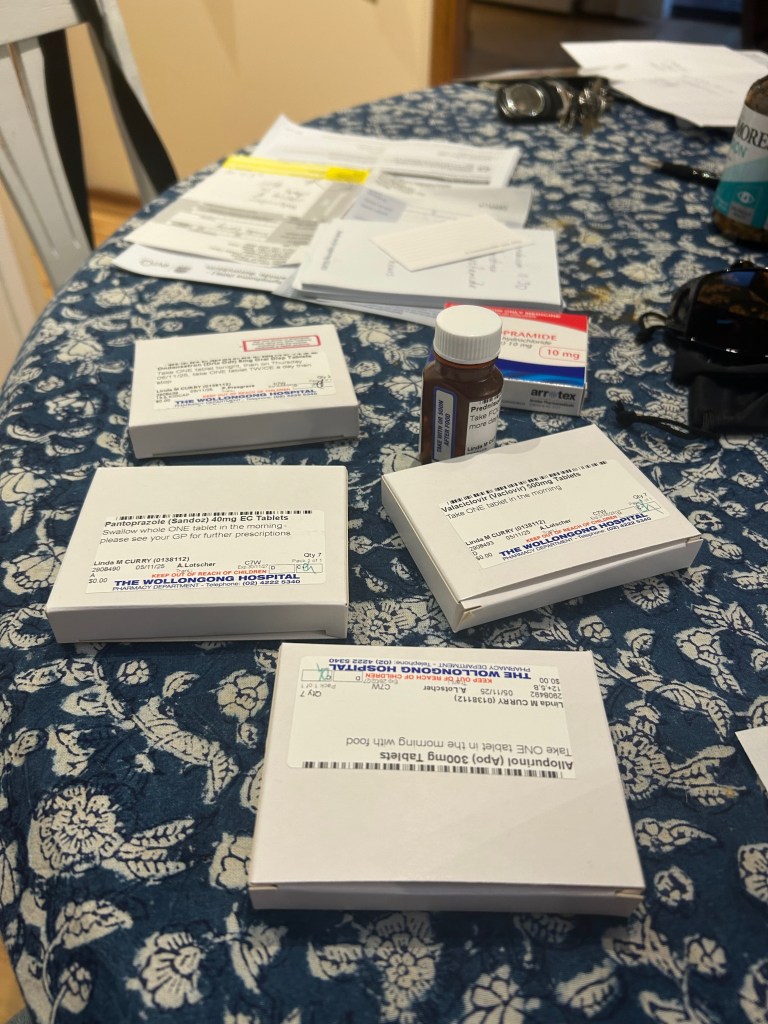
- Allopurinal is for kidney protection and works by reducing the production of uric acid
- Pantaprazole is an antacid and treats heartburn and acid reflux
- Valaciclovic is an anti-viral and importantly keeps shingles at bay
- Ondansentron prevents nausea and vomiting
- Prednisolone is a steroid taken for four days after chemo that manages side effects and also destroys cancer cells
- Resprim Forte is an antibiotic taken three times a week in a low dose
- Loratadine is an antihistamine which helps reduce bone pain after a Pelgraz injection
- Pelgraz injection (given by nurse four days after chemo) stimulates the bone marrow to make more white blood cells
- Panadol helps with pain from Pelgraz injection
- Temazapan helps with sleep while taking Prednisolone (steroids)
- Two sachets of Movacol with water plus Coloxyl tablets help with constipation caused by chemo.
- Atorvastatin for cholesterol (a pre-existing medication)
Once the six cycles had finished I was reduced to taking 1, 2, 3, 6 and 12..
Six weeks later I am down to 3,6 and 12.
It is rather confronting to be pouring all these medications into one’s body but most of them are trying to repair the damage caused by the chemotherapy so the thought of not having them is even more alarming.
When I began treatment for DLBCL (Diffuse Large B-Cell Lymphoma) I was told I had to avoid certain foods as my immunity would be low. It included a few of my favourite things such as oysters, sushi and soft cheeses. Generally, one has to avoid raw, undercooked or unpasteurised foods, so the rare steak with blood dripping from it or the runny boiled eggs for dipping soldiers in were off the menu.
Deli meats are also discouraged because of the potential for listeria. Salami, bacon and ham with their high fat and salt content are also not recommended. I didn’t realise this until I had devoured a large portion of the Christmas ham. Raw foods must be carefully washed so my salad spinner became a regular kitchen tool, removing water from grapes, raspberries, blueberries and strawberries. Pasteurised yoghurt was safe to eat, but not kombucha, according to my research.
The greatest impact on my routine was the consumption of alcohol. Chemotherapy drugs put a huge strain on the liver, so the extra strain caused by alcohol could cause inflammation or worse. As well, alcohol can worsen nausea, dehydration and fatigue. It was a no brainer to stop my two drinks a day habit.
Five o’clock in the evening and my usual glass of white wine had to be replaced, possibly forever, but with what?
Almost immediately my Face Book was inundated with suggestions for non-alcoholic drinks. I have tried many in the last five months and still have not discovered the perfect one. My favourite is still tonic water with ice and lemon. I buy the low sugar variety and hope it doesn’t do too much harm.
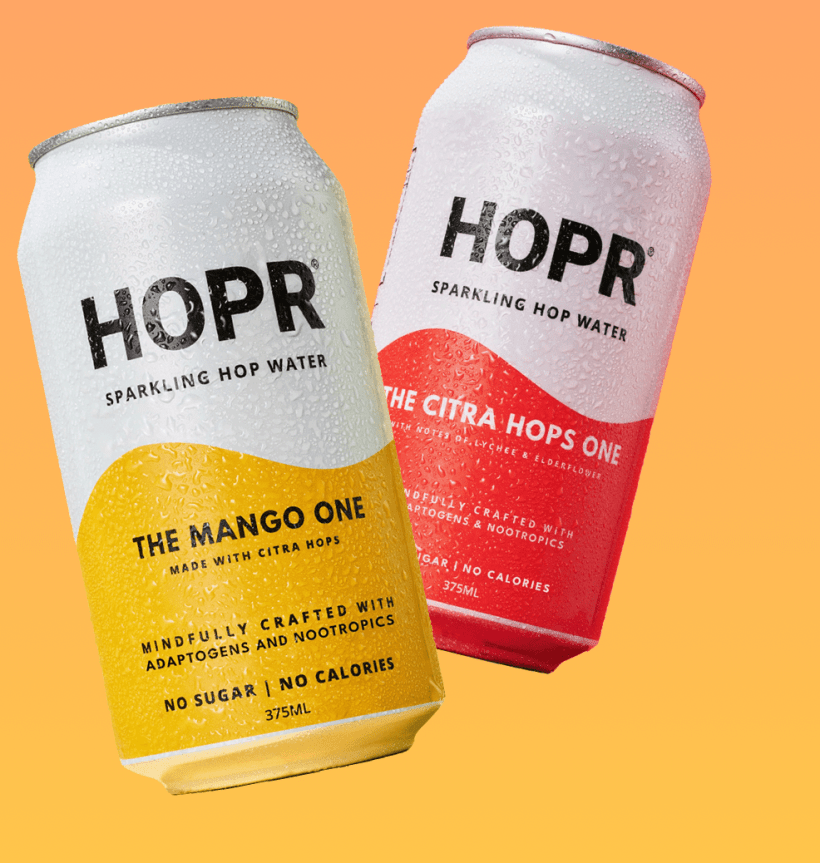
Heineken Zero beer is a pleasant drink, even for a non-beer drinker like me. There is a hops based drink called Hopr which appears on my Face Book quite regularly so I decided to give it a try.
The Hopr drinks have a slightly bitter taste that takes a while to get used to, are refreshing and not sweet. I found some varieties tasted better than others but served in a wine glass it is a pleasant drink to sip while preparing the evening meal.
I used to have a glass of red wine with dinner but not any more. Some wine substitutes I tried were from the Altina drinks collection. For Christmas Day I celebrated with s Sparkling Sansgria. Although I enjoyed it the first few times I had it it is not something I could drink on a regular basis. There is also a Sparkling Rose which is quite drinkable but when the alcohol is taken out of wine it definitely loses something.
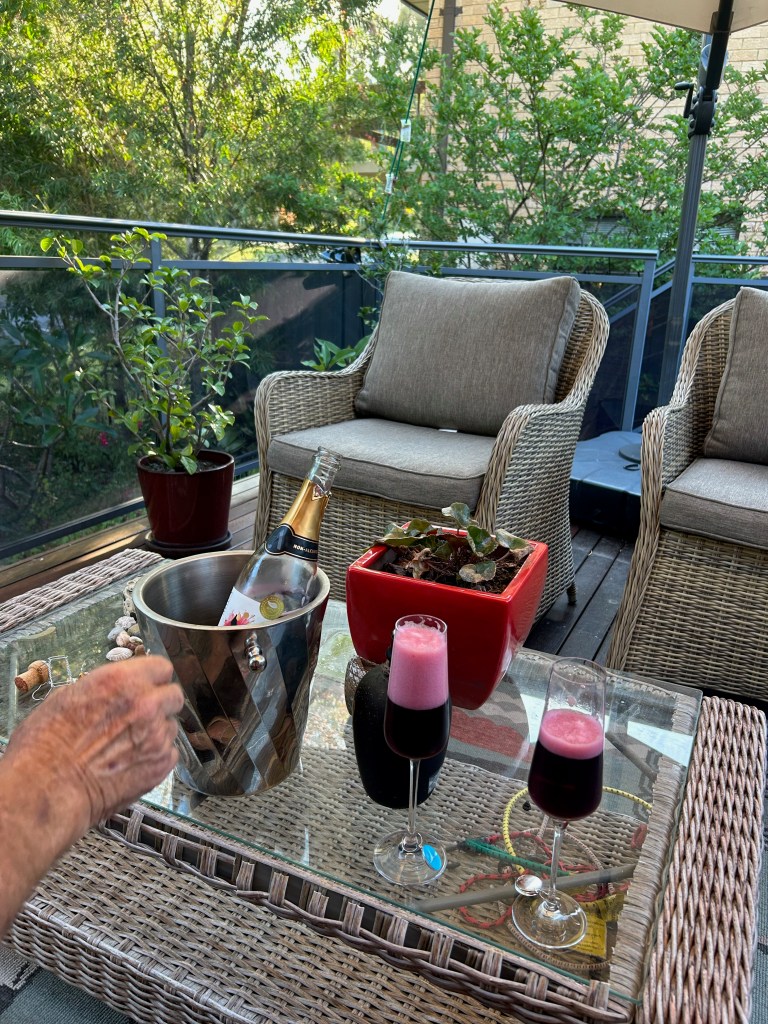
I broke the drought and had a glass of champagne on my birthday, six weeks after I finished chemo. Six days later I had one on John’s birthday. However, I have decided to limit alcohol intake to small amounts on special occasions.
 The Curry Apple Orchard