

We can’t talk about Xi’an without mentioning the Terracotta Warriors. It was Anzac Day 2014 but there was no celebration of it in Xi’an. We were shivering in eight degrees Celsius and looking glumly at the rain falling.Wearing our warmest clothes we were not too worried because we knew the warriors were under cover. What we didn’t know is that there were three pits to visit plus the museum so there was a fair bit of outdoor walking to do. The first pit was the largest and we were keen to get a good view of the infantrymen in their rows. So were hundreds of others so it was the quick and the dead to get a space beside the railing.
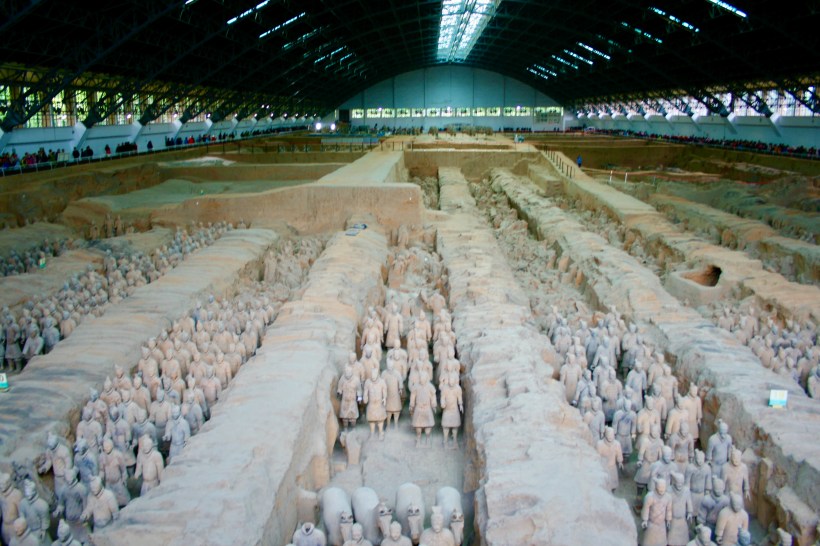
It was interesting to see the site of the well where three men were digging when they found the first warrior. It was decided to leave that warrior in a broken condition because that is how he was found.
It was here we were conned well and truly. We thought we were looking at the man who found the first pottery fragments in March 1974. He was there, signing books so I was inspired to buy one. I found out later he was a bit like Santa Claus, filling in for the original.
The Terracotta Army is 2,200 years old and is 1.5 kilometres from Emperor Qin’s mausoleum. The emperor was worried about dying and was searching for the secret to immortality. Just in case he didn’t find it he prepared for the afterlife on a massive scale and all his concubines, wives and workmen went with him when he died at the age of 49. It is thought he was taking Mercury to prolong his life but alas it had the opposite effect.
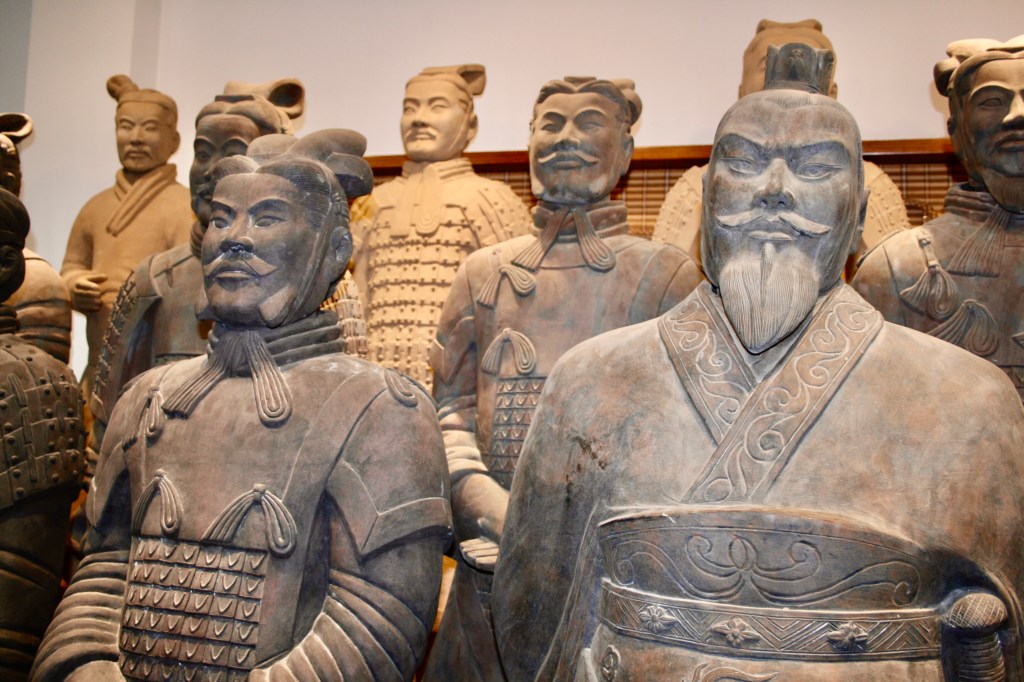
Pit 3 is the smallest pit, known as the command centre and was discovered in 1976. We then moved on to pit 2 where there were some close-up views of various soldiers and officers. We headed across to the museum where I especially liked the bronze chariots pulled by four horses, the second of which looked like a 2000-year-old caravan.

Xing Xing offered us a warm meal in a farmhouse or a Subway. John and I opted for the hot meal which was home cooked style and very tasty and fresh. Mr Yung lived on a farm which became part of the Warriors Museum Complex, so his old house was knocked down and he was given a new one. Fortunately, it wasn’t in an apartment block. He now finds cooking meals more lucrative than farming.
At 5.15pm we met for a walk to the bell tower, the drum tower and the Muslim Quarter. The last of these was fascinating with a huge variety of food being cooked on the footpaths outside the shops. We tried a date filled persimmon cake. Delicious!
That evening we hopped on a local bus to take us the two stops to the Shaanxi Grand Opera House. Because we had quite a filling lunch John and I opted to share the 16 courses of dumplings on offer before the show. They were delicious and accompanied by rice wine, beer and tea. The only problem was Ian in our group caught his finger on a chair and sliced the top off it. His wife had her first aid kit but he was in pain and will have to watch out for infection. You just don’t need that to happen on a holiday.
Xing Xing had only been able to get us C grade seats but they were fine. The show was entertaining although obviously geared to the tourist market. There was a mixture of orchestra and dancing supposedly from the Tang Dynasty but there were a few modern instruments thrown in, probably for the better as many Chinese instruments are strident and hard on western ears. The percussion was great but the dance of the masked warriors designed to expel epidemics and ghosts was my favourite.
We hoped to have a good sleep that night as the next night we would spend twelve hours on a sleeper train with two other (as yet unknown) people on the way to Beijing.
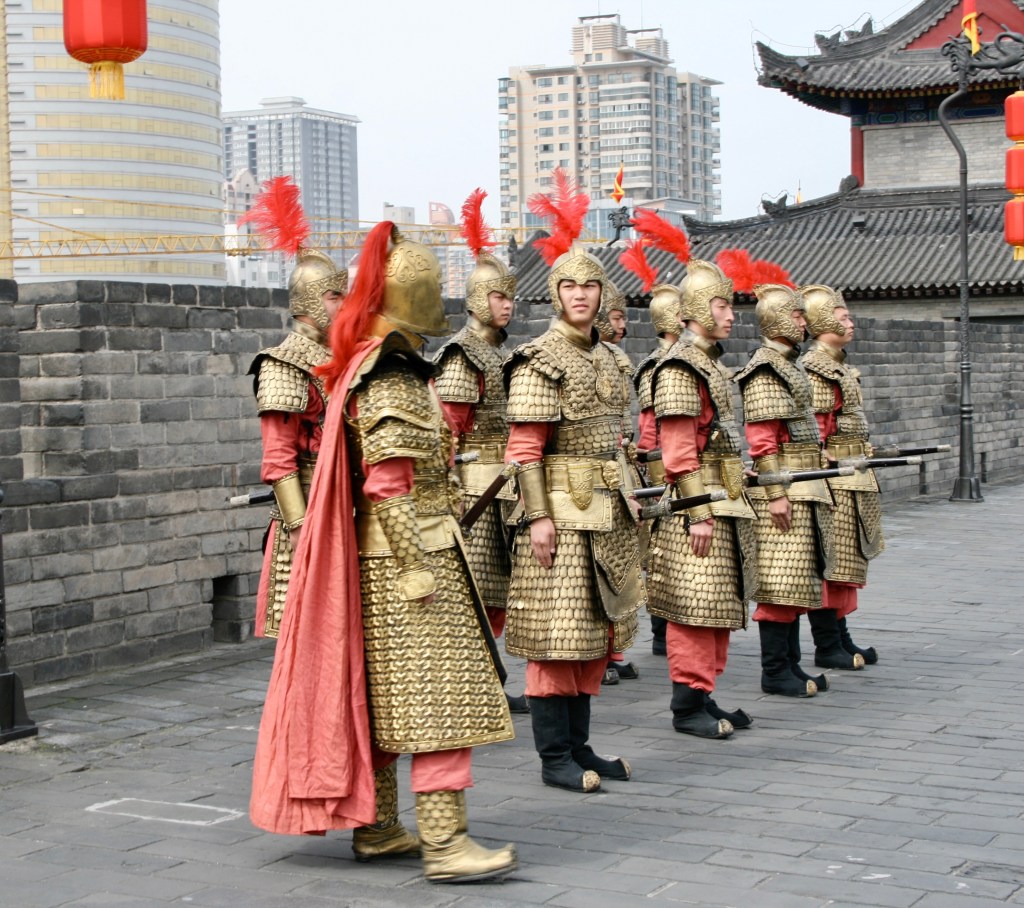
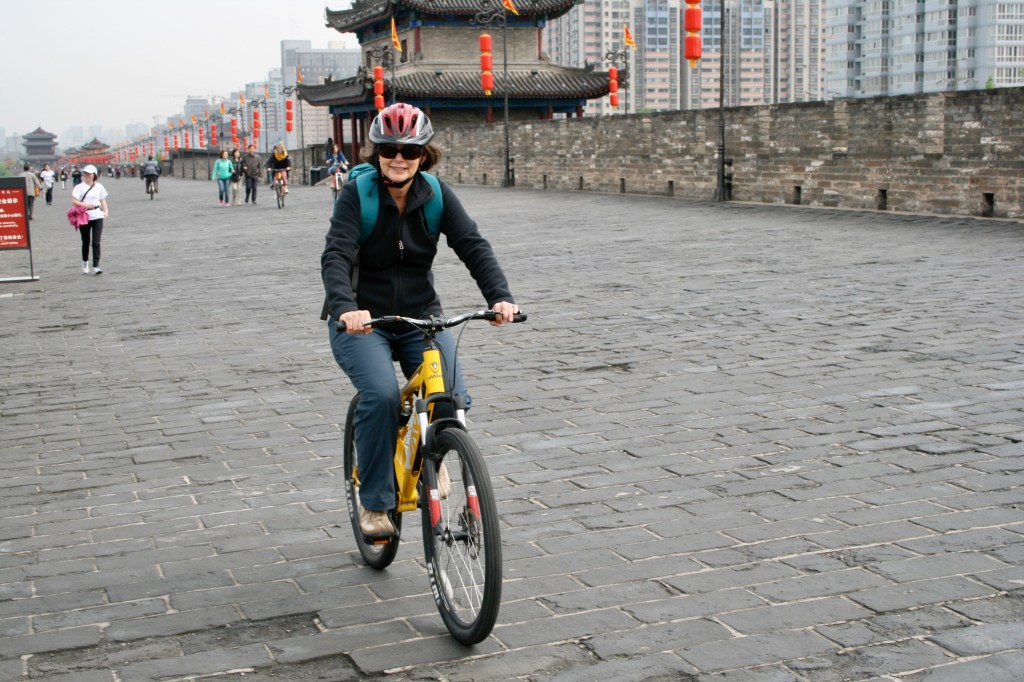
One of the things we really wanted to do before we left was ride around the City Wall of Xi’an on bikes. The wall is twelve metres tall, twelve to fourteen metres wide at the top and fifteen to eighteen metres thick at the bottom. It covers 13.7 kilometres in length with a deep moat surrounding it.
We had brought our helmets with us, packed with underwear. The bikes had no gears but good shock absorbers for the bumpy paving. We were having a great time when without warning John crossed in front of me and I hit his back wheel. Next minute I was sprawled across the pavement but fortunately had only minor injuries. We are still debating whose fault it was. The same thing happened to another couple so it was easy to do.
The afternoon was spent walking around Xi’an and getting lost. We finally bought a map and found we had been looking in entirely the wrong area for the Muslim Quarter.
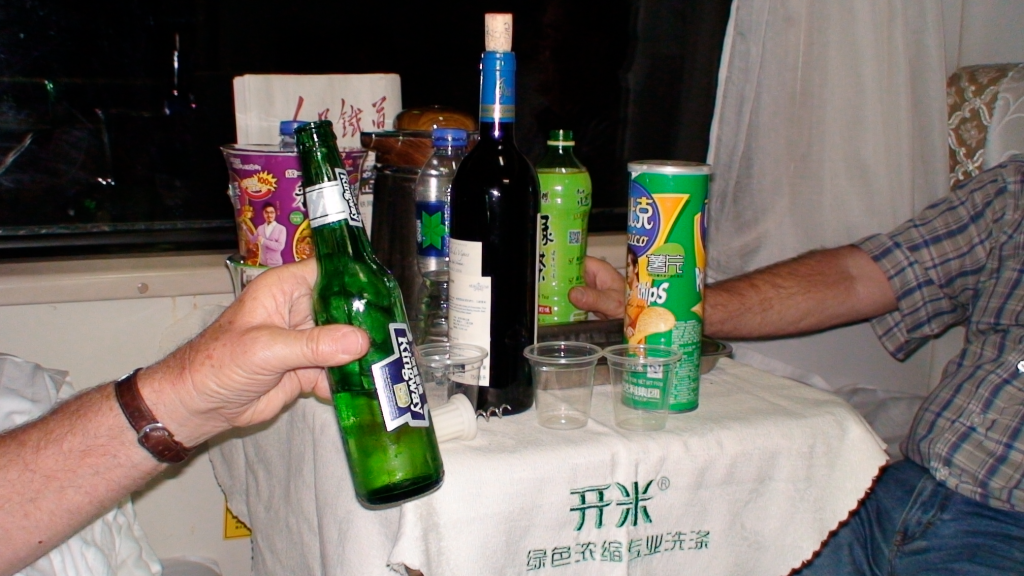
Just before six we stocked up on noodle boxes, red wine (French), bananas, longans, chips and peanut bars before heading off to the train station in a local bus, complete with luggage. At 7.30pm we boarded our train and found we were bunking with Helen and Ian from Sydney. We were rather perplexed as to how we could fit four adults and four big suitcases in such a little space. In the end we had to put two bags under the bottom bunks and some things at the end of the beds.

I was in a top bunk and was quite comfortable. It felt a bit like a school camp with everyone visiting everyone else to see what their cabin was like, card games happening and lots of laughter. We added hot water to our noodles from the supplied kettles and enjoyed the wine and snacks. Wearing our slippers we visited one of three sinks to clean our teeth. The toilet was western style to everyone’s relief.
The Travel China Guide says this about soft sleepers.
Soft Sleeper, as the name suggests, is softer than hard sleeper. But more importantly, the compartment is more spacious with only four berths inside, two upper and two lower; the berth is wider and longer, about 30 inches (75cm) and 75 inches (190cm) respectively; the compartment has a door, which separates it from the aisle and provides a quiet and private room for the passengers inside.
Soft sleeper ticket price is about 1.5 times of that of hard sleeper, and a lower berth costs more than an upper berth.
The group had varied opinions on the soft sleeper ride. Some didn’t sleep a wink while others found the rocking of the train lulled them to sleep. The train rattled a lot and felt like it had a flat tyre but it was certainly preferable to the eleven hours in the air it took us to fly to China. A loud musical wakeup call started at 6.30am and at 7 o’clock we pulled into Beijing Station.
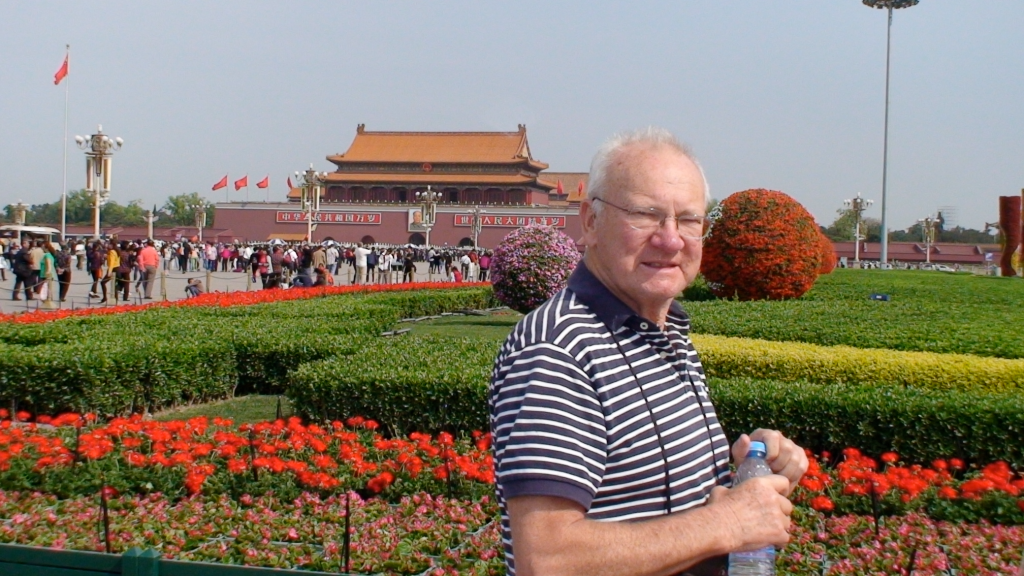
What!!!! This could not be Beijing. The sun was shining, the sky was blue with only a slight haze above the horizon. Where was the choking pollution? We were truly fortunate to see Beijing at its best.
 The Curry Apple Orchard