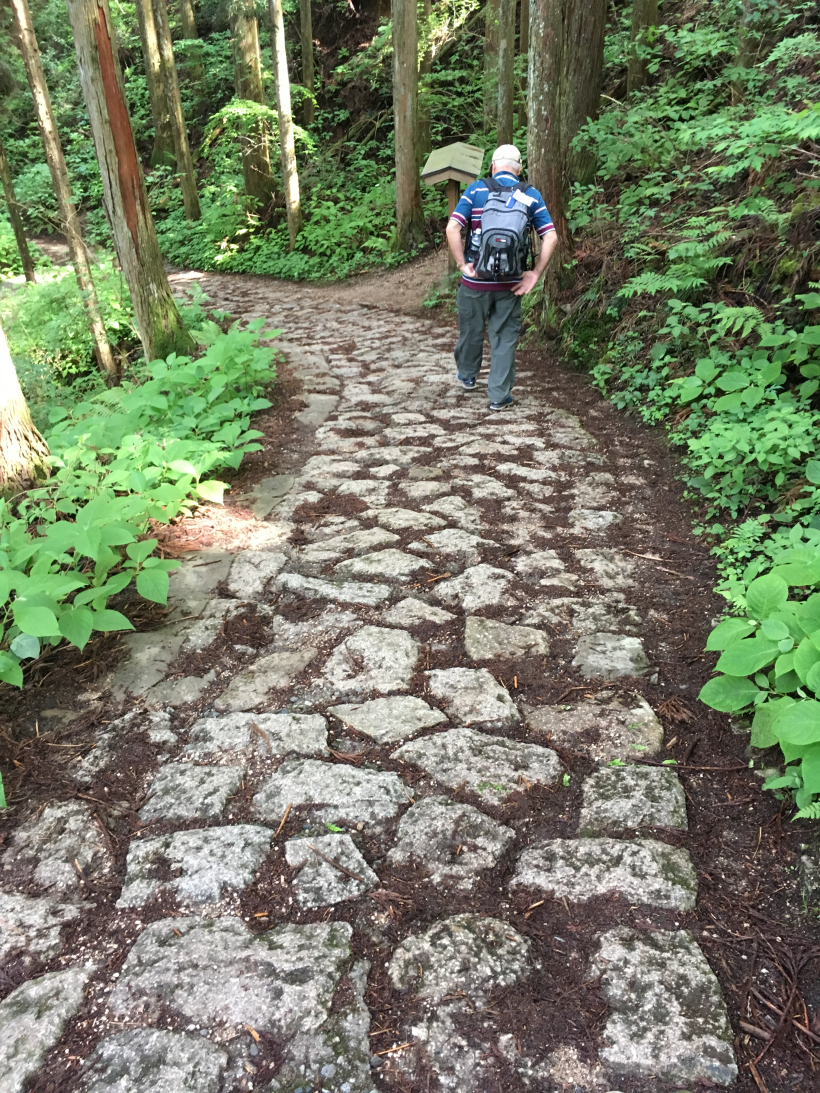

In Joanna Lumley’s series “Japan” she travels to the Kiso Valley to walk part of the Nakasendo Way. When I watched this on television I dreamed of doing the same. It is an old travellers’ road from the Edo period (which lasted from 1603 to 1868). Nakasendo literally means “Central Mountain Road” or “Inner Mountain Path” and is a trail that once connected a string of villages that provided lodging and sustenance for shoguns, retainers, samurai and daimyo (feudal lords).
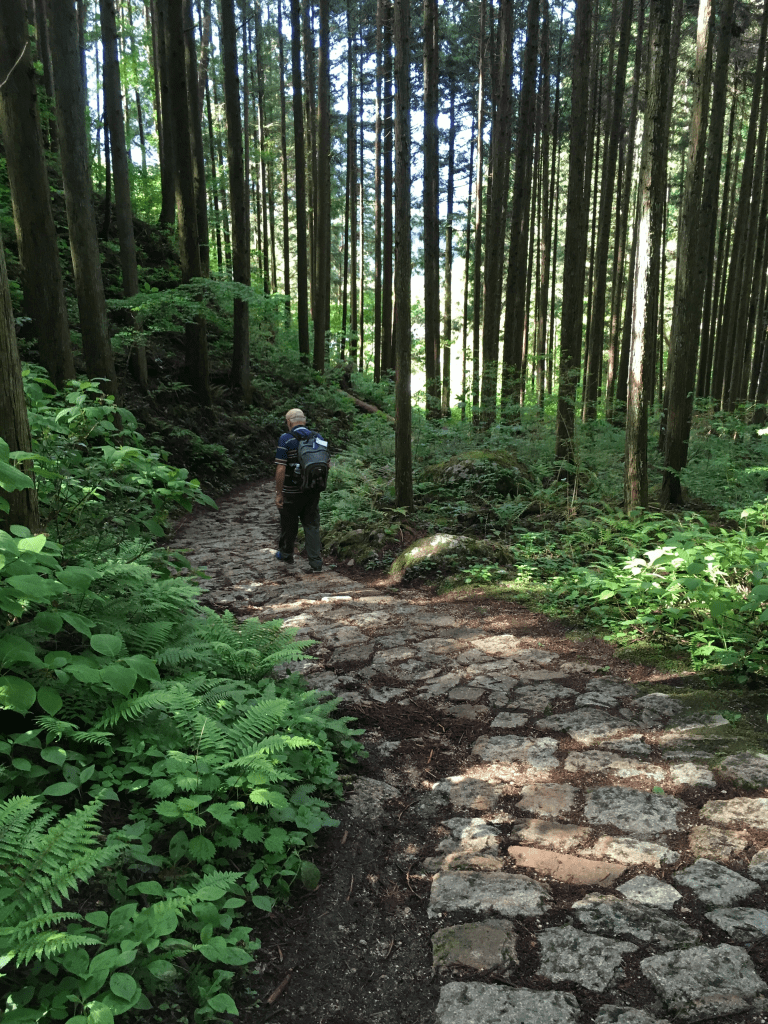
The trail and its villages were largely abandoned in the 19th Century but fortunately a campaign to remove all the modern buildings and restore those left from the Edo period began in the 1960s. Streets were repaved with original stone and period-correct food and shelter was once again available to walkers.

We felt a bit overwhelmed at the idea of finding our own way around Japan so utilised the services of “Inside Japan”. We looked at their suggested itineraries, picked out the parts that appealed to us and added a bit of our own (a visit to the Toyota factory for John). They booked the hotels, organised transport (trains and buses) and gave us a daily outline of where to go and when.
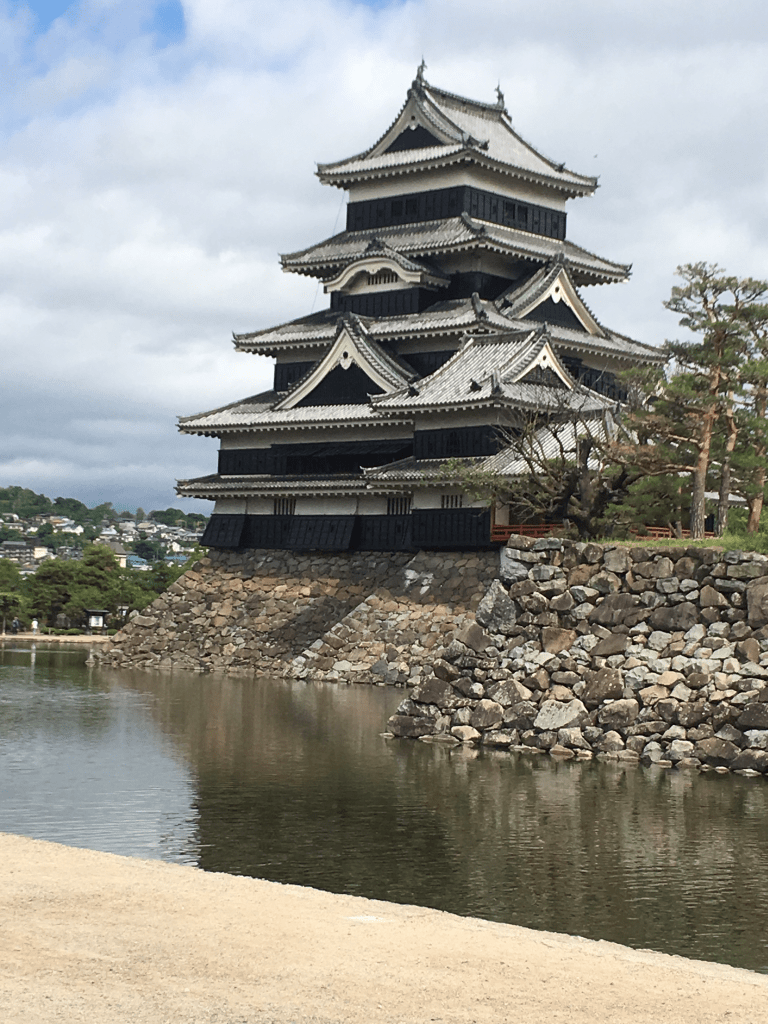
From Matsumoto we were to catch the train to Nagiso and then hop on a bus to Magobe. There was a brief period of time in the morning to see Matsumoto Castle. I left John at the hotel and promised to be back in time to catch the train. It was quite exhilarating to be on my own. I paid the entrance fee and climbed to the top of the castle, each floor accessed by steep steps until I breathlessly reached the top. Back in the grounds I posed with some Samurai warriors before finding my way back to the hotel. John was relieved to see me as it was time to head down to the railway station. It took one and a quarter hours to reach Nakatsugawa by train and then another 20 minutes by bus along a winding road to reach Magobe.
We walked uphill to the tourist information office and on through the ancient village to a vantage point overlooking the town. The trail starts in Magome at an altitude of 600 metres, rises up to 801 metres and then descends to 420 metres in Tsumago.
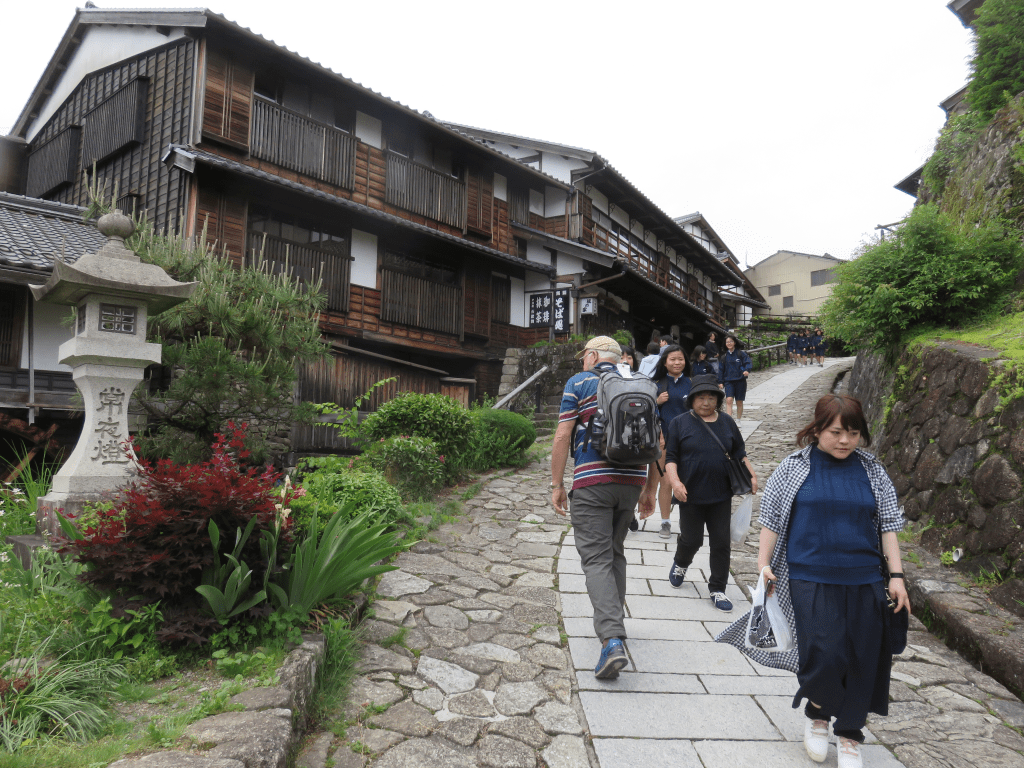
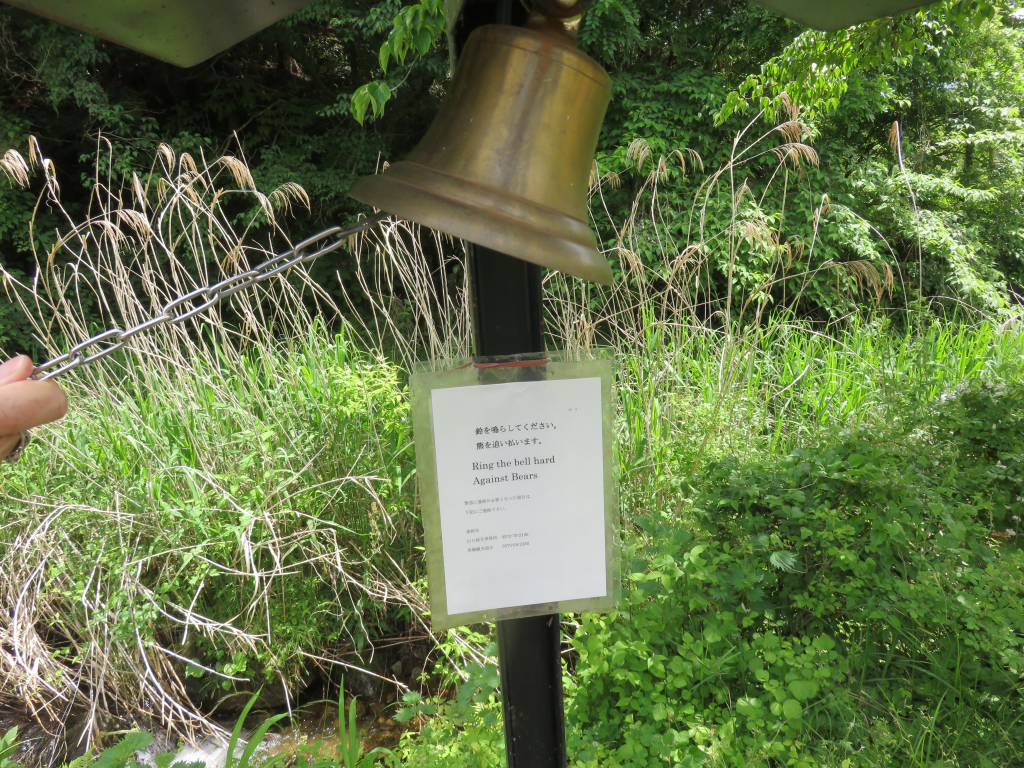
We headed off downhill again, skirting through a small wood to cross the road which appears regularly along the way. It is a very quiet road, but a reminder that a modern world exists outside of our ancient path. At the entrance to the wood is a static bear bell. Our information told us to give it a good yank and scare off the bears. We didn’t see any, but found a bell in each wooded area. I think the bears left the area long ago.
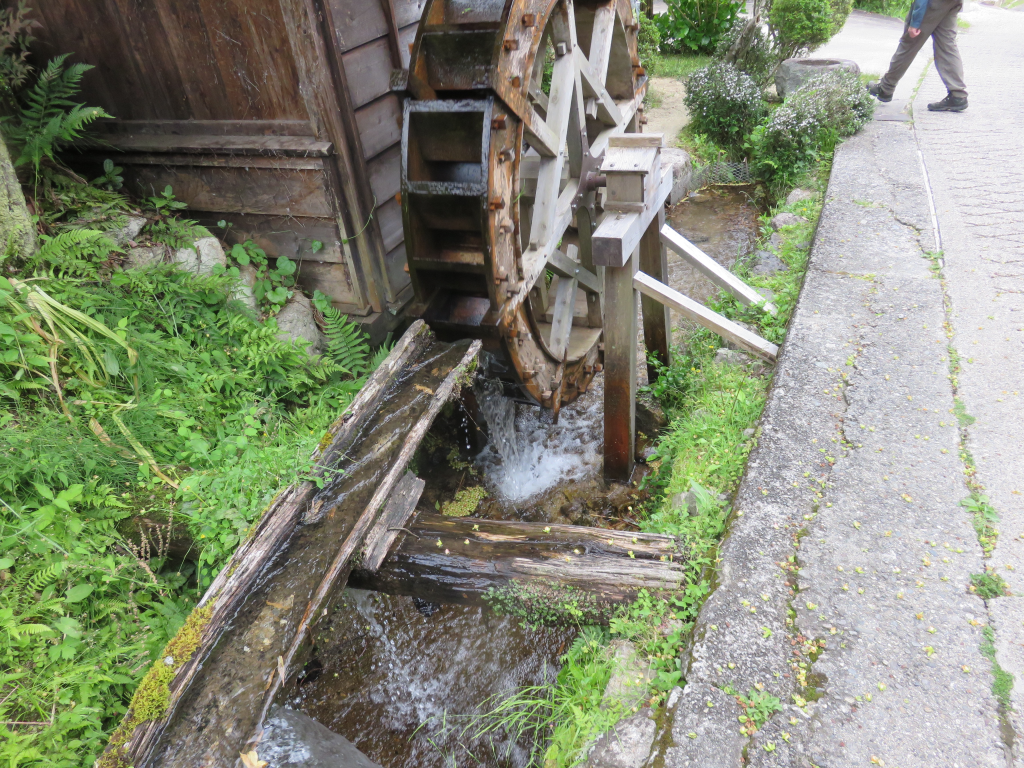
We walked past waterfalls, bamboo groves, terraced rice paddies and a working water wheel.
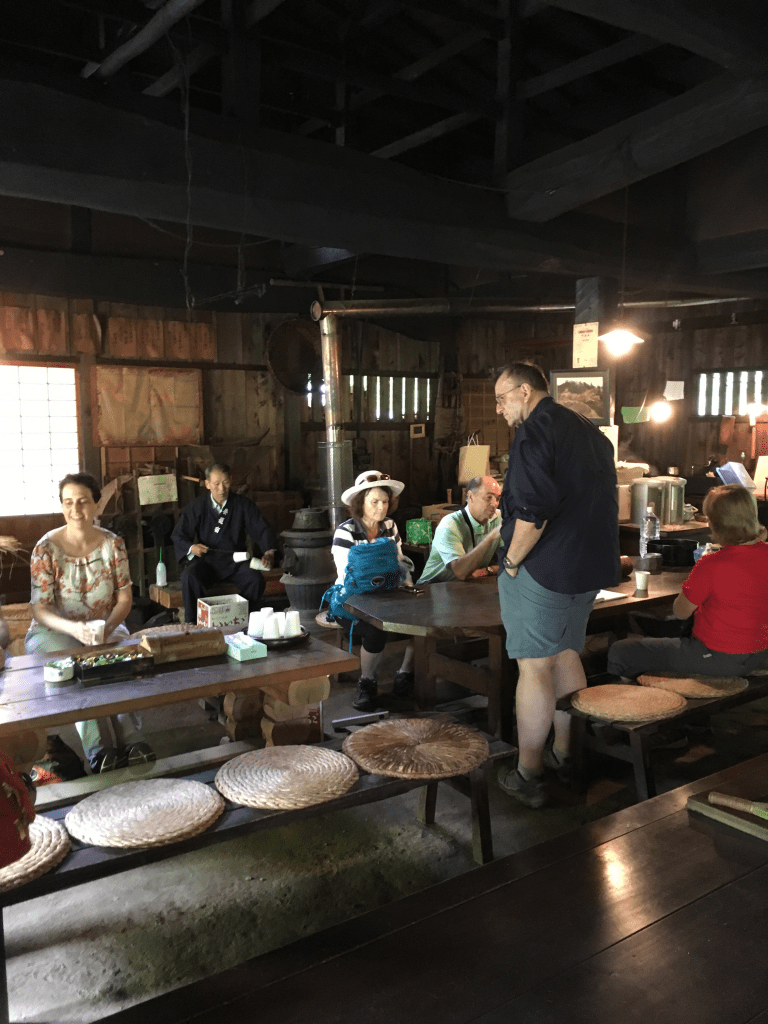
At around the halfway point there was a rest stop within a traditional-style tea house. Inside the old building is a traditional Japanese irori fire pit, and we had snacks and Japanese tea served by a local man in traditional costume.
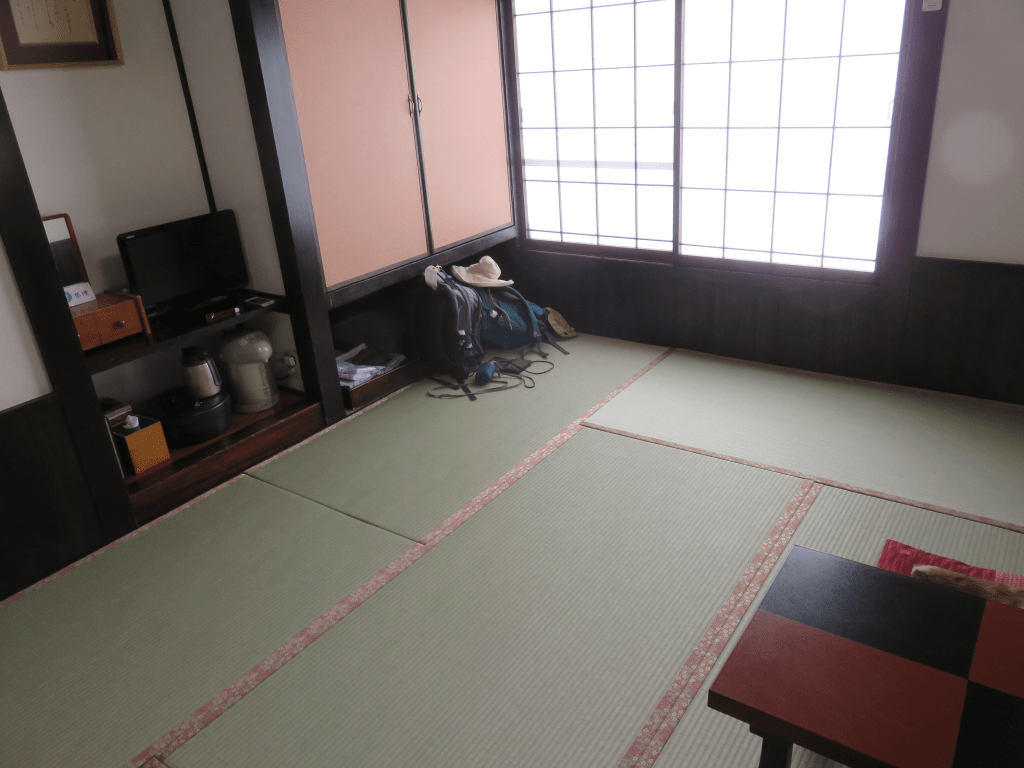
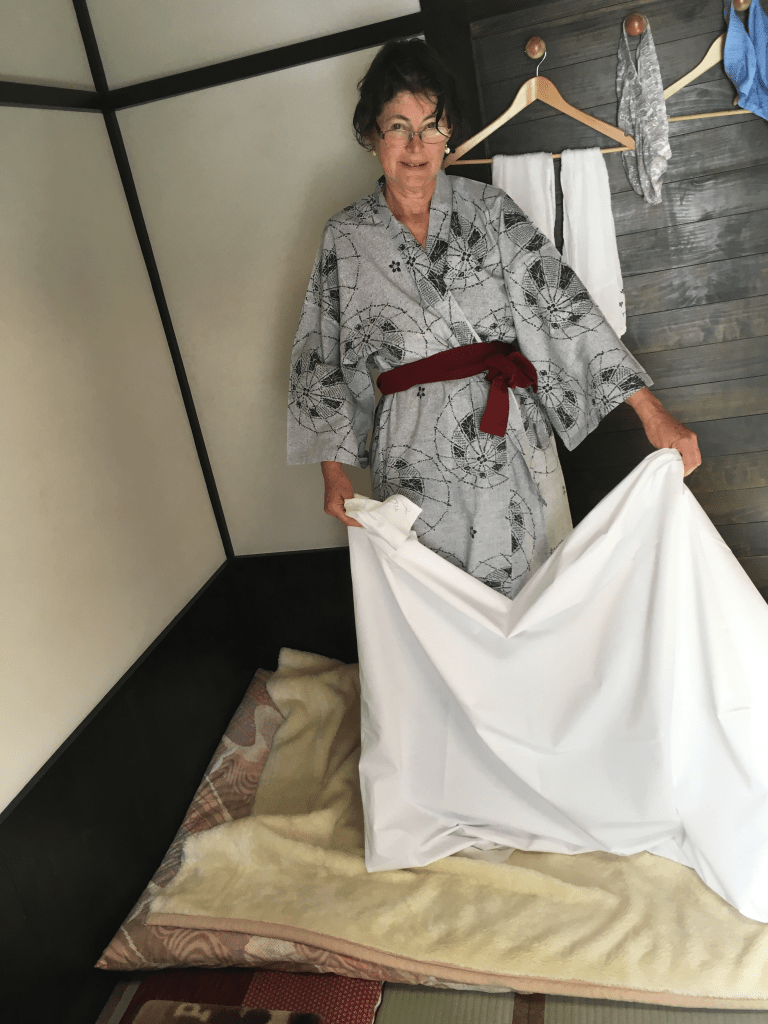
All up it was 7.7 kilometres to Tsumago, so we were pleased to arrive at our minshuku and view our room. It was almost totally bare but we were shown our beds and yukatas so we set about preparing for the evening. A minshuku differs from a ryokan in that it is a smaller family run operation. The rooms have basic amenities and beds often have to be prepared by the guests.
The correct way to wear a yukata is to place the left side against your body, then fold the right side over it. Then, take the belt (called an obi), wrap it around your waist one or two times and tie it in a bow knot. Finally, twist the obi around so the bow goes in the back. We removed the futons from the cupboard and laid them out.
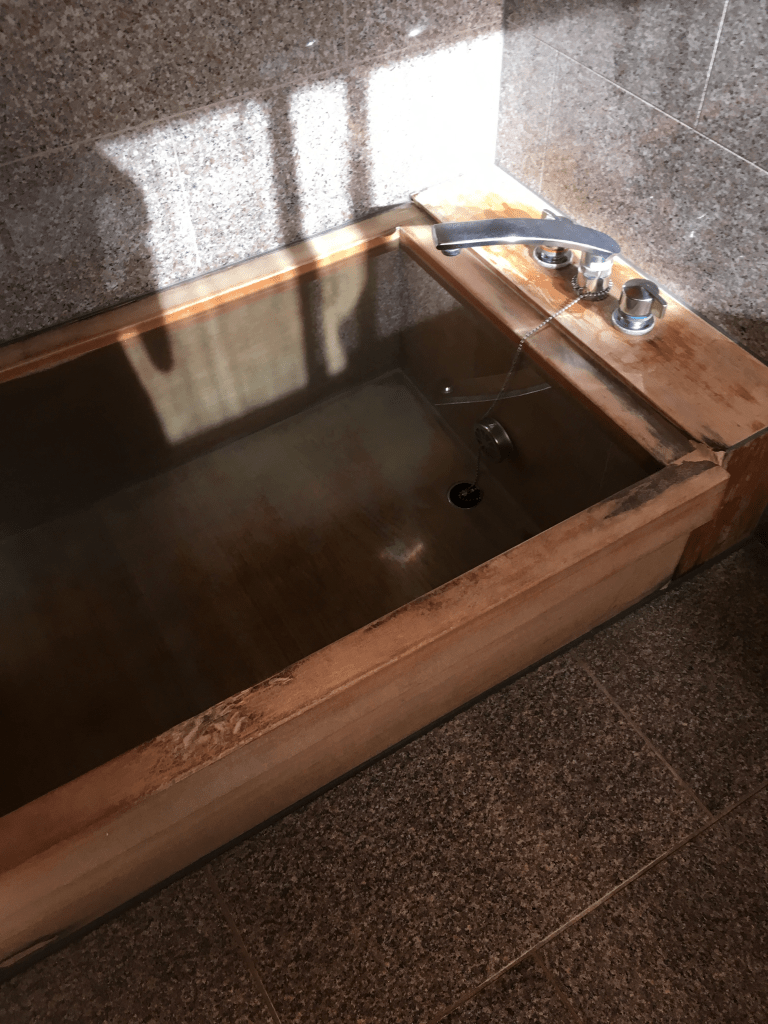
Once we were dressed we checked out our wooden bath. The local Hinoki cypress is turned into tubs for bathing and is fragrant when it heats up. Although it was at the end of the corridor we were told if we locked the door we would have it to ourselves. First we had to wash our bodies with a bucket of warm water and soap. When we were clean we stepped into the hot spring water and soothed away all the aches and pains resulting from our walk.
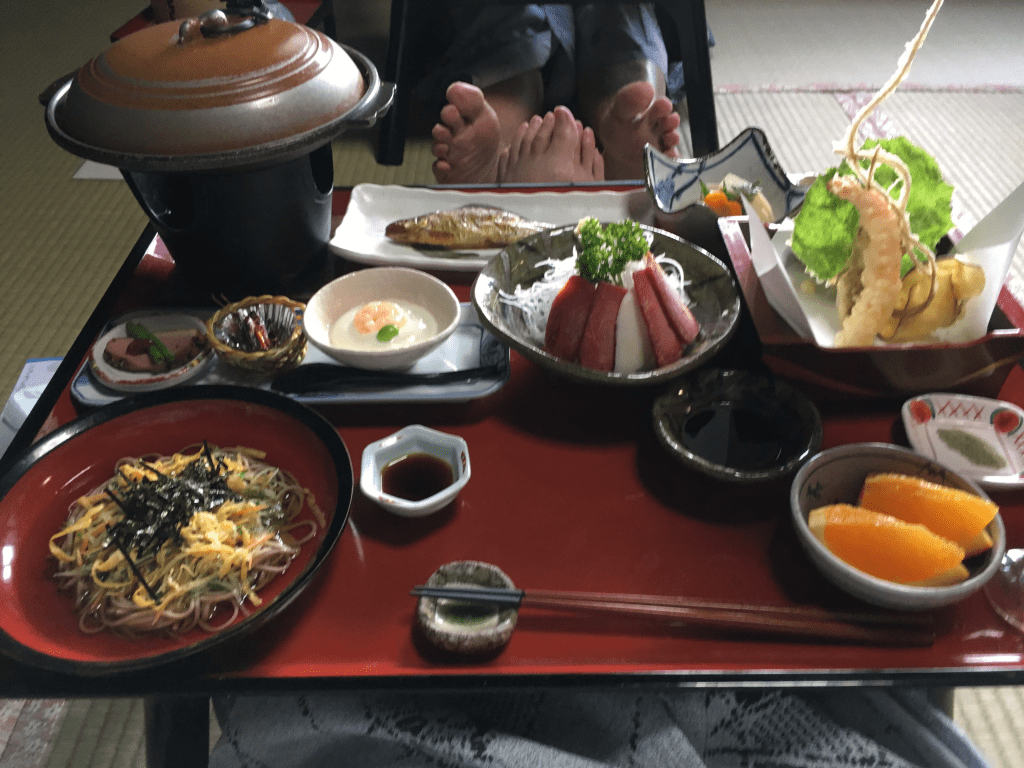
At 6 o’clock dinner was served in the dining room at low tables. Everything was delicious but most memorable were the grasshoppers and raw horse meat sashimi. I can tick that off my list and never need to eat either again.
We retired early after a strenuous and exciting day. The beds were comfortable but I did record in my diary that they were the hardest pillows I had ever experienced.
Breakfast was another hearty meal, farewells were made to the friendly family and we were on our way to Nagiso Station, another 3.5 kilometres.
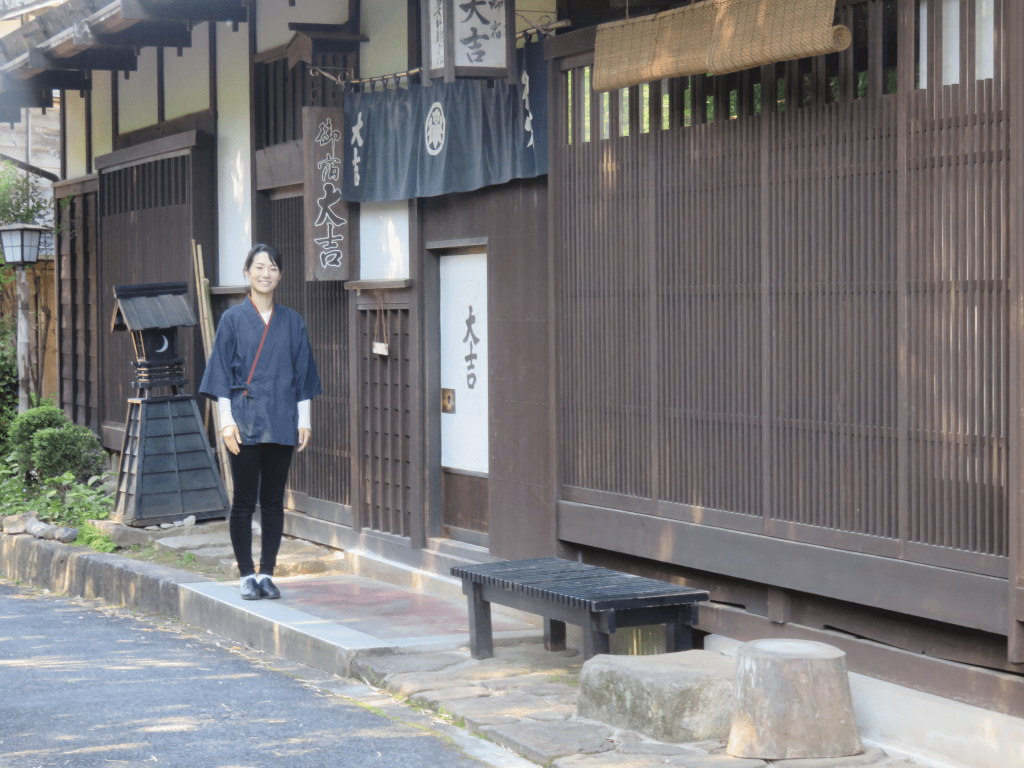
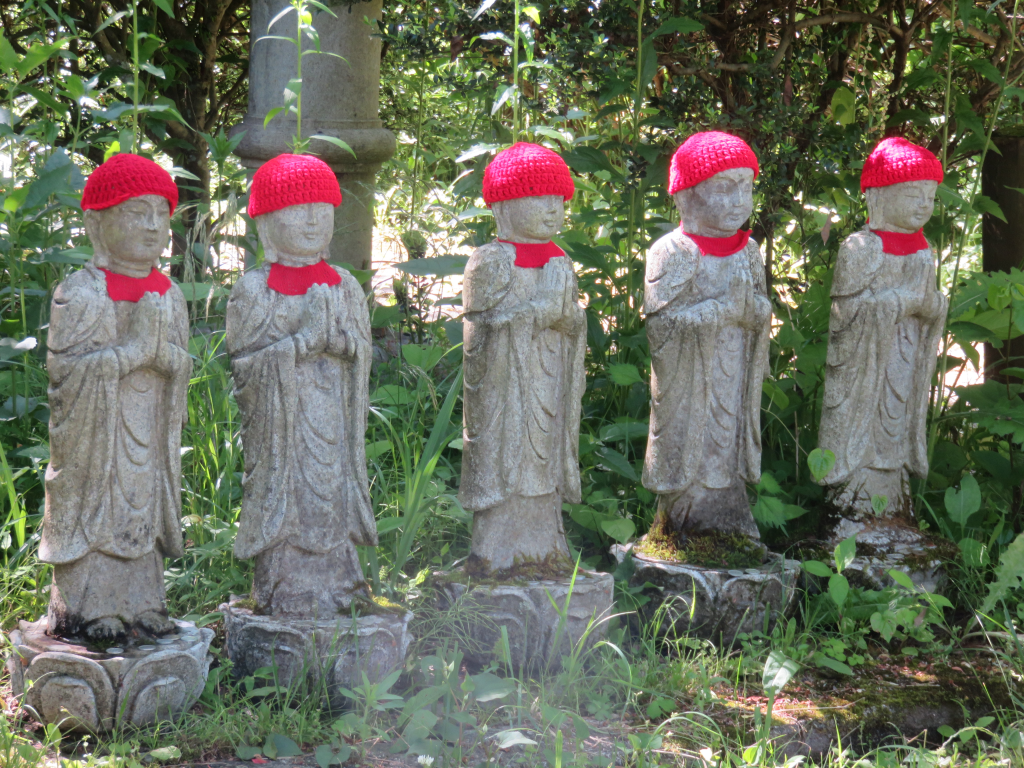
This section leads through more populated areas and does not feature any preserved pavements, but it still offers a pleasant, rural atmosphere and a shorter walk than the day before. We came across some intriguing statues with red knitted bonnets on their heads.
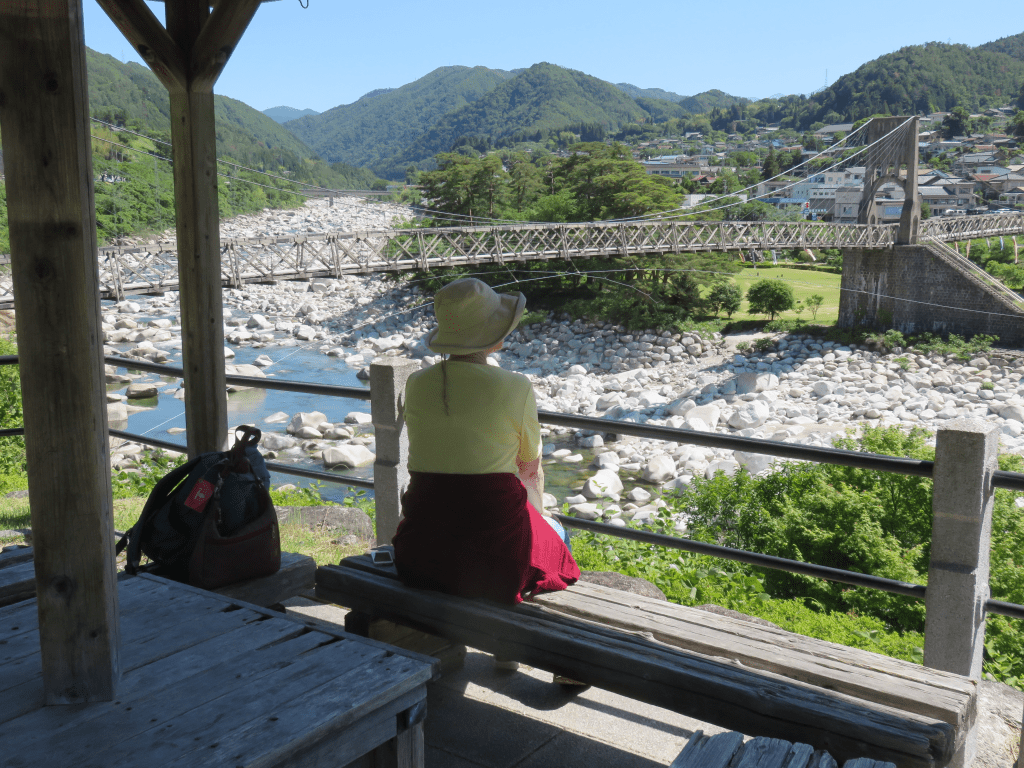
We had some time to fill before our train arrived so walked over the Momosuke Bridge, a wooden suspension bridge crossing the Kiso River. The bridge was built in 1922 to facilitate the construction of the nearby Yomikaki hydroelectric plant. The bridge is one of the longest of its kind in Japan.
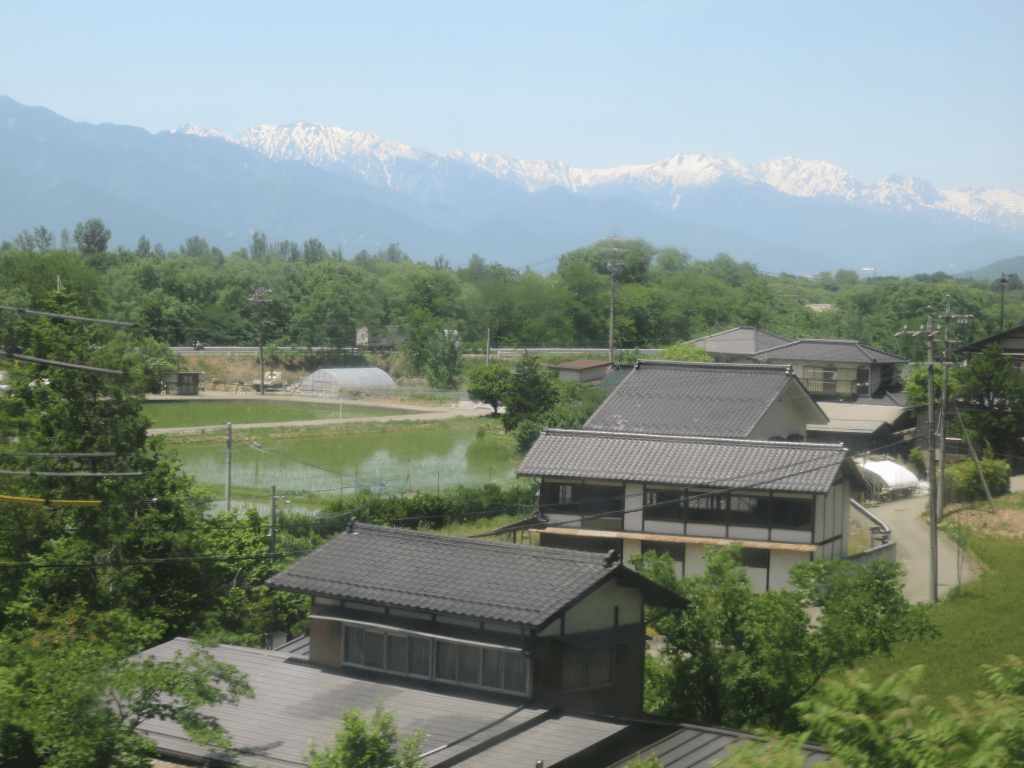
Our holiday was drawing to a close as our train raced towards Tokyo. Snow capped mountains could be seen from our window. One moment in time we were in ancient Japan and now we were speeding headlong to the modern capital.
 The Curry Apple Orchard