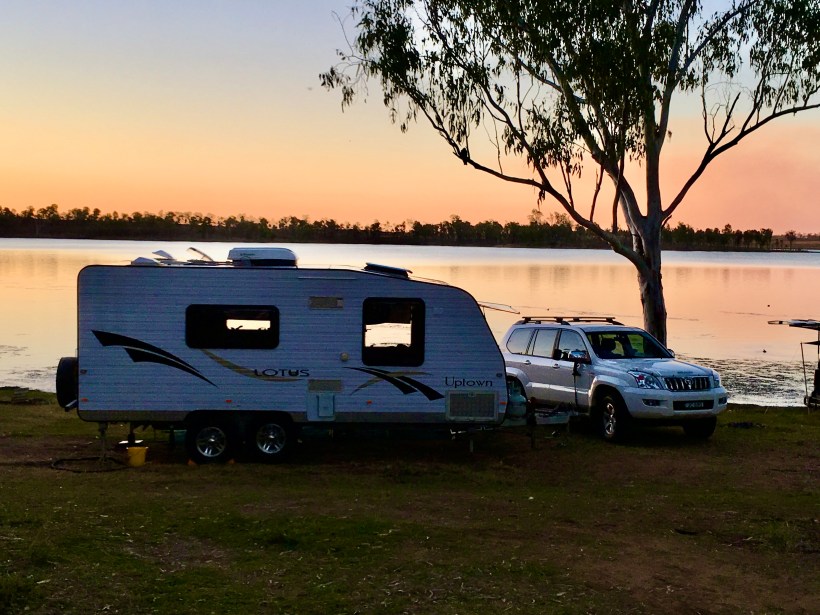

When I was still teaching and my husband was retired, we referred to ourselves as “the Grey Nomad and the Brown Worker”. A Grey Nomad is the term used to describe someone, usually with a caravan, camper or motorhome, who travels around Australia with the purpose of finding new places, meeting new people and generally leaving the worries and cares of home behind. As a teacher, I was limited to school holidays, generous as they are, but towards the end was able to take advantage of that wonderful invention, Long Service Leave.
It was only with my retirement, however, that we could contemplate spending months at a time away from home.
In the USA there is a term “Snow Birds” describing the habit of people in the cold north descending on Florida during the winter. We have something similar, with hordes of caravanners heading north from Victoria and NSW to the sunshine state of Queensland. They are sometimes known as “Mexicans” because they cross the border and stay for months at a time once they are warm enough. Some occupy the same spot in the same caravan park year after year, meeting up with friends and warming their aging bones in the sun.
Where we live in Wollongong is not cold compared to Britain, Northern Europe or North America but because of our in-between climate our older houses are not as well insulated or heated as our Northern Hemisphere counterparts. The attraction of warmer weather calls us north every winter with the proviso that we want to experience something new every time.
That might mean doing “The Big Lap”, driving 15,000 kilometres around Australia and stopping to experience all that is interesting along the way. This requires a bit of juggling to find the best time of the year for each part of the country. No-one in their right mind would head to the “Top End” in the summer, but a winter start means waiting until spring before heading south down the West Australian coast, not only to see the wildflowers but to avoid the wintry weather in Perth and crossing the Nullarbor. Since we experienced cold nights while free camping in the last part of our “Big Lap” we have installed a diesel heater. Now we can go anywhere at any time, regardless of the weather. Except where it’s too hot, of course!
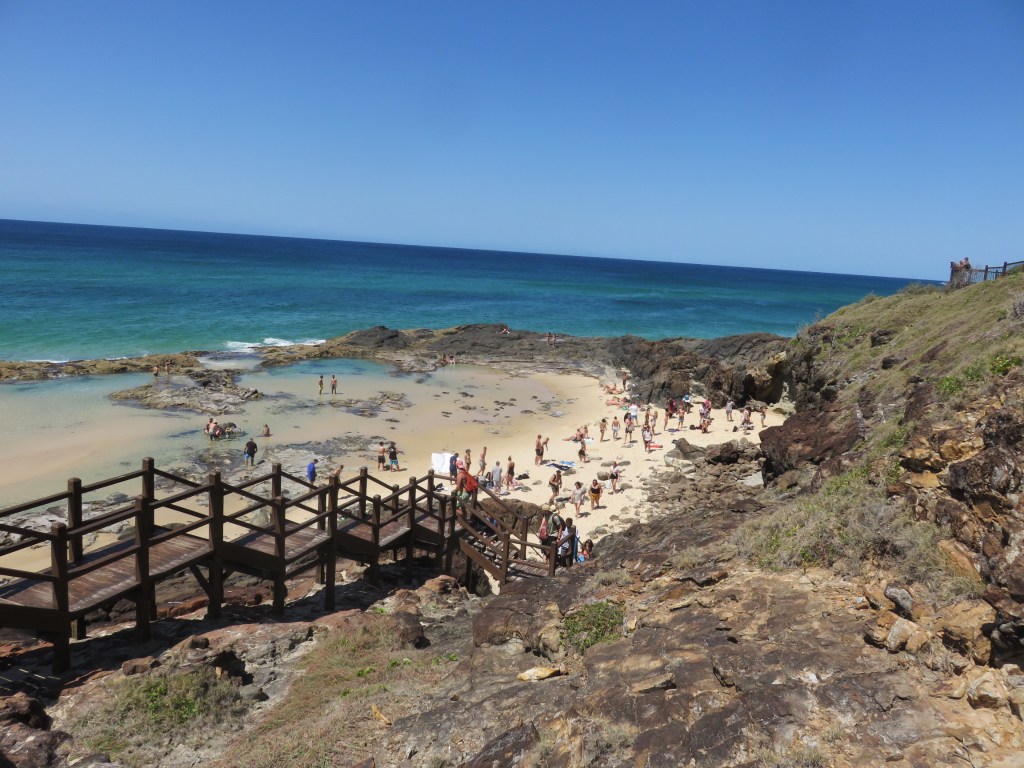
Even staying close to the Queensland Coast can be varied year by year. I’ll never forget staying in Hervey Bay and taking a day trip to K’gari (also known as Fraser Island). The four-wheel drive held six people and roared along the beaches, depositing us in the magical Champagne Pools and pristine perched lakes. Or there was the day trip we took last year to Lady Musgrave Island where we snorkelled with turtles and investigated the habitat of shearwaters and boobies. One year we stayed in Finch Hatton, driving into Eungella National Park and spotting a live platypus in the Broken River. It was the first time I had seen one in the wild as they are notoriously hard to find. Sometimes we have taken the kayak on the roof and explored the waterways at the Town of 1770 or paddled off Airlie Beach.

Turning in the other direction, to the south, we once crossed Bass Strait in the Spirit of Tasmania, boat and van snugly stowed below decks, to explore the small but fascinating island.
“Only a month!” cried fellow vanners. “You need two or three to see it properly!”
Alas, our first grandchild was expected within weeks and we weren’t missing out on that!

Travelling through the centre of Australia is the other extreme. You can drive for hours and see very little change in the landscape. To become excited at the sight of a service station or country pub shows how little there is to see. But then you come across something wonderful. It might be Uluru (Ayers Rock), Kata Tjuta, Kings Canyon or the West McDonnell Ranges. The majesty and beauty of these places has to be seen to be believed.

Travelling such long distances requires the right frame of mind. Some people find it boring. We tried listening to audio books but find them hard to hear with all the road noise. I usually plan the day and night stops, the coffee and lunch breaks, and John decides just how far he can drive. I have only driven with the van in tow a few times. Dealing with fast travelling road trains and bad roads, with over two tonnes on the back, is a job I gladly hand over to my husband. In the case of an emergency I would unhook the van and leave it for the insurance company to look after.
As we get older the driving becomes more tiring. Last year I planned a trip north with less than 200 kilometres a day of driving and stops of four or five days in each place. Turning around after a week in Townsville my husband broke all distance records as he sensed home was within reach. So much for not being able to handle long distances!

Some Grey Nomads sell their home to fund their van or motorhome, expecting to live on the road for the rest of their lives. This can be a problem if and when ill health arrives. I would want some land, or maybe a small unit as a base for medical treatment if needed. It could be making an income for you while travelling.
Owning a caravan is not necessarily the cheapest way to holiday. Apart from the purchase price there is maintenance of car and van, registration, insurance and annual service and inspections. As a van gets older there is usually something to repair, just as in a house. As for tyres, the car and van total 10! Caravan Park fees are going up, especially in desirable beachside locations in peak season. The price of petrol and diesel has gone up enormously since we drove all the way around the country in 2015. The number of vans on the road has increased since Covid kept people from flying overseas and consequently caravan parks are often booked out. Free camping where one is completely self-contained and self-sufficient can be aided by the used of an online app called WikiCamps Australia and the free campers bible Camps 12 (each new version has a number). This is an increasingly popular option but as people search for more out of the way places to camp they require off-road caravans, which in turn require sturdier suspension, weigh more and cost more. The towing vehicle needs to be upgraded to a larger, heavier more expensive vehicle.
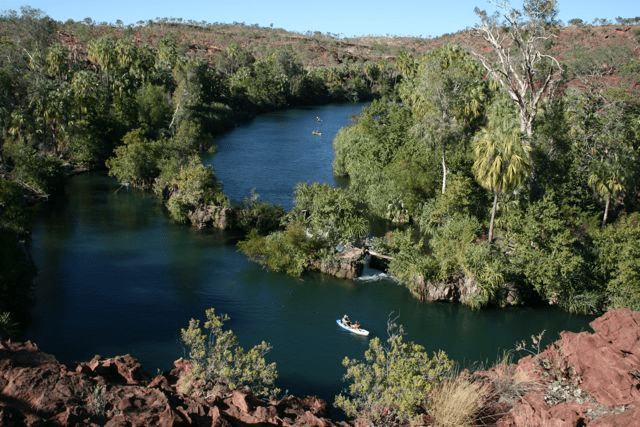
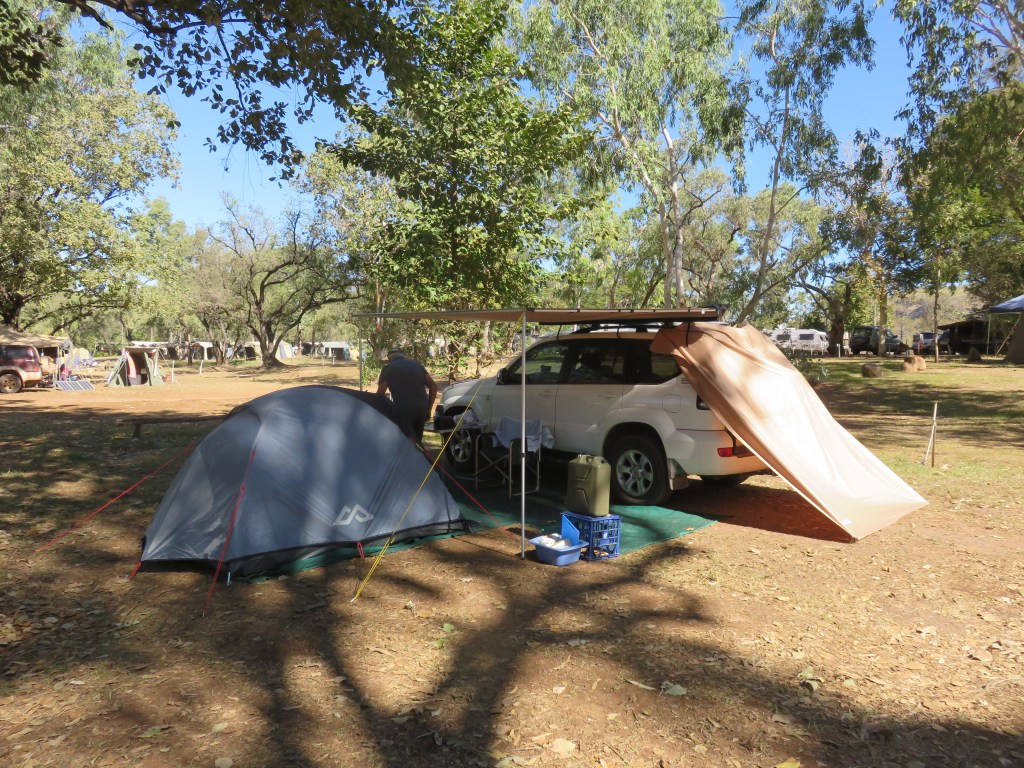
Or you could do what we did in the Kimberley, Western Australia. Leaving the van in Kununurra at a caravan park we took our camping fridge and a two man tent to explore some of the Gibb River Road and camp at El Questro Station. That was an experience!
Just writing about the nomad life makes me keen to work on our next trip. So far we have booked some van parks on the Queensland coast but then we will head inland, go to places where we’ve never been and who knows what we will find?
 The Curry Apple Orchard