
I may have given the impression we are always travelling, camping or boating. That is far from the truth as we spend a lot of time at home. I have always been interested in family history and being retired has given me time to pursue that hobby with renewed vigour.
Most Australians come from somewhere else a few generations back. Because the first British settlement in Sydney Cove was in 1788 it is fairly easy for people to find where they came from, especially with modern DNA technology to help .
As an only child with two grandmothers, I absorbed their stories of life in the outback and of the ancestors who came before them to Australia in the 19th Century. Both my parents were only children so there were no aunts, uncles or cousins to talk to. After my father died when I was 10, from a heart attack, it was just my mother and me, two grandmothers and a great uncle. I worshipped my mother as she turned my father’s failing business around and succeeded in a man’s world of steel and piping. To me she seemed invincible.
I did ask her how I came to be born fifteen years after she was married but she calmly told me she had used contraception until the time was right.
My parents had a difficult life with one failing business after another, so I accepted what she told me. In Mildura, where I was born, they had a successful business selling irrigation equipment to soldier settlers after WW2. My mother was happy there, she said, so that when I came along, she was in a position to enjoy having a child.
I was so involved in family history research that I based some of my A to Z’s on it. In 2017 I wrote “Fact or Fiction-Family Stories”, investigating all those tales I had been told, to see if they stood up to proper genealogical research. During that time I found out considerably more about my father’s paternal side of the family, hailing from Fermanagh in Ireland. All were involved in the railways and a shocking number of them died early from heart disease.

Late in 2017 my husband and I decided to do Ancestry DNA tests to help with our research. When John received a match to his cousin we marvelled at the accuracy of the test. When I received a very close match to an unknown person alarm bells rang. Funnily enough, I knew straight away that my father wasn’t my father.
Not that he had ever indicated I wasn’t his. In fact he spent a lot of time with me so that I missed a considerable amount of school travelling around the country as his “Shiralee”.
The person who matched as a possible cousin came from Mildura, the town where I was born. Her mother’s maiden name was familiar. I had a faded brown newspaper cutting from my deceased mother’s possessions. It was an obituary for someone with that name, written in 1952, the year after I was born.
At first I thought this man could not be my father. He would have been 60 when I was born. My mother was 33. You can imagine my brain has been very active ever since my discovery, vainly trying to piece together what happened. I wrote a whole A to Z based on my search in 2018. It is called “A is for Ancestry” and tells the whole story in detail. My “cousin” and I were very excited about our discovery, of course. She refused to believe that her grandfather could be my father as she wasn’t that much younger than I was. (At the time I was 66). Maybe it was his son or one of his younger brothers.
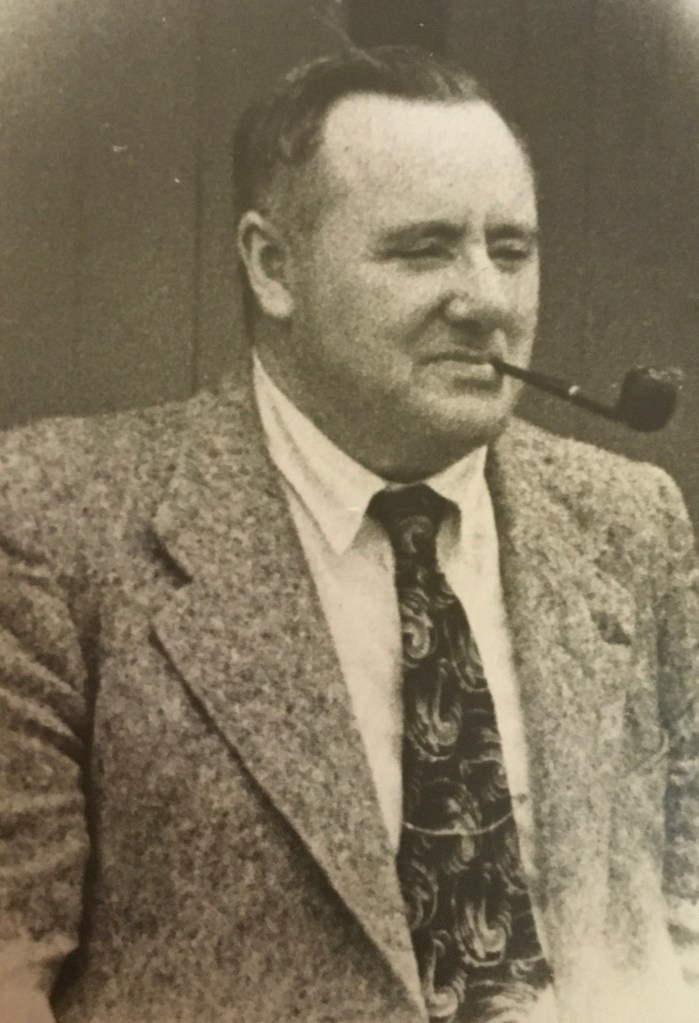
I was so keen to meet a living relative we drove a thousand kilometres to meet up at her place. Her cousin was a genetic scientist working in the United States so she sent all the information to him. He replied shortly after with the conclusion that her grandfather was without doubt my father! That made her my half-niece.
That also made her mother my half-sister. My newfound father Bert had married and had four children before I appeared. Now they were all in their nineties, except one who had died in her eighties. The family wanted to keep it a secret from the remaining sisters, so I had to meet them without telling them of our relationship.
I did meet my half-brother who was told of the discovery because his son was the genetic scientist in America. He remembered meeting my mother in 1952 after coming back from a trip to Europe. He even bounced me on his knee, not knowing our relationship! His father at that time was very sick and died shortly after. He could not tell me much about my BCF (Birth Certificate Father) that I grew up with, but I sensed he hadn’t liked him and he felt my mother was “under his thrall” which maybe means he bullied her or did not allow her to participate in decision making. I certainly saw plenty of evidence of that in my childhood.
I’ll never know what really happened. My mother always came across as a devoted, dutiful wife but she really blossomed after my father’s death. Free to make her own decisions at last, she built up a very successful business, retired and lived in relative comfort in a seaside suburb in Sydney.
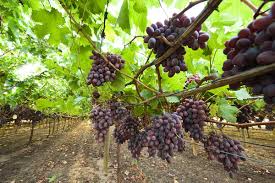
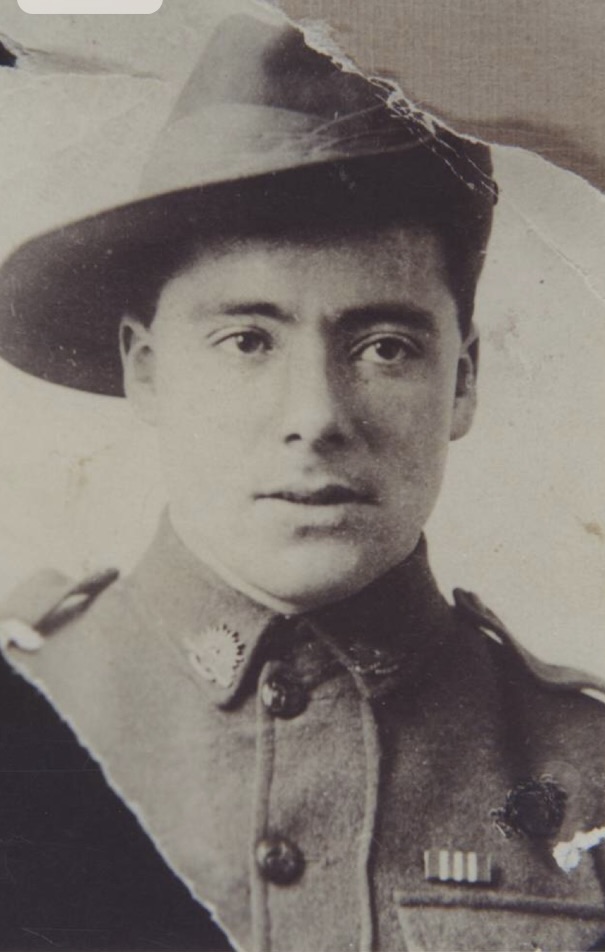
From what I have read, Bert was a very charismatic man. He had been lucky, surviving Gallipoli with a shoulder wound and returning from Europe after WW1 to take up land in Mildura under the Soldier Settlers Scheme. Finding that grape growing was never going to provide more than subsistence on a small block he organised a packing shed and devised marketing strategies for distribution of the grapes. This led to a career as a real estate agent and auctioneer and a stint as a recruiting officer for the Air Force in WW2. In the post-war years he suffered from a mystery illness and was semi-retired which is when he somehow became involved with my father in the irrigation equipment business venture.

This is where I just can’t decide what happened. I assume my father was unable to have children because after fifteen years of marriage nothing had happened. Note that my mother didn’t have any more children after I was born. Maybe the doctor organised a sperm donation. Maybe Bert and my mother had a relationship. Whatever happened, she did it to bring me into the world, and for that I will always be grateful.
It was a relief I no longer carried the genetic heart disease of my BCF and it seemed I had inherited some long-life genes if my sisters and brother were anything to go by. However, my biological father died at 61 and I’m still not sure of the whole story. The family said he died from cancer caused by a war wound in WW1. At the end of WW2 he had to retire early as he was diagnosed with cancer and given only a few years to live. His death certificate from 1952 says he died from a fibrosarcoma of the left axilla, diagnosed only 18 months earlier. His WW1 war wound was to the right upper arm and shrapnel had remained in his body. Maybe someone got the arms mixed up when transcribing the information.
Sadly my half-brother and two half-sisters have all passed on. One sister celebrated her 100th birthday last year. I was lucky to meet them all before it was too late. I also met a cousin (daughter of my new father’s sister) who was very much into family research and died two years ago. I keep in contact with my half nieces and nephews, some of whom are about my age. They are a very friendly bunch and have included me in a family reunion and the memorial service for my half-brother. I have been able to watch the other funerals online.
As for origins, I have English and Scottish heritage but have lost my Irish connection. On Bert’s side, his paternal grandparents came from London and Essex in England. His maternal grandparents came from London and Hampshire. They all emigrated to Victoria in the 1860s. On my mother’s side, her paternal grandparents came from Warwickshire and Sussex and on her maternal side they came from Norfolk, England and Aberdeen, Scotland. They too, all arrived in Victoria in the 1850s and 1860s.
So much for my origins. That I exist at all is a quirk of fate. That I grew up in a home full of love I am extremely thankful. I have indeed had a fortunate life and owe much of my happiness to my mother Elsa who devoted her life to my upbringing.
 The Curry Apple Orchard