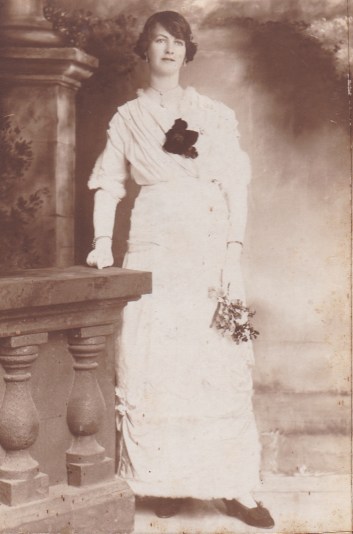
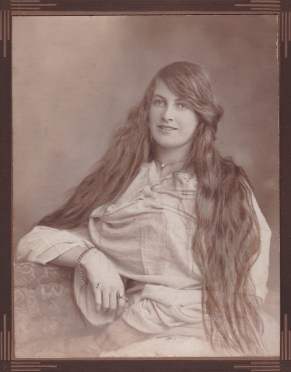
The bracelet is on Myrtle’s left hand. Here she is aged 18
When my grandmother Myrtle was 16 she was tall, graceful and attractive. She was asked by Myer, the big Melbourne Department Store, to be a model. Of course her father would not allow it but she was not short of admirers. One man adored her so much he asked for a lock of her long hair and had it made into a bracelet. On it is engraved “From S.E.B. 8-9-13”.
A crest at the front is engraved with MML for Myrtle May Lock. Six plaited strands of hair are held in place by engraved gold bands. It is an exquisite piece of jewellery.
The padded bracelet box is showing its age – 103 years old
When I was 16 my mother gave it to me, telling me that it was a family tradition to pass it on to the first born daughter of each generation when she turned 16. When my daughter turned 16 I gave it to her but she asked me to keep it for her as she was travelling and she probably wouldn’t wear it anyway as she wore silver, not gold. In ten years my granddaughter will be 16 so it will be time for the bracelet to move on to the next generation.
My workload was not onerous as a child but I was expected to make my bed, set the table correctly and help with the dishes. The animals had to be fed so the dogs were given dog biscuits and pollard mixed with hot water in the morning and Tuckerbox (canned dog food) in the afternoon. The hens were also given pollard and hot water in the morning and wheat in the afternoon. Feeding them was usually my job but I enjoyed the reception I received from the animals when their food arrived. I would let the dogs off their chains and they would scamper madly up and down the drive. As their job was to bark when a customer arrived they were chained to a long wire which gave them room to run up and down during the day.
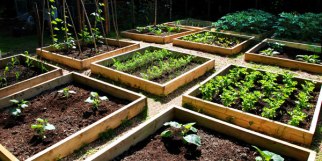
Our veggie garden had raised beds just like this one.
My father and mother had a large vegetable garden and I was given a plot to grow radishes as they matured quickly. I moved onto carrots and corn which took longer but were more useful. Often when I was in fantasyland making my own fun I would be dragged back to reality and told to do some work in the garden. Indoor activities were frowned upon during the day. Even reading books was an evening activitiy.
A Warm Ray identical to ours.
Collecting woodchips for the Warm Ray from the woodheap was another job and as I grew older splitting wood with the tomahawk was added to my chores. I learnt how to set the fire in the winter and clean the ash out of the tray. At night we filled hot water bottles. Each morning, now cold, they were emptied onto the garden.
Australian Geographic Magazine April 2016
On the other side of the road, across the Hume Highway, was a deep waterhole which had originally been a blue metal pit. Beside it was a water pump which channelled water under the highway to a dam on our side. I was keen to learn how to operate the pump on my own and found it fairly simple, with just the flick of a few levers. The scariest thing about it was when the metal door of the pump was opened a dozen or so long legged huntsman spiders ran around over the surface of the control board. It was necessary to wait patiently until they had calmed down after the intrusion and then gingerly set the controls and switches to set the pump in motion.
Huntsmen spiders were treated with respect as they ate the insect pests in the home and garden. They generally appeared inside during wet weather. My mother set a good example to her daughter by removing them with a broom and returning them to the outdoors. I’m pleased to see my daughter does this too. They are not venomous. They just look scary.
The day the Pantechnicon drove into the circular driveway at “The Waterhole” was bleak with heavy rain and grey skies . The tiny house was packed to its brown coved ceilings with furniture so my parents decided we would eat out. The nearest eating place was Bimbos, a truckie’s rest and food stop. My father said if truckies ate there it must be good.
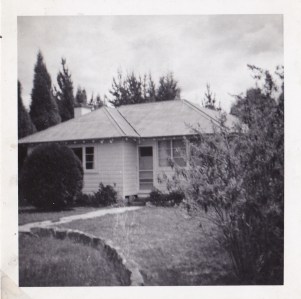
It wasn’t very grand but my mother was happy because it was hers.
We settled into our new home. My parents had the one bedroom and I was in the enclosed verandah at the front. The previous owners had planted avenues of trees. Crab apples lined the driveway, orchards of plum grew beside the house and apple, pear, peach and cherryplum trees were spread around the property. A grove of Scots pines grew to the south of the house and cypress pines to the west. Unfortunately the former gardener was now in the Kenmore Mental Asylum as we had bought our property from the “Master of Lunacy” whose job was to “undertake the general care, protection and management … of estates of all insane persons and patients in New South Wales” (The Lunacy Act of 1878 ).
The previous owner had left his legacy. Every wall and ceiling in the living area sported axe marks. My mother was so happy to have her own home at last that these small inconveniences didn’t worry her. However my grandmother (Kay) suggested that brown paper and flour paste would at least cover the unsightly holes.
My grandmother’s car
She arrived on a Sunday as she always did in her little green and black Renault Dauphine. The glue was mixed on the stove and the brown paper squares applied to the walls and ceiling. It was with great satisfaction that they sat down to a cup of tea in the late afternoon.
It wasn’t long before holes started appearing in the patches. Little footprints were dotted across the still wet paper. The rats had discovered the flour paste and were devouring it with great gusto. It was back to square one and the next problem was to get rid of the rats.
The incidence of mental instability in our small village of 100 people was disproportionately high. I suppose the availability of cheap housing and relative isolation made it attractive to people with problems of various sorts.
The 1950s was a worrying time as the Cold War intensified and the Hydrogen Bomb was tested in various parts of the world, including Australia.
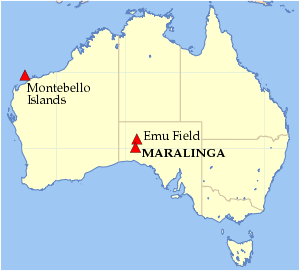
Testing at Maralinga
British Nuclear tests at Maralinga occurred between 1956 and 1963 in an isolated area 800 kilometres north-west of Adelaide. A total of seven nuclear tests were performed as well as many minor trials which littered the area with plutonium. While they were not, strictly speaking, H-Bombs, they were highly radioactive Atom Bombs.
Sites of British Nuclear Testing
The site was contaminated with radioactive materials and debate continued for many years over the safety of the site and the long-term health and social effects on the traditional Aboriginal owners of the land. The scientific and military personnel involved in the tests did not know at the time how the radiation they were exposed to as they watched the explosions would affect them. At the time all we knew was that Australia was “doing its bit” to help Britain in the fight against the Cold War.
My father took me to see the movie “On the Beach”. It was based on the book of the same name by Nevil Shute. It is a post-apocalyptic novel and film showing how a mixed group of people deal with the threat of impending death. The story begins one year after a nuclear war in the Northern Hemisphere which caused deadly radiation to spread relentlessly towards Australia. Surely the stuff of nightmares for an eight year old!
My father’s experience at an elite private school had taught him that there is a great social divide between rich and poor. Not wanting Australia to emulate the social class structure of Britain he saw Communism as a possible solution . He was also sure we would be invaded by the Russians and bought me a book on the Russian language to increase my chance of survival after the invasion. In hindsight it may have been better if he had read George Orwell’s “Animal Farm” where “All animals are equal, but some are more equal than others”.
Sir Robert Menzies, Australian Prime Minister 1939-41 and 1949 -1966
He didn’t go so far as to join the Communist Party but was an avid Labor supporter and spoke disparagingly of the Prime Minister Robert Menzies as“Pig Iron Bob”. This referred to an incident in 1938 when Port Kembla wharfies refused to load pig iron onto ships bound for Japan. They had been told, rather prophetically, that it would return to them in the form of bullets. When the Prime Minister came to Wollongong to try and defuse the situation he was heckled by an onlooker and referred to as “Pig Iron Bob”. The name stuck and was commonly used by his detractors.
In spite of or maybe because of his upbringing my father preferred to be his own master and initiated a number of largely unsuccessful business enterprises.
They left the vine-wreathed cottage and the mansion on the hill,
The houses in the busy streets where life is never still,
The pleasures of the city, and the friends they cherished best:
For love they faced the wilderness -the Women of the West.
from The Women of the West by George Essex Evans
My family was small but I had two wonderful grandmothers. They were very different but their lives in some ways were remarkably similar.
Myrtle May born in 1896
My mother’s mother was named Myrtle but she hated that name and called herself Kay. The eldest of four children she was clever but had to miss school to care for her sickly brother. The girls in the family were expected to learn a trade and be self supporting, so Myrtle chose dressmaking while her sister favoured millinery. At the age of 18 she married a much older man largely to get away from the demands of her family. When she was 21 she gave birth to my mother but had serious complications and was unable to have any more children. Eight years later she left her husband and her neat little home in Williamstown, Victoria, taking my mother to Forest Lodge in Sydney, where she set up a dressmaking business from home.
This was 1925 where respectable married women did not run away from their husbands. I wasn’t told why she left but I do know she was very unhappy. Sewing for the well to do in Sydney was demanding but paid well enough until The Great Depression. I am guessing this was the reason Kay put my mother in boarding school and went to work on a cattle station as a housekeeper.
Ella Maud born in 1875
My other grandmother was experiencing a similar trajectory in life. Widowed and with a six year old son, she had no skills apart from domestic duties, so accepted the job of housekeeper with Mr Munro, an eccentric, unmarried landowner in the Moree area of northern NSW. Any suggestion of an improper relationship between them was strictly denied by Ella, who preferred to be known as Maud but was called Ma. I do suspect that it was with Mr Munro’s help that my father was sent to boarding school at Newington College in Sydney.
Ella and Mr Munro spent most of the war years until 1945 on Norfolk Island. Some of Mr Munro’s land had been requisitioned by the Australian Government for war use so he decided the safest place to be was on an island 1700 kilometres out to sea.
My first memories of Mi-Me (as she was known to me) are of a very old lady with white hair, walking with the aid of crutches. She had fallen over and broken her hip in the steep rocky backyard of Mr Munro’s home in Springwood. She would have been about 70 by then. I was five and followed her slow progress as she walked, listening to her stories and poems. She knew all the bush ballads and particularly loved to quote, “The Women of the West”.
I am fortunate that she was a keen writer and photographer because I have her articles and photos from The Australian Woman’s Mirror, The Grazier’s Review and other publications.
Meanwhile Kay had not found a benefactor like Mr Munro. She told me stories of cooking huge cakes and meals for the shearers and life on far flung rural properties and may even have found happiness for a short while when she married a boundary rider. He was never mentioned when I was a child so I imagine that the marriage did not end well.
Google Instant Street View Image date 2014 This is the building, now a veterinary hospital, where Kay lived and had her dress shop
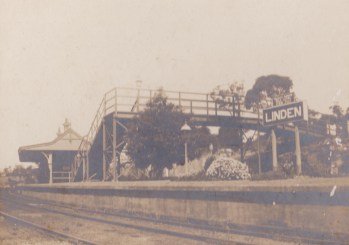
When I first remember Kay, or Me-Ma as I called her, she owned a dress shop in Mortdale called Kay Muir Frocks. Behind the shop was a large room with long tables for cutting patterns and sewing machines to make dresses. Above the shop was the apartment where she and her third husband George, lived. To me it was a palace as it was brand new and had the most wonderful bathroom imaginable. The tiles were a mottled green and the bath, shower recess, flush toilet and pedestal basin all matched the tiles. The kitchen was red and white with a large laminex table in the centre, the lounge room had a dining table which was never used, a television set, a pianola, a very uncomfortable green vinyl lounge and a magical display cabinet full of fascinating objects. My grandmother had frequent disagreements with her husband and to cheer herself up would buy some ornament to place in her cabinet. To me it was far more interesting than her TV set.
My grandmothers had hard lives but I am so proud of what they achieved. One was reserved, somewhat haughty and demanding. The other was outgoing, the life of the party and yet a disaster when it came to choosing men. Yet I felt they both loved me, their only grandchild. They showed me how important a grandparent can be to the life of a child and influenced the way I interact with my own grandchildren.
Although I lived in several houses in Mildura and Sydney, 35 Edgerton Street, Lidcombe is the first home I can remember. Situated on a large corner block it was a weatherboard house with an imposing brick verandah across the front.
Fridges like this one were death traps for some unfortunate children
The owner had divided it into two flats and another family lived in the other half. It was in a semi-industrial area with a clothing factory next door and normal suburban houses over the road. It suited my father well as he was gathering second hand steel and piping with a plan to sell fencing and gates to farmers and graziers. In the backyard was a cement swimming pool, sadly now empty but useful for riding my tricycle. My father was never one to pass by a bargain so the block was littered with finds that might bring a good return one day. It was a wonderful playground for small children in the neighbourhood. Our favourite game for a time was locking each other in a disused fridge and seeing how long we could bear to stay in the pitch dark without begging to be released. Fridges in those days had external handles and so could not be opened from the inside. It was only later when I heard of a child suffocating in a fridge where they had been left too long that I realised what a dangerous game we had been playing.
When I was five and a half I started school. Why I started in September I don’t know as it would have been usual to start at the end of January. In those days there were no orientation classes to prepare children for school. I arrived after the school holidays in the last term of the year while all the other children had been there for two terms. Auburn South Infants School seemed large and frightening. When I got into trouble I was made to eat my lunch with the boys. I never understood why I was in trouble. It often had something to do with Folk Dancing.
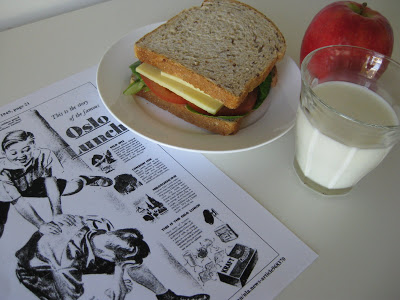
They must have run out of apples the day I had my Oslo Lunch
One day my mother decided I could order an Oslo Lunch from the school canteen. The Oslo Lunch was a Swedish invention which consisted of a cheese and salad sandwich on wholemeal bread with fruit to follow. It was found to considerably improve the health of children who ate it for six months. To get my lunch I had to walk across an enormously wide playground, a daunting expedition for a small child. I remember there was a whole tomato with the lunch which I could not bring myself to eat. Not knowing what to do with it I hid it under the seat. More trouble ensued and more lunches were spent sitting with the boys.
Living in Sydney in the 1950s was a time where the bread was delivered by horse and cart, the toilet was out the back and emptied by the dunny man, mumps and measles were rites of passage for children and immunisation was a terrifying experience as one waited in long lines outside schools or health centres for the dreaded needle. Visiting the dentist was also deeply traumatic as teeth were pulled without regard for the effect on subsequent spacing and alignment. My fear of the dentist began when aged about five I was asked to take a tablet before the extraction. I drank an entire bottle of orange drink and still the tablet would not go down. My mother had to hold me down screaming as the dentist pulled and pulled.
The stag heads made a big impression
My father was keen to move away from Sydney as he had recently been declared bankrupt and wanted a fresh start. One rainy, foggy day we travelled to the Southern Highlands to inspect a derelict guest house. The low, L-shaped building had stag’s heads on the walls and a dark, cavernous kitchen. In the overgrown garden was a maypole. A piano sat forlornly in an open sided outhouse. I was familiar with maypoles from my nursery rhyme books and could imagine what fun people must have had in days past. We didn’t buy this property but it wasn’t long before we were to leave Sydney forever.
The most exciting day of the year apart from Christmas was Empire Day. It was established to honour Queen Victoria after her death in 1901 and was celebrated throughout the British Empire on the 24th May.
Having a half day holiday was excitement enough but when we reached home we raced out to the paddock where the pile of wood, tyres and anything that would burn had been growing in size for weeks. It was often a community activity as there always seemed to be other people, adults and children, arriving with their boxes of crackers just before dark.
After the bonfire was lit and burning nicely our attention was drawn to the crackers. There were Jumping Jacks which had us all running from their irregular path, Catherine Wheels that had to be nailed to a post, Tom Thumbs which crackled like gunfire and Skyrockets standing in their bottles ready for the finale.
Flower Pots sent balls of colour into the frosty night sky and Golden Rains cascaded onto the ground. The wonder of this is that we were not just spectators. We had bought the crackers weeks before, choosing them carefully and storing them in a dry safe place. We lit them ourselves, supervised by our parents. As the stores of fireworks dwindled we put potatoes in the coals. Coated in hard black burnt skin, the insides, with a dab of butter, were soft and delicious. Potatoes have never tasted so good.
Next morning I would scour the paddocks to find where the rockets had fallen. When unwrapped they displayed Chinese writing which provided endless fascination as to their origin.
In 1958 Empire Day became Commonwealth Day. Still the Cracker Nights continued until 1986 when the sale of fireworks to unlicensed individuals was banned in NSW. There were good reasons for the decision although many derided the “nanny state”. The day after Cracker Night there would be newspaper articles about children who had lost a finger or an eye when playing about with the mini explosives. Letterboxes were blown up with penny bungers. Cats and dogs were terrified. There were even horrifying stories of children left in the back seat of cars setting fire to themselves with the lethal combination of a bag of fireworks and a cigarette lighter.
I will grant that watching the fireworks display over Sydney Harbour on New Years’ Eve is spectacular, but for me, nothing can rival the pure exhilaration of a backyard Cracker Night in the 1950s.
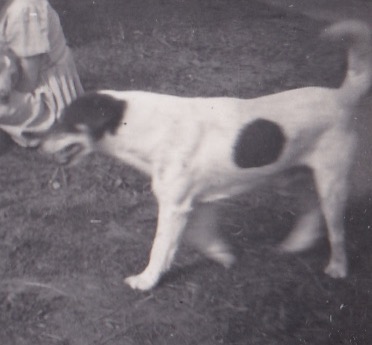
Spotty adopted us and travelled with us to the country
Before we moved to the country we lived in the Sydney suburb of Lidcombe. The first animal that came into our lives was Spotty, a portly fox terrier with the long wavy tail. One day he trotted into our front garden and just stayed. He moved with us to Yerrinbool and lived a long and happy life chasing rabbits, cornering them in pipes which lay in abundance on our property. My father would upend the pipe and next thing the rabbit would be skinned and cooking in a camp oven over a fire. The rabbits were always fed to the dogs as my mother couldn’t bear the smell of them cooking.
Trixie in a basket – the only photo I have of her
Trixie, the tortoiseshell cat, became my friend in a hotel in Cowra. As usual, I accompanied my father on one of his business trips and got to know Trixie so well after three days that I begged to take her home. The hotel owners were glad to be rid of a stray cat. My mother was not so pleased as Trixie was female and produced litters of kittens with monotonous regularity.
Other cats and dogs came and went, usually meeting with their deaths on the busy Hume Highway which ran past our property, but Trixie and Spotty were smart and outlived them all.
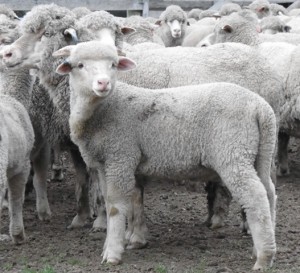
A merino lamb with a tail
My father brought home a newly born lamb he found on the highway. We fed it with an eye dropper and then a bottle with a teat attached. Paddy had a tail which was unusual for a sheep as they are usually docked to prevent flystrike. Every day I would move him out of his cage to a new piece of grass. He became very strong and would pull me over as soon as he was set free.
Sputnik, the first artificial world satellite launched by the Soviet Union in 1957
We had another sheep we called Sputnik because she would run round and round her post until the rope became too short for her to move.
These White Orpingtons are the same breed as our hens although they look a bit fluffier
When we moved to the country my father bought hens and ducks. We had to shut them away at night so the foxes wouldn’t get them. The hens were easy to look after and produced eggs which were fun to collect. Once they stopped laying they lost their heads on the chopping block and were transported to the laundry where they were dipped in the boiling hot water of the copper, plucked and cleaned. I was always intrigued and revolted by the varying colours of their intestines.
We had white Muscovy ducks like these
The ducks were harder to look after as they produced little ducklings which seemed to die at an alarming rate. We took them into the warm kitchen and kept them at the side of the stove in an attempt to keep them alive. The ducks finally disappeared, whether eaten by foxes or escaping from their compound, but the hens continued to produce eggs and obediently hopped on their perches.
Every summer, on Boxing Day, my mother and I would travel to the NSW south coast to spend a blissful two weeks in the shack at Coalcliff. Even getting there was an adventure. My grandmother’s car had to be left in a car park and all clothes, food and other necessities carried across a bridge over Stoney Creek, along a track and up some stone steps. The shack was one of hundreds of similar dwellings on a hillside overlooking the beach and sea. A simple reinforced canvas rectangle with one bedroom it was graced with louvred glass windows, striped awnings and a stone courtyard facing the beach. Mobiles of cut glass tinkled in the sea breeze and the constant roar of the surf made for a soothing background as I drifted off to sleep in the fold up bed. We thought our shack was the best and prettiest of all the cabins on the hillside. It even had its own toilet.
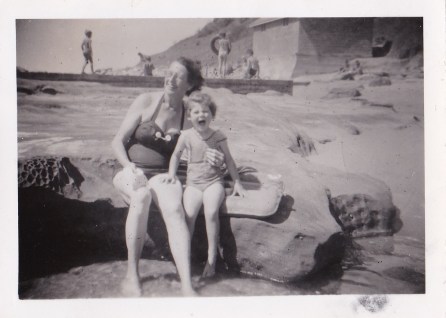
Having fun with my grandmother
I remembered being really difficult one day when my grandmother was looking after me. She had asked the teenage daughter of a friend to watch me on the beach but as soon as I saw her looking the other way I gave her the slip and ran back to the shack. Now that I have grandchildren of my own I can imagine the terror they felt when they scanned the beach and sea looking in vain for a little six year old girl. When they finally found me hiding under a bed in the shack I was given a belting followed by a glass of orange cordial.
My friend Pam on the left was badly sunburned
My parents never holidayed together because of the demands of their business but I do recall one occasion when my father came to Coalcliff in his truck. It was quite a surprise to me that he could swim and dive. He took my friend and me by the hands and jumped with us in the waves. An extra large wave took away his false teeth which were never seen again. The next day we drove up Macquarie Pass in the truck and my friend was returned to her family, her fair skin covered in sunburn.
A Christian group of men and women provided entertainment for the children holidaying at Coalcliff. We made huge words on the beach out of flowers, threaded popcorn in long strings in the hall and walked through the darkness with lanterns on poles over our shoulders on New Years’ Eve. I don’t remember making any friends and I detested the folk dancing in the hall and refused to take part.
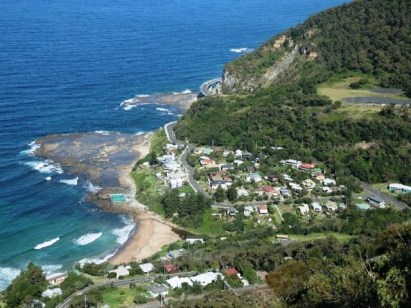
Coalcliff as it is today
I didn’t know at the time that the shack was my grandmother’s escape from her unhappy marriage. During the week she worked in her Frock Shop in Mortdale but whenever she could she left the poisonous atmosphere of home and visited her hideaway. Some years later, all the shacks were removed and now there is only the Surf Life Saving Club where once hundreds of holiday makers packed the hillside. On the southern side million dollar houses look out across the ocean, the rock platform and the ocean baths. The Seacliff Bridge winds around the edge of the cliffs where once rock falls closed the road and the Coalcliff Coke Works is just a rusting ruin.
Until I travelled the world I thought all beaches had yellow sand, rock platforms at each end, a lagoon, surf and ocean baths. To me this is still the definition of a beach..
Can you remember the first time you became aware that the black squiggles on pages represented the spoken word? I can still recall that lightbulb moment well before I started school but it was quite a process before I could read confidently myself.
A Book to ReadNSW Department of Education
Reading in the 1950s was taught using phonics and sight words and by the use of school readers and work books. There was a lot of repetition and very little variety in the stories as Wendy, Sue and David ran, jumped, skipped and played with Nip. By the end of second class we completed Travelling On and were ready for the School Magazine.
The School Magazine arrived each month to supply us with reading material and was always welcome.
The magazine shown here reflects the excitement of Australians anticipating the arrival of Queen Elizabeth. Her Majesty and Prince Philip were to enter Sydney Harbour in the Royal Yacht Britannia while the adoring public waved flags and sang “God Save the Queen”.
This is Judy who was killed by a falling tree while protecting her little brother.
I wasn’t a precocious early reader and can still recall at the age of seven struggling to read Seven Little Australians aloud to my grandmother, Ella. She would take over when I grew tired but would only read selected parts, such as the death of Judy, which reduced me to tears every time.
Despite our isolation in the country my father would occasionally take me to Sydney to visit Greenwood’s Second Hand Bookshop in Castlereagh Street. I was allowed to buy about half a dozen books which would last me until the next visit and be read many times. A Little Bush Maid and the subsequent Billabong books by Mary Grant Bruce were great favourites.
Heidi had a great life in the Alps eating bread and cheese and drinking goat’s milk.
What Katy Did, Heidi, Anne of Green Gables and Little Women were devoured. One of my early books was The Adventurous Four by Enid Blyton. Of all her Famous Five, Secret Seven and Malory Towers books, this one remained my favourite.
To think four children would be allowed to go to sea in a boat! No wonder they were shipwrecked.
Our one teacher school had a very small library. It was only a bookcase of five shelves but the Department of Education sent a new box of books once a month. The downside was they had to be returned on time and we were not allowed to take them home. Too bad if we were halfway through a book when it came time to pack up the box.
Comic Books were popular but because my father didn’t really approve of them he bought me Classics Illustrated. From them I became familiar with The Tale of Dorian Grey, Around the World in Eighty Days and The Man Who Laughs, to name a few.
Two little second hand books I adored were “Flower Fairies of the Autumn” and “Flower Fairies of the Wayside” by Cicely Mary Barker. The plants and weeds were English but where I lived in the Southern Highlands of NSW they were quite common. I matched the fairies with my friends but the one I picked for myself was the Blackberry Fairy. Not only did I love blackberries but I thought I looked a bit like her with my mop of dark, curly hair.