G for Grapes

grapes 2

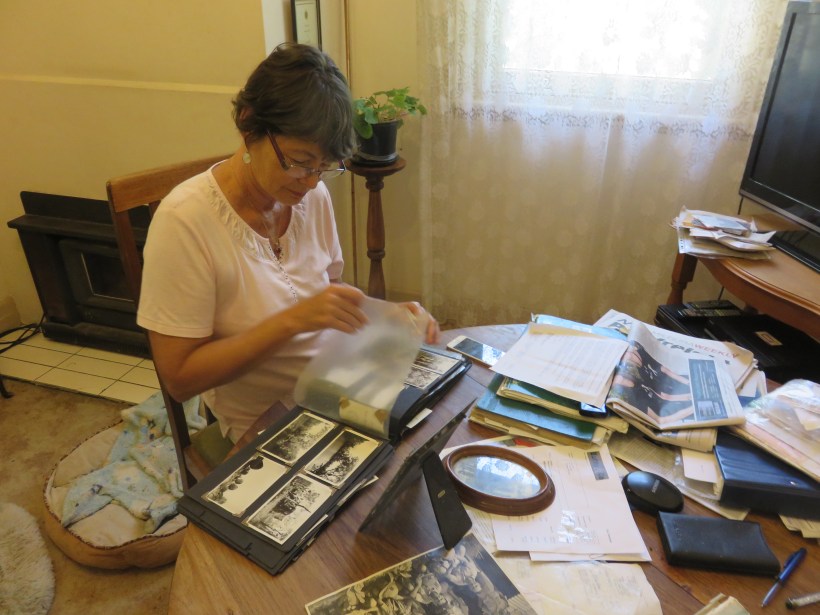
There was still one thing left to do.  Edith lives a few kilometres out of town so Denise and I visited her in the house she has lived most of her life.  Vineyards once surrounded the house but now the area has been subdivided into residential lots.  The inside probably hasn’t changed much in fifty years.  The walls were covered with family photos but most prized of all was Edward’s Diary of his experiences in WWI.  I was allowed to borrow it for one night only as copies are in short supply.

IMG_0661 2
I’m surrounded by memories that are not my own.

Edith played for us on the piano and then asked if I would like to play.  I must admit that although I  have had lessons on and off throughout my life I have never had the determination to keep practising and so I declined the offer hastily.  It seems this family is very musical.  Edward would play the violin with his daughter Edith accompanying him on the piano.  Edith asked hopefully if I also played the violin but I hadn’t inherited this trait from the family either.

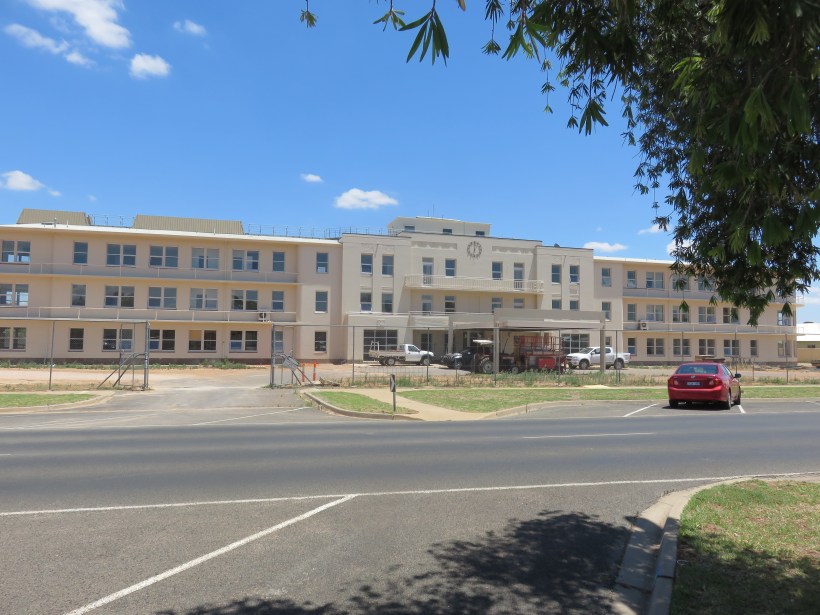
On our way back I had to stop and look at the Old Mildura Base Hospital where I was born.  It has been empty for a number of years but I was pleased to note that it is being redeveloped as 63 self contained apartments, keeping its Art Deco exterior intact.  I remember my mother being very proud of the hospital, her doctor and the town of Mildura.  The hospital was once surrounded by vineyards but urban development has crept up to it on all sides.

IMG_0679

Built in 1934 it heralded a new era of health care for the surrounding area.  A local told me its design was based on a paddle steamer but the Heritage Alliance Report says that “the continuous balconies and steel pipe railings evoked the ocean liner, a common association in the work of progressively oriented architects of the period.”

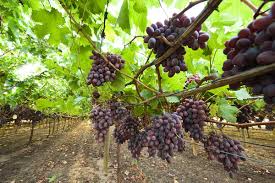
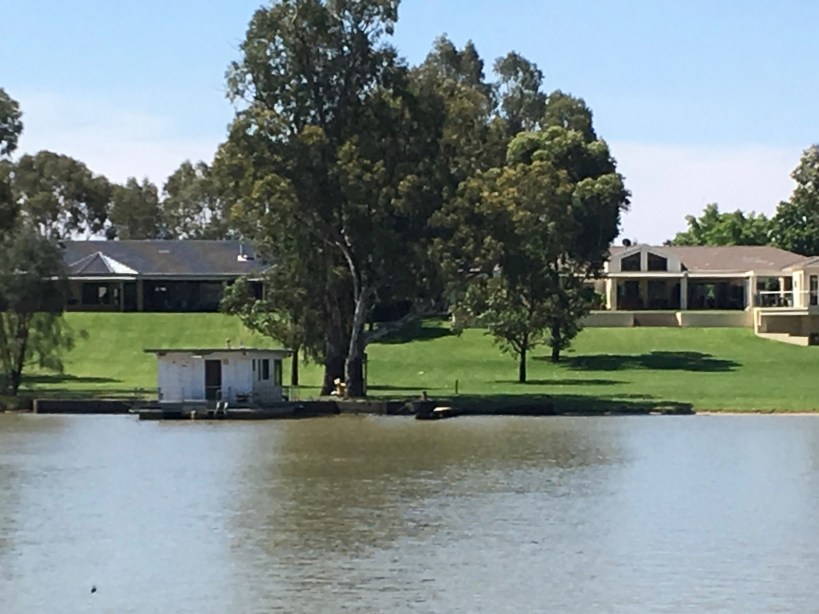
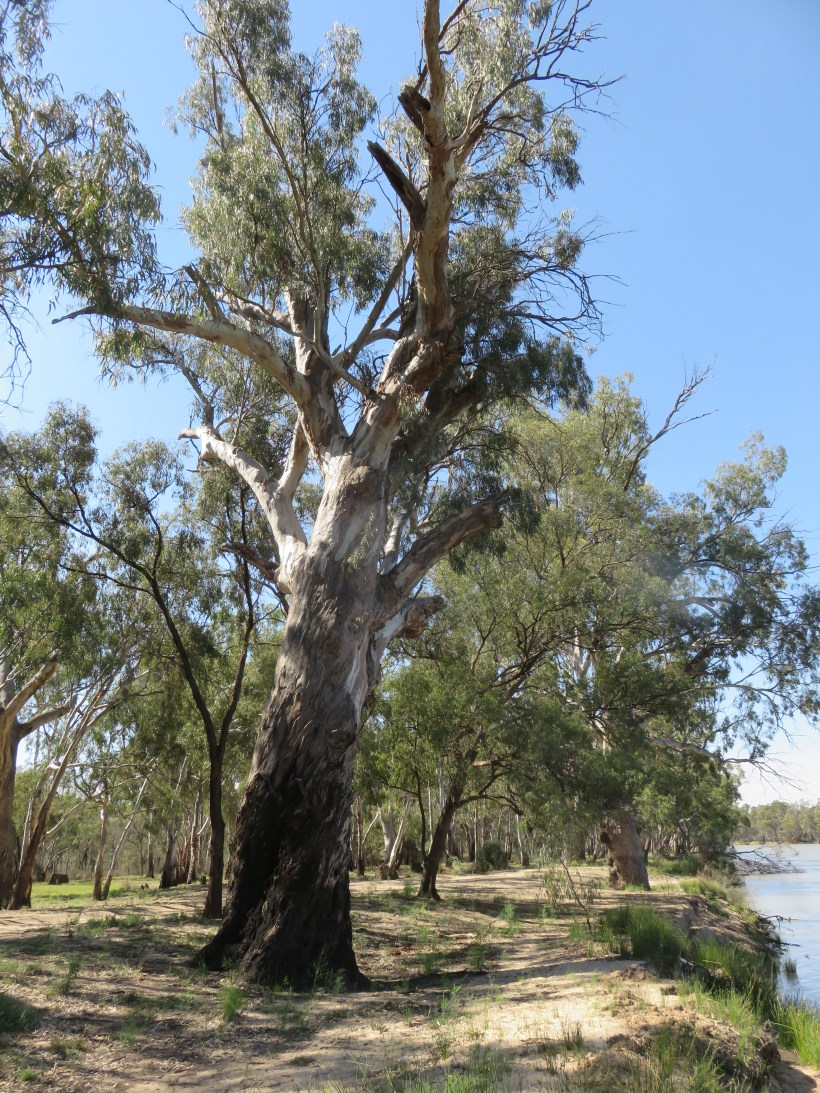
Denise begged us to stay one more day so she could show us around Mildura.  The locals are very proud of their town and rightly so.  I learnt how to tell the difference between grapes grown for wine, dried fruit and table by the type of trellis they grow on.  Denise drove us through rough tracks to a camping spot by the Murray River.  Prosperous houses could be seen on the NSW side but our river bank was blissfully peaceful and remote.

IMG_9115

  It was not a place to be caught in heavy rain as Denise could testify.  Her caravan was trapped in there for weeks until the muddy track dried sufficiently for them to tow it out.

IMG_0708

It was time to go home and sort out all the material I had on Ted and his early life. We said goodbye and headed the thousand kilometres east back to our home on the coast.

F for Finding my Father

The day after our arrival in Mildura I was to meet another relative.  He was Alice’s father and although he hadn’t had his DNA tested his father had and was the second closest match to me.  He couldn’t tell me much more than I knew but was very pleasant and interested to hear all about our discoveries.

After he left, Denise and I spent the afternoon examining all the descendants of Thomas Turner *, Ted’s father.  Whoever my father was I was undoubtedly descended from Thomas.  We both felt we need to find out more about Ted’s two brothers as Hugh*, Ted’s son,  was ruled out.  He had been in England and Europe at the time of my conception.

It was next morning when I heard excited voices outside and a knock on our caravan door.  When I opened it Denise said, “Hello, Aunty”.  She had just discovered that Ted, her grandfather, was almost certainly my biological father.

Now let me go back to how this information was obtained.  Ted had a son called Hugh, who is still alive and in his 90s.  Hugh had a son who became a scientist and is now working in the United States.  His specialty is DNA although he is applying his research to chickens rather than humans.  When Denise rang him and told him of the discovery of a new family member he asked for all my matches and corresponding centimorgans.  He is absolutely sure that the only possible candidate for my biological father is his grandfather Ted Turner.

When I received the news I read the email several times over.  Denise’s cousin insisted that it was not necessary or even wise to test any more people.  There could only be one result.  Denise talked to her sister on the phone and decided not to tell her mother as it might be too much of a shock.  Her mother, Edith* is 96, lives on her own, drives a car and plays the piano!  It is quite surreal to think we might have the same father.

My new half sister, Edith, arrived in time for morning coffee. She thinks I am descended from one of Ted’s brothers.  That is what we all thought until that morning.  Denise planned to take me to visit Jane* that afternoon.  Jane is Denise’s aunt and is the daughter of one of Ted’s sisters.  That makes her my cousin.

IMG_0605
John relaxing in Denise’s garden

Jane’s house was cool and inviting after the heat outside.  A computer sat on a table in the lounge room surrounded by stacks of folders.  She served tea (with lemon for me), asparagus rolls and home made vanilla slice.  As she talked I took photos of numerous birth, death and marriage certificates which will hopefully make sense when I study them properly.

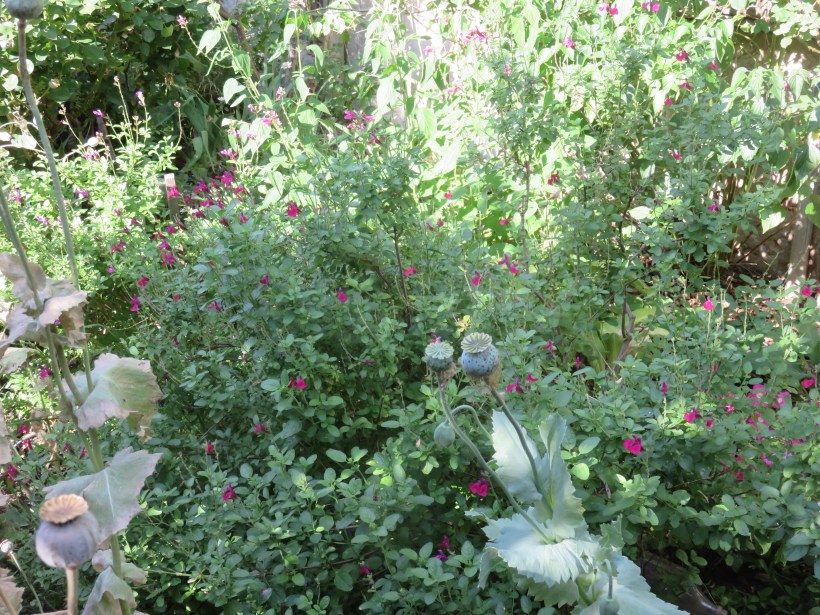
Edith was looking tired as we made our way out through the masses of tall plants lining the pathway.  The gardens in Mildura amaze me.  In the middle of a desert an abundance of English and European plants are kept alive by water from the Murray.

IMG_0613

Denise drove us out to Red Cliffs to look at the house where Thomas and his wife had lived.  It now stands empty but Edith recalled happy times staying there with her grandparents whenever her mother was having a baby.

IMG_0622

Next stop was the cemetery.  First we found the graves of Thomas and his wife.  Later we came upon the war grave of Edward (Ted) Turner.  

You might be wondering if I felt a connection to my new cousins or saw a family resemblance to any of them.  Apart from the fact that apparently Ted had brown hair and brown eyes like my own there is nothing about Ted Turner or his descendents that appears in any way similar to me or my children.  When you consider the dilution of DNA from other family members that is not surprising.  I did find however that they were all very friendly and welcoming.  I had reconnected with my birthplace and developed a new interest in its history and the life of Ted Turner.

* Not their real names.

E for Eleutheromania

Definition: An intense and irresistible desire for freedom.

That is a good reason to own a caravan.  Maybe we are not manic as in some definitions but it is a lovely word, isn’t it? We can pack up and go wherever we like whenever we like (except life does keep getting in the way, even when you are retired).

By the time we had driven right around Australia I decided I was OK with what had happened.  We had had some uplifting experiences in more ways than one. Flying  to the Horizontal Waterfalls from Derby we visited what David Attenborough called “One of the greatest wonders of the natural world”.

IMG_9301
Horizontal Waterfalls


Walking alongside the fresh water crocodiles in Wyndjana Gorge and into the dark caves at Tunnel Creek in the Kimberley we relived the agony of Jandamarra, a Bunuba man, torn between two worlds.

We travelled back in time to 1629 as we flew out to the Abrolhos Islands and imagined the wreck of the Batavia and the massacre of many of its crew and passengers by the wicked Jeronimus Cornelisz.

IMG_9884
Abrolhos Islands

The new DNA discovery actually made life a bit more interesting.  There were puzzles to solve and new family to meet.  Denise wasn’t home when we drove through Mildura.  She was in her caravan enjoying the  warmer weather in Queensland.  My husband was keen to get to our home to check on the garden and the house.  From Ceduna onwards we were travelling through familiar territory, so arrived home after three days of steady driving, averaging 700 kilometres a day.

It was two months later that with van in tow we set off once more for Mildura.  First we had to visit cousin Don who lives in Kyabram, Victoria, not far from the Murray River.  Don is not really my cousin.  Rather he is my mother’s cousin and I knew about him long before joining Ancestry!  His father was my grandmother’s brother and he is one of the few people I have been able to claim as a relative since my mother and grandmother died.  Don lives with his wife in a large house on a large block a long way from anywhere (from my perspective).  He has collected gramophones  and phonographs as well as musical instruments over the years and houses them in a large garage.  This time we didn’t look at his collection but had tea and cake with him and his wife reminiscing about our previous visit ten years ago and our common ancestry.  That was an amazing experience for me because when you have no other relatives, being able to talk about your common family history is a bonus.

We broached the topic of my parentage but he was unable to offer any clues.  He didn’t really get to know my mother until after my father died.  His attitude was to proceed cautiously as he was worried my visit to Mildura might achieve very little.

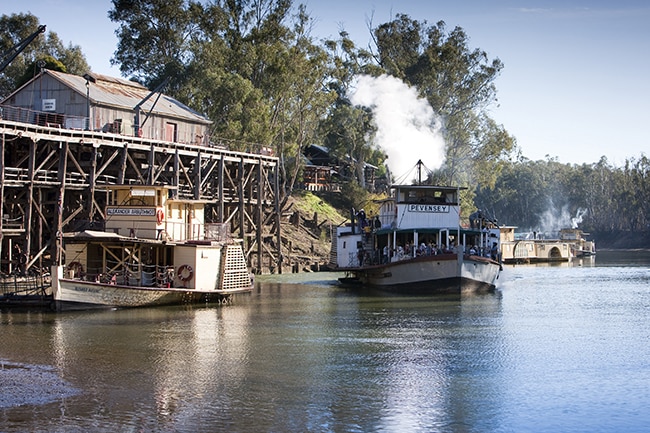
We bid Don and his wife farewell and drove the short distance to the Echuca Rotary Steam Park.  Camping here is free apart from a small donation for water and dump point.  It is an old river port complete with paddle steamers plying the Murray and a street of heritage buildings.

TWR-Getaway-Echuca-10

ECHUCA WHARF. Photo: Robert Blackburn

Meandering slowly along the Murray, we stayed at free camps along the river bank, until Mildura appeared on the horizon. Denise had invited us to park our van in her front yard.  She may be my cousin but could we really just roll up to a complete stranger and camp on her property?  Diplomatically she suggested a caravan park but still insisted we stay at her place.

John made the decision and soon we were carefully squeezing through her front gate and onto the circular drive.  We all embraced a little nervously, set up the van and reported to the back garden for drinks.  That night we had a barbecue dinner and did a lot of talking.

D for Dinosaurs

When I sent the first message to Denise, my husband and I were travelling around Australia in our caravan.  This is colloquially known as doing the “Big Lap”.  There was plenty of time for thinking as the road unrolled in front of us.  We stopped at Kidman’s Camp just out of Bourke, then drove into Queensland where we visited the Qantas Museum in Longreach.  Crawling all over old planes and reading the history of aviation in the remote outback is a great way to appreciate modern technology.  You can see our van parked in the distance behind the 747.


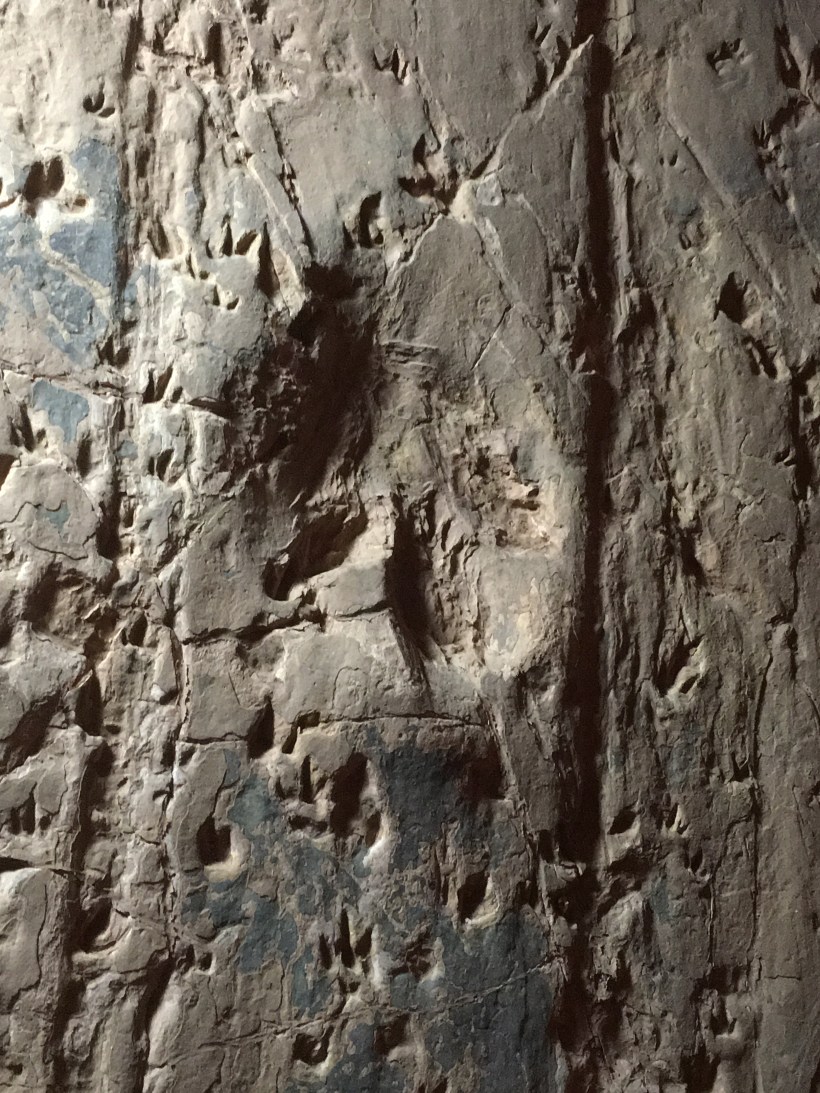
We visited the Dinosaur Stampede National Monument at Lark Quarry where a herd of 150 small two-legged dinosaurs was ambushed by a large theropod, 95 million years ago.  As I was wrestling with the information I had found through Ancestry, the sheer immensity of time since those footprints were made in the earth somehow gave my findings perspective.

IMG_7616
Big and little dinosaur footprints

It was three days  before I told my husband what I had found as I had to convince myself of the implications.  From the start he was enthusiastic and excited.  We both suspected that Linden Price was not my biological father.  Could I somehow  be related to the Turners?

A new match appeared on Ancestry.  Her name was Alice* and she was also a  cousin.  She replied to my email that she too was related to the Turner family.  Her sister appeared as a match and also her grandfather.  Denise tested her mother and she came up as possibly….my half sister.

Each match corresponded to a certain number of centimorgans.  According to Wikipedia in genetics, a centimorgan (abbreviated cM) or map unit (m.u.) is a unit for measuring genetic linkage. It was named in honour of geneticist Thomas Hunt Morgan by his student Alfred Sturtevant. It is defined as the distance between chromosome positions (also termed loci or markers) for which the expected average number of intervening chromosomal crossovers in a single generation is 0.01.

Hmmm.  Maybe if I just list them it will make more sense.

Denise’s mum 1,443 cM

Alice’s grandfather 988 cM

Denise 815 cM

Robin * (Denise’s cousin) 698 cM

Alice 240 cM

As Ted had brothers and a son it was possible that any one of them could have been my biological father.  I was interested to find I had some matches on my mother’s side.  There were common ancestors from both sides of her tree so at least I knew  my mother was my biological parent.  There were no matches on my father’s side.

* Not their real names.

C for Coronary Occlusion

This is what took my father away at the age of 53.  It also helps explain his behaviour and my feelings about his death.

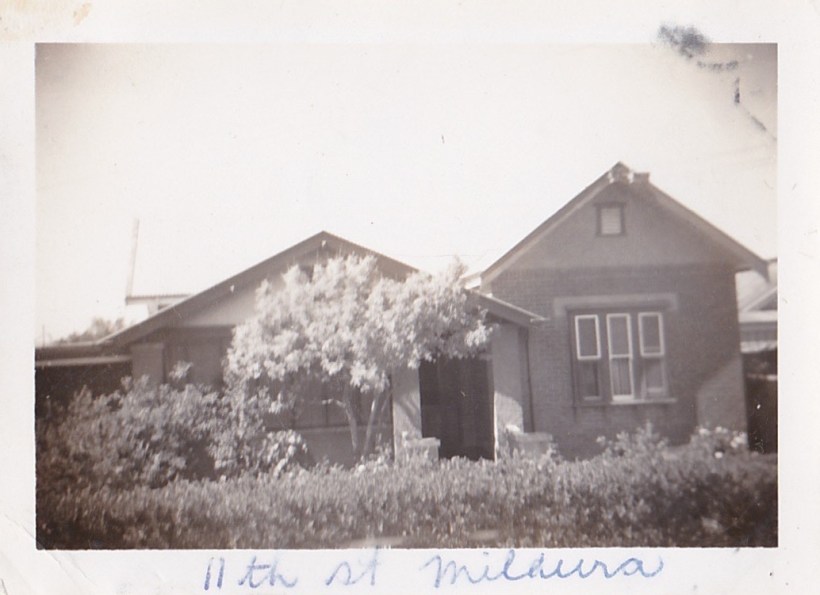
No matter how much I search I can’t find out much about my father’s time in Mildura. My mother said he marketed irrigation equipment to soldier settlers after World War 2.  The equipment included portable motors and flexible hoses,  obtained at Sydney sales, probably from war surplus supplies. He first opened for business in the old Custom’s House and then moved to other premises, renting houses in 11th Street and San Mateo Avenue. 

11th st MilduraThe Ranch

In 1951 I was born at Mildura Base Hospital. On my birth certificate the accoucheur (obstetrician) was Dr Bothroyd.  My father (aged 42) was the manager of the Mildura Irrigation Company and my mother was 33, residing in The Ranch, San Mateo Avenue, Mildura.

According to my mother the source of the irrigation equipment dried up and Linden had no choice but to close the business and move back to Sydney.  He opened a second hand steel and piping business on a rented block of land with a house near Silverwater.  In 1956 he was declared bankrupt.  Alfred Munro came to his aid again and loaned him the money for the purchase of twelve acres in Yerrinbool, a small township on the Hume Highway, 62 miles (100 kilometres) south west of Sydney.  The business struggled but my mother loved owning her own home for the first time.  The house is the one you can see at the top of this page.

That all came to an end when Linden died of a massive heart attack on the morning of 25th January 1962.  He was 53.  His death certificate states he died from a) Coronary Occlusion and b) Coronary Sclerosis. The definition of a coronary occlusion is the partial or complete obstruction of blood flow in a coronary artery. (Wikipedia). Sclerosis is hardening of tissue, in this case the arteries surrounding and supplying the heart.

We were well aware that my father had a problem.  His doctor had given him the bad news the previous year that nothing could be done.  His plans to sell the business and start a truckie food stop in Mulgoa never eventuated.  It may have been his illness that caused him to behave irrationally but he sorely tried my mother’s patience.  While my mother and I were visiting my maternal grandmother he moved all of our possessions out of the house to a cottage about a mile away.  The cottage belonged to Alfred Munro and my father’s mother who was still housekeeping for him.  They were both too old to care for each other so my father moved them both into our house.  This was done without consulting my mother so you can imagine she was furious.  Their relationship was pretty rocky from then on.  I can now see that he felt he owed his mother and Alfred a great deal and was trying to repay them.

Mr Munro
My mother and Alfred Munro


I had mixed feelings over my father’s death.  Although I missed him and I knew he loved me, life was much more peaceful.  There were no more arguments between my parents and I could attend school every day of the school year.  In the previous year I had missed 54 days of school as my father took me everywhere with him when he was buying and selling steel and piping for the business.  We drove for hundreds of miles to country towns in an old truck, staying in country hotels and, as he said, “learning more than you would in school”.  He taught me a secret language to use as part of a card trick.  We would amaze the locals in country pubs as I identified the hidden card after receiving the signal from my father.

We caught the steam train to Sydney and stayed in old hotels, visiting the picture theatres, Chinese restaurants, second hand bookshops, Luna Park, the Art Gallery and the Australian Museum.  We drove to Cooma and took a tour of the Snowy Mountains Scheme.  Once we caught a train to Victoria to rescue my mother’s uncle from exploitation  on a dairy farm.

Sometimes we just had a fishing break.  I caught my first fish at Sussex Inlet in a hired rowboat while staying at a guesthouse on the waterfront.

Mother and pipe
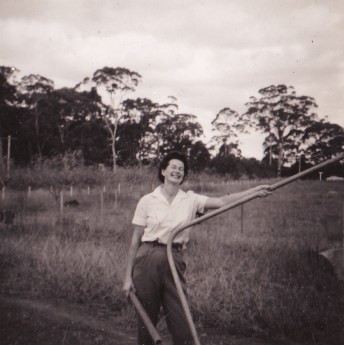
My mother posing with a piece of piping

Meanwhile my mother stayed at home and ran the business.  After my father’s death she turned it around and by the time she sold it ten years later she had made enough money to buy a house with a flat attached in the Sydney beachside suburb of Cronulla.

B for Bill

Before I sent the email to Denise* I did actually recognise one of the names on the list.  It was Turner*.  Even though my father died when I was 10 I recall both he and my mother talking about a man called Ted Turner*.  My memories are vague but I thought he was a businessman who helped my father set up his own business in the Victorian town of Mildura.  I knew he died in 1952 because my mother had kept a newspaper cutting featuring his obituary. 

Denise replied promptly, telling me that she lived in Mildura and that her grandfather was Ted Turner.  There were also other Turners, including two brothers and his son Hugh*, now aged 93.  This was astonishing news because Mildura is where I was born. It is a medium sized country town, current population 33,000 and a thousand kilometres from where I  now live.

Before you go jumping to conclusions (I can tell you I did), I will put you in the picture about my parents.

My mother married my father when she was only 18.  She had left school early, mainly because her mother was absent earning a living as a housekeeper on outback  stations, while she boarded with a family in Roma, Queensland.  She followed her mother’s first trade and became an apprentice dressmaker for a while in Charleville before moving to Melbourne to live with an aunt and work at Lucy Seekers.  At the age of 17 she was back in Queensland, finding a job as a receptionist in the Victoria Hotel, Goondiwindi.  It was here she met Linden, ten years her senior and probably the most exciting thing that had happened to her in her whole life.

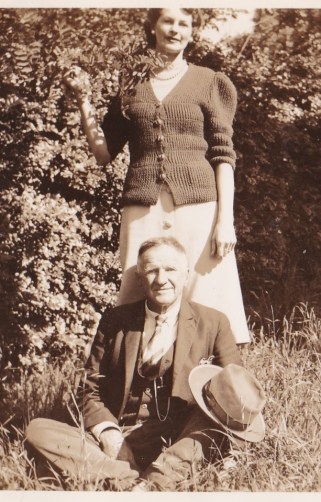
Linden and Elsa
Linden and Elsa

His occupation at the time is not clear but electoral rolls show he spent a few years trapping rabbits on properties belonging to the Munro family, for whom his mother worked as a housekeeper.  Although he had attended Newington College in Sydney and was given the opportunity to work as a wool classer, he seemed at a loose end.  Maybe it was because his father had suffered a fatal heart attack on his own railway station when Linden was six.  Possibly mixing with sons of the landed gentry at school made him unsure of where he fitted in the social hierarchy.  When he married my mother in 1936 he was a “grazier” which is a quite a step up from trapping rabbits.  According to my mother, Linden leased flash cars, owned a racehorse, was for a time a bookmaker and enjoyed dining out and spending money.  It is here I will explain why B is for Bill.  My father felt the name Linden was a bit sissy for the bush.  Maybe Linden the rabbit trapper didn’t quite gel.  Anyway, by the time he met my mother he was Bill to all but his closest family. 

My parents were fortunate to have the help of my paternal grandmother’s employer, Alfred Munro.  With the lease of 3,000 acres near Boggabilla on the McIntyre River near the Queensland border the young couple battled twelve months of drought and watched the sheep die. So they went touring and found a well watered property called Berrigagama, three miles from Tocumwal on the NSW side of the Murray River.  Alfred helped them with the purchase  and  the sheep enjoyed the green grass until they developed foot rot.  Alfred Munro purchased the property from them allowing them to move on to other enterprises.  Bill was fed up with the land so the next project was a guest house in Sydney, followed by a fruit shop turned into a milk bar – it was a lot of hard work with nothing much to show at the end.  Linden came up with the idea of renting a building and subletting it until the owner found out and put an end to the enterprise.

I will never know why they decided to travel six hundred miles to Mildura to set up a business but in 1949 that is what they did.  That was two years before their only child (yours truly) was born.

* Names have been changed.

A for Ancestry

Last year my A to Z was “Fact or Fiction – Family Stories”. When I reached Z I thankfully put family research on hold.  There was one last thing to do.  My husband and I decided to have our DNA tested on Ancestry to verify my family tree research.

After a six week wait our results came back. I found my ethnicity included 54% Europe West, 19% Ireland/Scotland/Wales and 12% Great Britain.  Of slightly more interest I found 6% Iberian Peninsula, 5% Scandinavia, 2% Finland/ Northwest Russia and 1% Africa North.

Screen Shot 2018-03-21 at 4.10.40 pm

I was a little disappointed as I had expected to find out more.  Little did I know what was yet to come!

A few days later I discovered my husband had a cousin match.  We both recognised her name and marvelled at the fact that her family connection showed up purely through their matching DNA samples.

It was then I noticed that I had a cousin match as well.  That was impossible!  Not only was I an only child but so were both my parents, so there could be no cousins, aunts or uncles.  At the side of the page were listed 23 family names as my new cousin had quite an extensive family tree.

Not one of those names corresponded to anyone in my family.  Was this an error on the part of Ancestry?  Who was this person and how could she possibly be related to me?

I sent her an email through Ancestry wondering if she would reply.  I had an unsettling feeling however that I already knew the answer.

Theme Reveal

Image 19-3-18 at 10.27 pm

You have all seen those Ancestry DNA advertisements haven’t you?  Connect with relatives! Meet a distant cousin!  Discover your ethnicity!

I found out a bit more than I expected.  It rocked my whole world and my sense of who I am.  It sent me on a search halfway across the country to the town where I was born to meet the family I didn’t know existed.

In doing so I found the written records of a man who participated in some the most significant events of the 20th Century, who died over sixty years ago and yet undeniably shares my DNA.


REFLECTIONS

At first I was a bit overwhelmed with the new A to Z format as this was my second A to Z and I had forgotten most things I learnt last year anyway.

The reason I wrote about “Fact or Fiction-Family Stories” is because I had been meaning to put in writing all the stories I had been told so my children and grandchildren could read about their ancestors.  I felt the pressure of writing every day for a month was just what I needed to get the job done.  What I didn’t realise was the amount of time it would take to verify the stories and also the fact that I would not find all the answers.  I was surprised and touched when a fellow blogger, Anne Young, found some extra information for me.

Most people who commented on my blog were people I had met in last year’s A to Z.  There were a few new ones and although I didn’t write with the intention of having a following it was rather exciting to read their comments.  I tried to comment on their blogs as well but if I missed anyone I’m sorry.  Researching took up so much time.

I’m hoping to do the A to Z again next year.  If I do family history it would be the time before they all left Great Britain.  I am not sure it would be as interesting as I have so little information.  The big discovery when doing this year’s blog was “Trove”, where I was able to read about my ancestors in Australian newspapers, in amazing detail.

My biggest discoveries were about my two grandfathers about whom I knew practically nothing.  From discovering Walter Hall had been married before and was a keen Aussie Rules player in his youth to reliving the last minutes of the life of John Price I felt a bit closer to both of them. As for the mysterious Reuben Benjamin I found why his family turned their backs on him.  I am especially thankful I live in an age where I don’t have to give birth to ten children or depend on a man for survival.

My husband found my continual absences in April somewhat perplexing but was somewhat mollified by some research I did of his family tree.  A lot still remains to be done on his side but for now I am taking a rest from family history and returning to a normal life.

Thank you to the organisers of this year’s A to Z.  For me it worked well and I would be happy with the same format next year.

Z is for Also Sprach Zarathustra

Also Sprach Zarathustra, Op. 30 – Strauss

Richard Strauss composed this stirring music which introduces Stanley Kubrick’s  2001: A Space Odyssey.  It is followed by Johann Strauss’s Blue Danube Waltz as a space vehicle circles the earth.

One family story I wanted to confirm or deny concerns Australia’s first astronaut, Philip Kenyon Chapman.  I was told and always believed that he was part of the family and descended from Eva and Robert.  Looking at his birthdate of 5 March 1935 he could be a grandson but however much I have searched I can’t find a connection AND time is running out.

In the 1960s his story filled me with excitement as space travel was tantalisingly close.  I have decided that whether he is related or not I will tell his story because it is an interesting one.

Before heading off to be an astronaut Philip was involved in the 1958 Australian National Research Expedition in Antarctica,  receiving the British Polar Medal.  Born in Melbourne, his parents moved to Sydney and he attended Parramatta High School.  He learned to fly at the University of Sydney, as a member of the University Squadron of the RAAF.  His uncle Norman was active in the aviation industry and helped establish many outback routes for QANTAS.

220px-Astronaut_Philip_K_ChapmanThe Australian Womens’ Weekly of Wed 6 Sep 1967 has a feature article on Philip Chapman, saying that he will be the first Australian to orbit the earth and quite possibly the first to land on the moon.  Aged 32 at this time he is described as a soft-spoken, pipe smoking physicist.  He had just been appointed a scientist-astronaut in the U.S. Space Program.

He said, “To land on the moon is the dream of every astronaut.  To be realistic, though as a scientist-astronaut rather than a pilot-astronaut, I can expect to be assigned  to orbital flights concerned with research rather than with lunar landings.”

Philip applied for  American citizenship in 1961 because he knew he had found his life’s work and it meant spending the rest of his life in the United States, where space research was so advanced.

His wife retained her Australian citizenship.  “If I am killed”, said Philip, “I would like to think that Pamela would feel free to go home to her family.  If she took out U.S. Citizenship she might find that more difficult to do.”

Dr. Chapman was selected as a scientist-astronaut by NASA in August 1967. After initial academic training and a 53-week course in flight training at Randolph Air Force Base, Texas, he was involved in preparations for lunar missions, serving in particular as mission scientist for the Apollo 14 mission. Because of the lack of spaceflight opportunities for scientist-astronauts in the 1967 intake, Dr. Chapman left NASA in July 1972.

chapman_philip_2In 2003 Philip Chapman wrote:

The Failure of NASA: And A Way Out

by Philip K. Chapman

Sunnyvale – May 30, 2003

I was in Mission Control when Neil Armstrong announced that the Eagle had landed. The applause was unexpectedly muted as we were all overwhelmed by the significance of the moment. Nobody had any doubt that Tranquility Base was the first step in an expansion into space that would drive human progress for centuries to come.

We had of course all seen the 1968 Kubrick/Clarke movie 2001: A Space Odyssey, and the facilities depicted there seemed entirely reasonable. In our lifetimes, we expected to see hotels in orbit, translunar shuttles operated by commercial airlines, and settlements on the Moon. Only the alien monolith was questionable.

None of this has happened.

Phil ChapmanPhilip Chapman is still living in the United States and has led a busy, active life despite not having gone into space.  He worked with Peter Glaser, inventor of the Solar Power Satellite and has been involved in the development of space based solar power.  He is now retired but still publishing opinion pieces, some quite controversial, on scientific issues.

The more I read the more I doubt we are related.  His father’s name is Colin and his uncle is Norman.  Those names have not appeared in my version of the Robert/Eva Chapman family tree.

Oh well!  Another myth shattered. Not that it matters.  It has been fun exploring the stories of my family but I will be very pleased when this last post goes up and I can sit back and relax with a glass of  Sieur d’Arques Aimery Crémant de Limoux Grand Cuvée 1531 that I have been saving for the occasion.  That’s what it says on the bottle so I will try it and see if it lives up to its grand name.