The idea of a Horizontal Waterfall sounds preposterous so of course, we had to see it for ourselves.We were camped in Derby for a week and investigated the best way to get to what David Attenborough calls “Australia’s most unusual natural wonder.”It is 110 km north of Derby but can only be accessed by air or sea.We opted for a seaplane flight and an overnight stay on a houseboat.
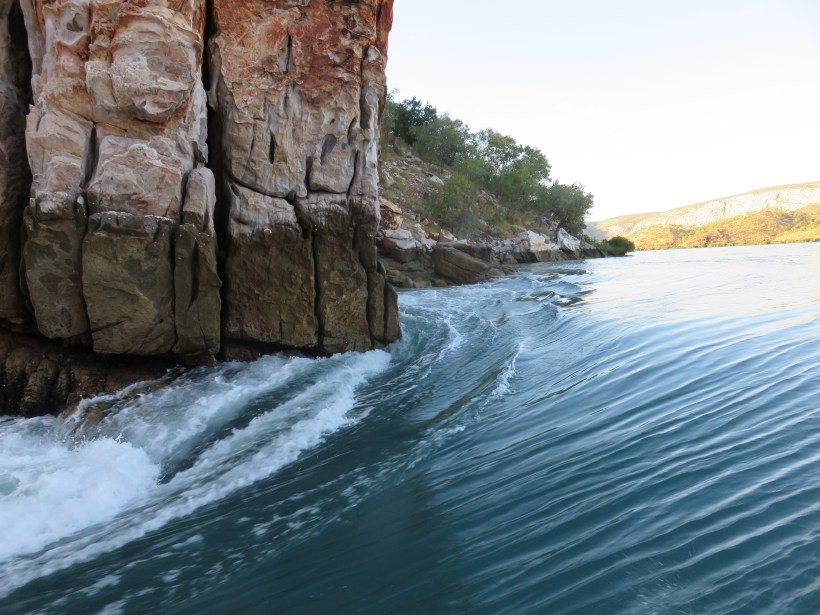
The waterfalls are formed by intense tidal currents hurtling through two narrow coastal gorges. Massive tidal movements create a waterfall effect as water banks up against one side of the narrow cliff passage, to be repeated again on the turning tide.
The twin gaps are part of the McLarty Ranges, which have two ridges running parallel approximately 300 metres apart. The first gap is about 20 metres wide and the second, most spectacular gap is about 10 metres wide. The tides in this area have a 10-metre variation which occurs over six and a half hours from low tide to high tide and vice versa.
At 2.15pma courtesy bus picked us up from the caravan park and took us to the airport where we boarded a 14 seat turboprop jet seaplane.
The scenery below changed from mud flats to crystal clear water and then we saw it.The two narrow gorges with foaming white water rushing through. After landing beside a long houseboat we watched sharks being fed from the deck while some brave souls sat in a cage to get as close as possible to the experience of being eaten.
Finally, we were off in a 900hp boat to experience the sensation of riding on a waterfall (horizontally).Maybe it wasn’t quite as amazing or scary as I had imagined but it was still lots of fun.We then cruised through bays and creeks marvelling at colourful rock strata and observing a helicopter land on the roof of a boat.
It was BYO drinks but they had been chilling in an esky so we sat on the deck watching the sunset across the shining water.Barramundi was served for dinner and after watching the stars in the night sky and chatting to fellow guests we retired to a small but comfortable cabin.Next morning we watched the sunrise as some took off on helicopter flights.We boarded the boat for yet another trip through the Horizontal Falls as the water was flowing in the opposite direction.
The seaplane trip back was spectacular as we flew over the Buccaneer Archipelago and King Sound.Finally, the grey water of Derby appeared along with its enormous circular jetty.We were back on dry land ready to turn south on our circumnavigation of Australia.
You might think you have already been here on your A to Z journey.There is so much more to Geraldton than the Abrolhos Islands so I had to give it its own post.
The evening of our arrival we were drawn to an impressive monument at the top of Mount Scott.It was the memorial to the HMAS Sydney, sunk in 1941 with the loss of all 645 on board.
The story is surrounded by conspiracy theories and wild conjecture as the loss of every man on board is a mystery.Books have been written about what may have happened but the facts are that HMAS Sydney was on patrol duty in Australian waters when it observed an unidentified ship.As it moved to intercept,the ship identified itself as Straat Malakka, a Dutch merchant.Suspicious, because it had refused to reply with the secret call sign, the Sydney moved closer.It was then that the Kormoran, a German auxiliary cruiser, “decamoflaged” and opened fire.
The Sydney was mortally wounded and disappeared in a south-southeasterly direction, sinking almost vertically, her bow torn off.
The Kormoran had also received crippling wounds and the ship was abandoned by the German sailors. 318 out of 399 from the Kormoran survived and were later interred in prisoner-of-war camps in Victoria until 1947.
The wrecks were not found until 2008, although many attempts had been made.An American shipwreck hunter David Mearns entered into a partnership with not-for-profit company HMAS Sydney Search.With considerable government grants, they succeeded where others had failed, finding the Kormoran first and later the Sydney.
The first, temporary memorial was installed prior to 19 November 1998 and was used in a remembrance ceremony in that year. During the playing of the Last Post, a large flock of seagulls flew over the participants and headed out to sea in formation.
This inspired part of the permanent memorial.It has four parts, a stele in the shape of the ship’s prow, a granite wall listing the ship’s company, a bronze statue of a woman looking out to sea and waiting in vain for the cruiser to come home and a dome (of souls) onto which 645 stainless steel seagulls were welded.The memorial was almost complete by 2001 but it took another 10 years to complete the stele.A pool of remembrance has also been added showing the position of the wreck on a map.
Before we headed south, we visited the Museum of Geraldton, overlooking the Indian Ocean.In the Shipwrecks Gallery, we found remains from the ships Batavia, Gilt Dragon, Zuytdorp, and Zeewijk.
As well as the famous Batavia mutiny, there were lesser known tales such as the inspiring saga of the Zeewijk survivors and the unknown fate of other European shipwrecked souls stranded on Western Australian shores.
Like the survivors of the Batavia, it was decided by the Captain of the Zeewijk that a rescue group of eleven of the fittest men and First Mate Pieter Langeweg would take a longboat to Batavia to get help.They were never heard of again.Those left behind on Gun Island, on the edge of the Abrolhos, had enough water and food to survive until they built the first European ship ever made in Australia, the Sloepie, 20 metres by 6 metres.Of the original 208, 82 made it to Batavia.
The gallery features artefacts, clay pipes, silver coins, cannons and the original stone portico which was used as ballast in the ship and was destined to be used in a building in the city of Batavia.
Replica of the longboat of the Batavia
From the windows, we could see a full-sized replica of the small long boat used by the group consisting of Captain Jacobsz, Francisco Pelsaert, senior officers, a few crew members, and some passengers. They left the wreck site in a nine metres (30 ft) longboat, in search of drinking water. After an unsuccessful search for water on the mainland, they abandoned the other survivors and headed north in a danger-fraught voyage to the city of Batavia, now known as Jakarta. Pelsaert was able to return and rescue the survivots as well as punishing the perpetrators.
Something I find fascinating is that after the trials and executions, Wouter Loos and a cabin boy, Jan Pelgrom de By, considered only minor offenders, were marooned on mainland Australia, never to be heard of again. Many theories abound, including that they were taken in by the Aboriginal people, that they had children and that their descendents still live in Australia today.
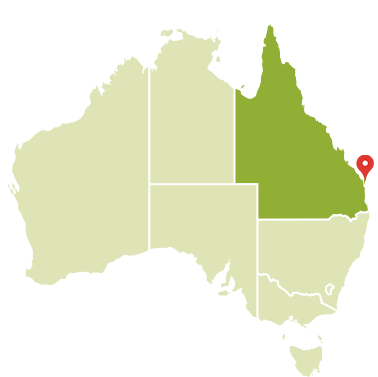
The winters in the Illawarraare relatively mild compared to those of North America and Europe but by July the novelty of log fires, coats and scarves wears thin.My husband likes to say, “Let’s head north until we can wear t-shirts and shorts”.Last year it was late August before we were able to get away to Burrum Heads on the Fraser Coast of southern Queensland.
The area is named after Fraser Island which is the world’s largest sand island.At 120 kilometres long the island features 100 freshwater lakes, rainforests, eucalyptus woodland, mangrove forests, wallum and peat swamps, sand dunes and coastal heaths.It is the only place in the world where tall rainforest grows in sand. People take their four wheel drive cars across on the ferry to skim the smooth beaches or bounce precariously along the sandy tracks.An eco stay at Kingfisher Bay Resort now promises royal treatment after the recent visit of the Duke and Duchess of Sussex.
We were heading for home but decided to stay a few days on the beach at Hervey Bay, enjoying the “bright lights” after the tranquillity of Burrum Heads.Although we had been to Fraser Island twice before there were still places we wanted to experience and I thought I had found the perfect day trip. Leaving at 7.30 am we would visit Eli Pools, the wreck of the Maheno, Indian Head and Champagne Pools.A maximum of seven people would travel in a modern Toyota Landcruiser.There was even champagne with lunch! Just perfect!
Of course there are many stories associated with Fraser Island.Around 10,000 years ago it became separated from the mainland as the sea levels rose.The Aboriginal people who lived in the area moved from mainland to island and back in bark canoes, with the population on the island swelling in the winter months as fish supplies increased.An escaped convict in 1824 reported two to three thousand people gathered at Indian Head during the mullet season.
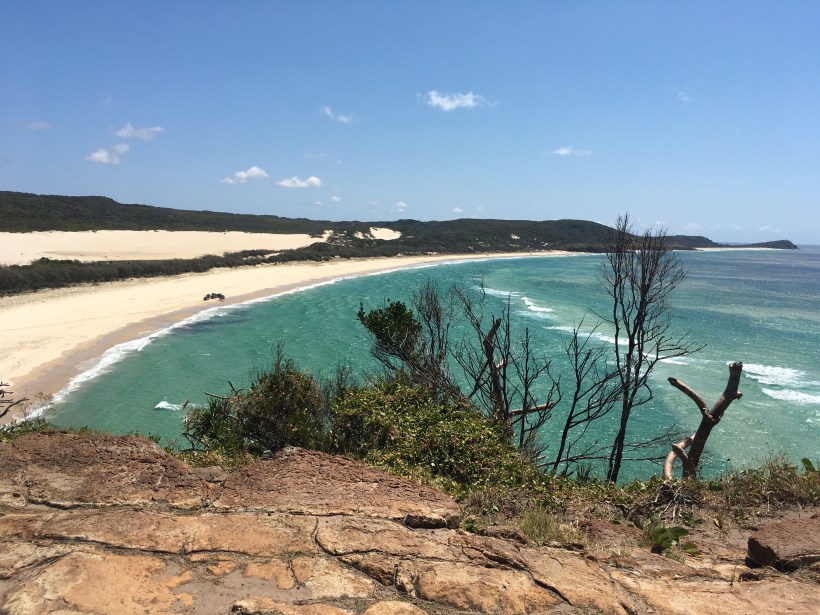
View from Indian Head
Fraser Island is named after James Fraser, captain of the brig Stirling Castle.It is his wife Eliza Anne who became famous as a survivor of a shipwreck in 1836.She had accompanied her husband on the voyage from London, and they were on their way to Singapore when the ship hit a coral reef north of the Great Sandy Island (Fraser Island).Two lifeboats of survivors left the ship in search of the penal settlement of Moreton Bay.They became separated and one landed on what is now Fraser Island.Eliza gave birth to a baby which died shortly after.The truth of what happened next will never fully be known as the story of Eliza has become folklore, turned into books, plays, paintings and musical compositions.
In the Australian dictionary of Biography Elaine Brown tells Eliza’s story, The Aborigines divided the men among family groups to assist with hunting, fishing and gathering firewood. Aboriginal women cleansed Eliza’s sunburned body with sand, rubbed it with charcoal and grease and decorated it with colour and feathers. She was required to nurse their children, dig fern roots and rob bees’ nests, but was so inept and resentful that the women tormented her.
Finally rescued, Eliza was feted in Sydney as she told of her mistreatment by the natives. Questions surrounding her rescue and its aftermath led to lasting controversy. Descendants of those Aboriginal people resented the way their ancestors’ attempts to help the castaways were misrepresented.It was felt that subsequent massacres of Aboriginal people were fuelled by the exaggeration of Eliza’s accounts.It appears Eliza not only told fibs but double dipped, marrying in Sydney and receiving generous compensation and then appearing in London as a distraught widow, becoming the beneficiary of another appeal.
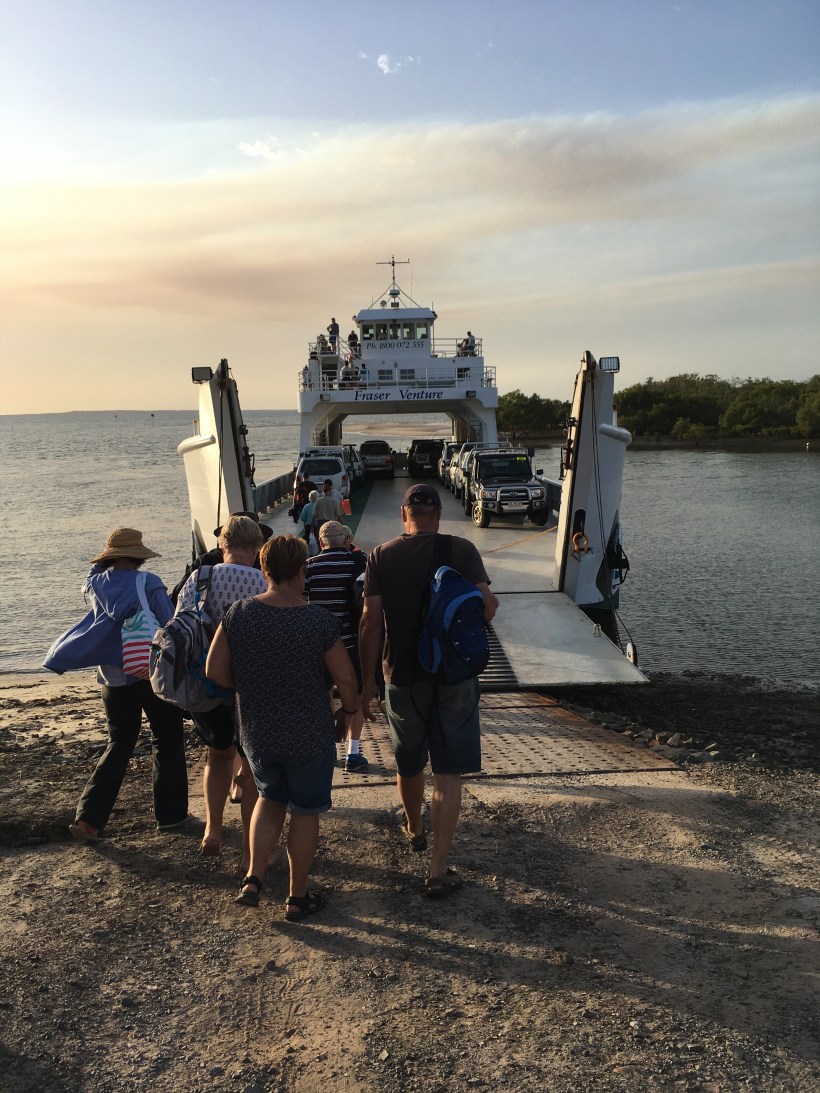
Back to the present. We were picked up at the front of our caravan park by Fritz, who originally came from Austria. Two couples were already in the car, from Holland and Germany.We headed south to River Heads where we boarded a ferry which unloaded us at Wanggoolba Creek on the island.
Ferry to Fraser Island
There were two Landcruisers so we climbed into one, following deeply grooved tracks until we reached the eastern side of the island.Cruising along 75 Mile Beach we stopped at the wreck of the Maheno for morning coffee.
Coffee time
Built in 1905, the SS Maheno was one of the first turbine-driven steamers. She plied a regular route between Sydney and Auckland until she was commissioned as a hospital ship in Europe during World War One. She also served in the Mediterranean and the Red Sea. In 1935, she was sold to Japan for scrap.
Herrudder was removed and she was being towed to Japan. In Queensland waters, a cyclonic storm snapped the tow chain and the Maheno drifted helplessly onto Fraser Island’s Ocean Beach.
Wreck of the Maheno
There she lay, slowly rusting away.However she has not been ignored.In 1936, during salvage operations the customs officer Dudley Weatherley married Beatrice McLean of Townsville.On a deck pitched at 16 degrees, the nuptials were sealed to the sound of crashing waves and the ship’s organ. In World War Two it was used for bombing practice which acceleratedits decline. More than 200,000 people visit the wreck each year and usually pose in front of the rusting frame with the white sand and blue sea providing a vivid photograph.
The next stop was Indian Head which, after a steep climb, gave us good views to the North and South.Captain Cook named it after the Aboriginal people he saw assembled there as “Indian” was a term commonly used in those days to describe indigenous people from many countries.
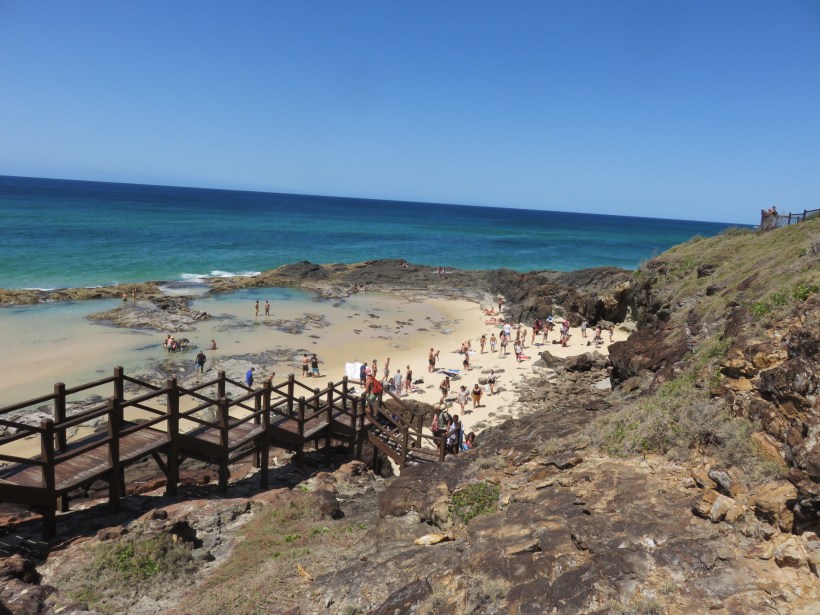
Champagne Pools
I was really looking forward to experiencing the Champagne Pools.They lived up to their name.As the waves broke over the rocks the water fizzed like champagne.Although the water was bracing it was great fun swimming in the deeper holes.
Beach Highway
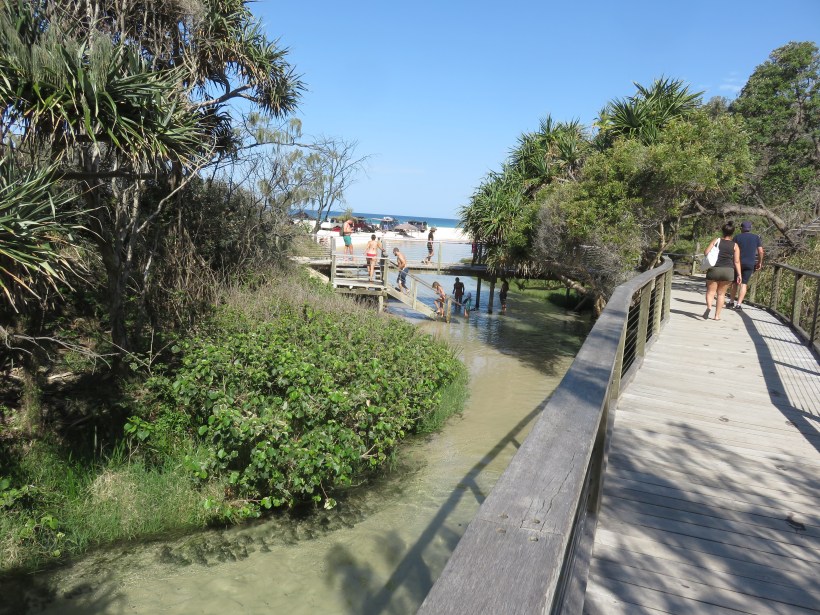
After a lunch eaten in the shade of rocky cliffs we returned to Eli Creek.It is the largest freshwater stream on the island with over four million litres of water flowing from its mouth onto the beach and ocean each hour.The shallow water with clear sandy bottom is perfect for wading “up the creek”and floating back down again.
Eli Creek
Our last stop was Lake McKenzie.It was a rough ride as it was our turn to sit in the cramped 3rd row of seats.The shadows were long and the lake was empty of people but I wasn’t going to miss a chance to swim in the amazing water.
The Butchulla people believe that K’gari Island, (Fraser Island), was created when the goddess K’gari was transformed into the land. Lake McKenzie, or Boorangoora, was said to be one of her eyes. This is one explanation for the beautiful clarity and blue color of the water. A more scientific explanation is that the high acidity levels of the water make it difficult for any organic matter to survive, though there are Fraser Island Short-Necked turtles and fish that swim around the reeds. Wild Swimming Australia
Lake McKenzie
The sun was setting as we walked onto the ferry for the return journey.What a truly magical place.
Before we owned a caravan we would take our two children on road trips, staying in caravans or cabins in caravan parks. Squashed in the back seat, with an Esky between them, they travelled through NSW, Victoria and Queensland, soaking up the history of the countryside and visiting many “dead and dying towns” as our son called them.
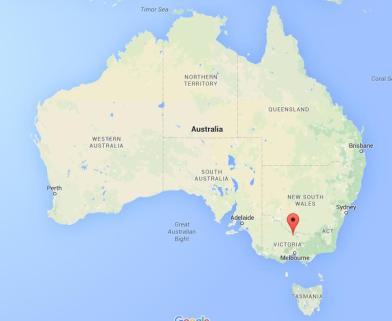
Echuca was not dead or dying when we visited but had history oozing out of every corner.Perched on the edge of the Murray River with a multi level 400 metre long redgum wharf built to withstand the varying heights of the river, it was host to a number of restored paddle steamers chuffing up and down the river. Wool, wheat, other grains, livestock and timber were the most common cargoes in its heyday. This industrial boom led to a rapidly expanding population, at one stage in excess of 15,000, with more than a hundred pubs (hotels) rumoured to exist in the Echuca district at one time.
Crawford Production 1983
The whole family was excited to be there because it was the setting of the TV mini series, All the Rivers Run based on the book of the same name by Nancy Cato. The paddle steamer Pevensey was used in the filming of the show.
In the book the irrepressible Philadelphia Gordon lives on the banks of the Murray River with her family.She watches the paddle steamers as they ply the river.Eventually she owns a share in the PS Philadelphia and becomes the captain when her husband has a stroke after a diving accident. She witnesses the marooned boats when the river levels become too low, the building of the locks allowing boats to navigate the river in all seasons and the coming of the railways which resulted in the eventual failure of the river boat trade.
An extract from my diary of 1990 recalls the town nearly 30 years ago.
We began at the Star Hotel where we bought tickets entitling us to a tour of the Star Hotel, the Wharf area and the upstairs of the Bridge Hotel. I tried to get tickets for the “Pevensey” but she wasn’t running until Saturday.
This photo of Echuca Paddlesteamers is courtesy of TripAdvisor
The Adelaide was doing a demonstration of towing a barge of logs instead. Before taking our tour we bought tickets for an hour long river trip on the “PS Canberra” which although originally a paddlesteamer now runs on diesel. We took about a dozen photos of the paddlesteamers, “Adelaide”, “Pevensey”, “Emmy Lou” and “Pride of the Murray” as well as lots of little houseboats.
Photos courtesy of swissnomads.com
Everyone was starving on the return journey so we repaired to a riverside restaurant for Devonshire Tea – fantastic views from picture windows of the Murray and river boats.
Echuca Wharf (courtesy of ABC News)
The wharf itself was really something. The lower levels were covered with water as the Murray is in flood. The old disused railway station is still there with a train parked in front. The “PS Pevensey” is moored at the wharf and is open for inspection.
How delightful it was, sitting in Oscar W’s (I later found its name), eating scones with jam and cream and looking out over the river traffic. Unfortunately it has now closed as a result of a protracted dispute over redevelopment of the site. The retaining wall needs rebuilding and the empty restaurant is deteriorating.The last article I read said that the building was to be demolished as it had no heritage value.It was only 31 years old even though it appeared much older, with its timber beams and corrugated iron.
In 2017 we stopped there again, this time in our Lotus,seeking out a free camp by the river.The Rotary Park had a donation box, some locked toilets and steep banks to the Campaspe River which joins the Murray but we are self contained so it was not a problem. A tour of the old part of Echuca unearthed the signs of change.A $14 entry fee gives access tothe Discovery Centre, Evan’s Sawmill, a Steam Display, Echuca Wharf, the Cargo Shed Museum and a Rail Siding with Vans but it was closed off from general public.
The euphoria I felt on my first visit was diminished.The restaurant will become a grassed area with a pop up park and there will hopefully be uninterrupted views of the paddle steamers on the river.
As Philadelphia cried in her mind, Time, flow softly, but it doesn’t does it? We are all caught in a current that is relentlessly speeding up. There is no way of arresting that endless flow. (inspired by Time, Flow Softly by Nancy Cato)
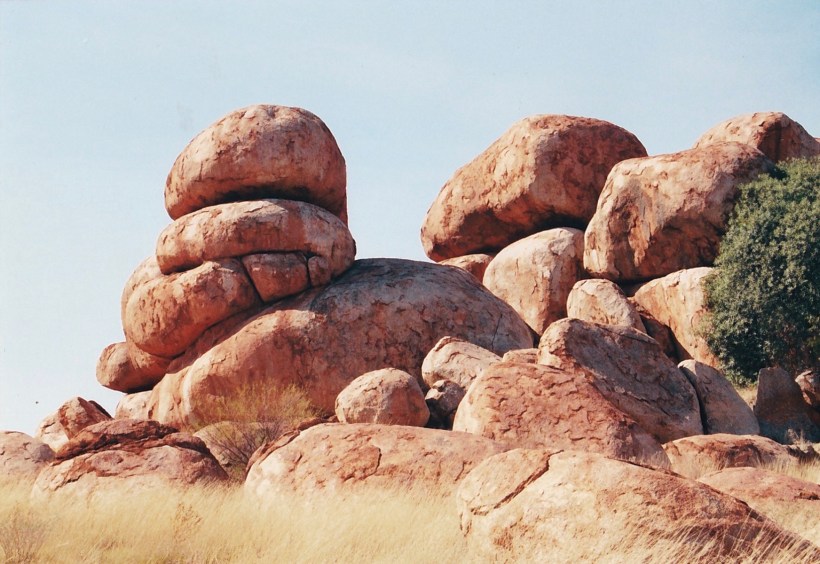
The Devils Marbles are 393 km north of Alice Springs and 760 km south of Katherine. In other words, in the middle of nowhere. The Stuart Highway between Darwin/Katherine and Alice Springs goes right past the reserve.
The rocks vary in size, from 50 cm up to six metres across, and are strewn across 18 square kilometres. Many of them seem impossibly balanced on top of each other. They started out, many million years ago, when an upsurge of molten rock reached the surface, spread out and settled into a solid layer. That one block of granite developed horizontal and vertical cracks and split into many rectangular blocks. Over the following millions of years erosion wore away the edges and many became rounded.
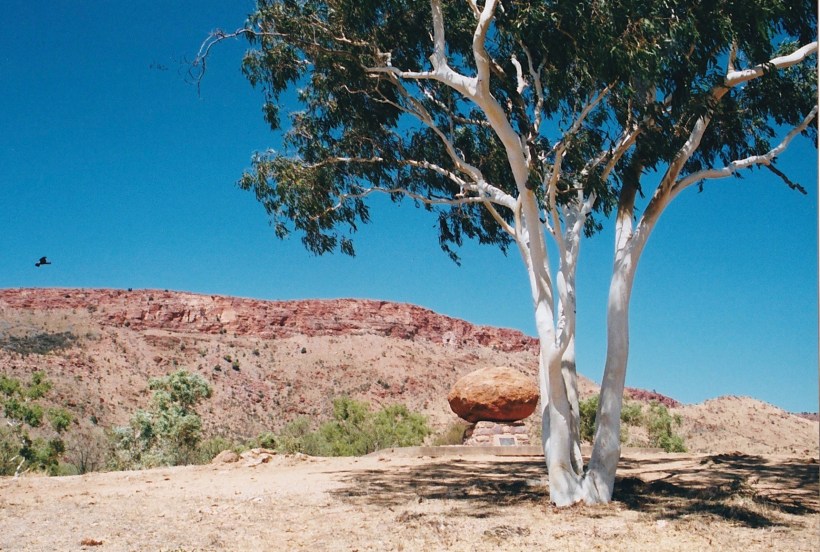
The first time I saw the Devil’s Marbles I was 19 years old and travelling on a bus with fellow Teachers’ College students on a three week trip to the Red Centre.The year was 1970 and I remember being shocked by the graffiti, mainly painted initials, on some of the stones.We had recently left Alice Springs where we saw Flynn’s Memorial, with one of the marbles sitting on top.It too, bore the initials of unthinking visitors.
I had no idea in those days that the real name of the Devil’s Marbles was Karlu Karlu or that the stones were of special significance to the local Aboriginal people. I have since learned of one the most popular Dreamtime stories involving the rocks. The legend speaks ofArrange, an ancient ancestor of the local people who once walked through the area. As he passed through, he made a hair-string belt, which is a traditional garment worn by initiated Aboriginal men. When he began spinning the hair into strings, he dropped big clumps of them which then turned into the red boulders we see today.
Imagine thedistress of local Aboriginal groups when in 1953 an eight tonne rock was taken from the area to be placed on John Flynn’s grave in Alice Springs.
John Flynn was a Presbyterian Church Minister who grew up with a desire to live and work in inland Australia.He was inspired by a letter he received shortly after WWI suggesting the solution to administering the spiritual, medical and social needs of inland people was the aeroplane.With the help of a bequest and a meeting with Hudson Fysh, a founder of Qantas, he was able to to launch the Aerial Medical Service (later known as the Flying Doctor Service).
John Flynn on the $20 note
In 1949, aged 70, Reverend John Flynn climbed Mt Gillen and declared this was the place he would like to be buried. Following his death in May 1951 Flynn’s family and friends located a burial site at the foot of Mt Gillen, 15km west of the township of Alice Springs.
Mrs Jean Flynn was motivated by the biblical story of the crucifixion in which a large rock was rolled across the entrance to the grave of Christ. At a meeting of community and church groups it was agreed that a rock would protect the ashes of the late Reverend John Flynn.
The original marble on Flynn’s grave
Following an unsuccessful search for a suitablerock in the nearby MacDonnell Ranges, one was located in the Devil’s Marbles and transported to the site of Flynn’s Grave by the Northern Territory Public Works Department without the consultation of traditional owners of that area.
Meetings were held in 1980 and 1981 between the Uniting Church and Aboriginal representatives and the search for an alternative stone was commenced. However controversy surrounding the removal of the rock from Flynn’s grave resulted in a stalemate.
It wasn’t until 1996 that negotiations once again commenced involving the Central Land Council, Uniting Church, the Aboriginal Areas Protection Authority and the Parks and Wildlife Commission of the Northern Territory. An agreement was reached in October of that year for the marble to be returned to Karlu Karlu.
In early 1997 the Arrernte traditional owners of the site of Flynn’s grave began the search for an alternative rock. After considerable effort and input by all parties concerned,a suitable rock was identified in late 1998.
The stone came from an area of vacant crown land subject to the Alice Springs Native Title Claim and was removed in accordance with a certificate issued by the Aboriginal Areas Protection Authority. The exchange of rocks was financed by Community Aid Abroad and all parties involved were satisfied and happy with the outcome.
The new rock on Flynn’s grave
The story of the stolen marble had been aired on SBS TV so we were aware of the controversy as we approached Karlu Karlu in 2001.We were towing our new A-van and although we didn’t camp overnight we were able to explore the area more thoroughly.
I was pleased to see all signs of graffiti removed as it had been painted over with a red ochre paint but was especially excited to identify the rock from John Flynn’s grave.It was unmarked but I noticed it was a different colour to the other rocks.My theory is that when the graffiti was removed the red colouration caused by oxidation was removed also.
My own theory is that the returned marble is the light coloured one on the left
The year was 2013.We were travelling with friends who had not seen Karlu Karlu before.
Again, because it was only lunchtime and we were booked into an Alice Springs Caravan Park we moved on.Those who have camped here overnight describe an almost surreal feeling as the moon rises over the Marbles.Maybe for us there will be a next time where we will experience this too, although at 3,150 kilometres from home it is not a trip we do too often.
For years we had talked of doing “a lap around the block” and in 2017 it happened. Four days after leaving home we arrived in Charleville, Queensland on May 27, camping at the Cobb and Co Caravan Park.I was interested in the town because I have a few family connections to the area.
My mother was born in Williamstown, a suburb of Melbourne, but she was baptised in Charleville, aged two, in 1920.When you look at a map it is a long, long way to travel by train with an infant.1700 miles (2736 km) with five train changes could take a week.My mother was baptised by the Bush Brotherhood and then remarkably she was back in Melbourne a year later.
That wasn’t the end of the Charleville connection.My grandmother was back there again in 1931.Because it had no high school my mother boarded with a family in Roma, 266 kilometres away. My grandmother married a local“overseer” in 1938 and divorced him ten years later.As a child I was not told much about this period for by then my grandmother lived by the sea and assured me she was never going bush again.
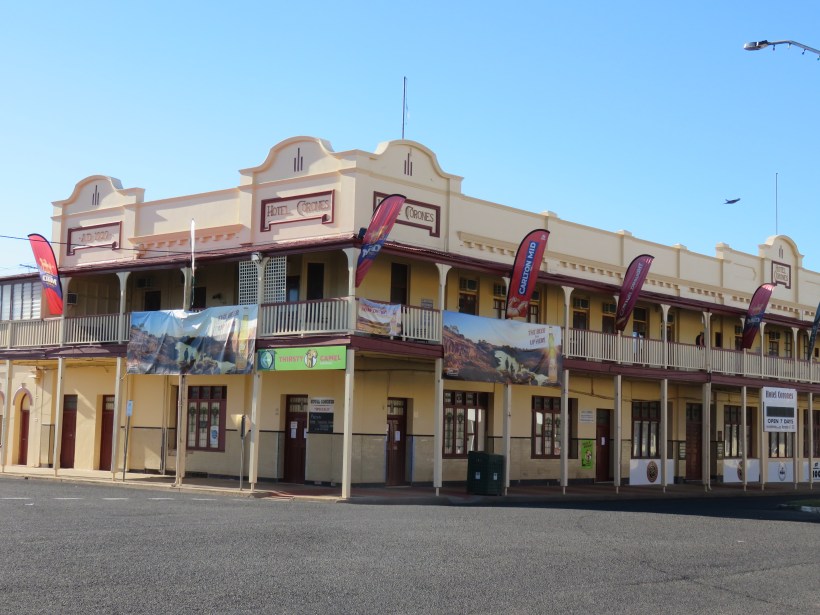
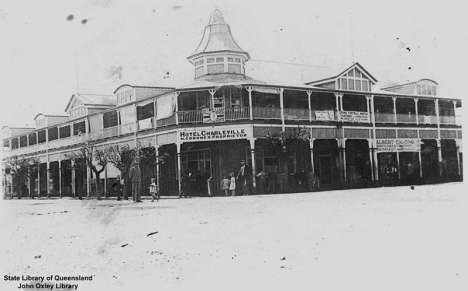
We didn’t have much time to see Charleville so decided to have breakfast in the main street. The guide book mentioned the well known Corones Hotel, stating that it hosted manyaviators and other famous people so we took a walk around the block to admire the imposing building.Built in 1924 it had been restored to something of its former glory. We had a quick peek in through a door but I am sorry I didn’t know then what I know now.
Hotel Carones in 2017
Reseaching Charleville to shed some light on my grandmother’s time there, I came across the book “The Accidental Australians” by Francis Harding.It brought to life the Charleville of the 1920s and ‘30s.This may not be my grandmother’s story but the tale of Harry and Jimmy Corones is very much tied up with the history of Charleville itself.
Haralambos (Harry) Corones, 23 and his nephew Demetrius (Jimmy) arrived in Sydney in 1907, leaving a life of poverty on the Greek Island of Kythera.Working in a fish and chip shop in Sydney and then an oyster bar in Brisbane, the two young men took a chance and bought a cafe in Charleville.Forty eight hours after leaving Brisbane the Western Mail chuffed into the station.Harding describes a main street lined with white cedar trees, horses tethered to posts and swarms of flies filling the air.
The cafe, located beside the Hotel Charleville, was merely a roof over a couple of dirty tables. Harry and Jimmy were horrified but had no choice but to work with what they had.They had learnt in Sydney and Brisbane not to cook Greek food for the unsophisticated Australian palate.Instead they cooked steak and eggs, fish and chips served with bread and butter, tea and coffee with plenty of milk and sugar.Within a year they had paid off their loan and moved to better premises.
A talent scout from the brewery Castlemaine Perkins was impressed with the success the Corones had made of their cafe and offered them the lease of the Hotel Charleville.Harry became the first Greek in Australia to hold a hotel licence.The lease was for five years at six pounds a week.What guided their success was a desire for a standard of excellence unknown in the bush.Guests were picked up at the station by a horse drawn carriage and later by car. The dining room shone with polished silver and starched white linen.Harry was always looking for new experiences for his guests and so the numbers increased.
Jimmy at the station ready to pick up passengers
A matchmaker arranged a marriage for Harry with the daughter of a widowed Greek priest newly arrived in Sydney. Twenty seven year old Eftehia made the long journey to Charleville with her new husband to begin a lifetime of working in and running hotels.She was met with a pile of rubble as the hotel had burnt down in their absence.In the years that followed the hotel was rebuilt and Effie raised a family.
I wonder, when my grandmother arrived in 1920, did she answer a job advertisement to work at the Hotel Charleville?It would have been difficult with a two year old.Maybe she followed her original career of dressmaking or looked after a family.Whatever she did it was short-lived and she took the long journey back to Melbourne and an unhappy marriage until 1925 when she left Melbourne for good.
I digress because in 1920 the Hotel Corones had not been built. The Great Air Race of 1919 had spelt the end of Charleville’s isolation.Keith and Ross Smith landed there and stayed three months while a new propellor was being built in Ipswich.Of course they stayed at the Hotel Charleville.
View of the Vickers Vimy and crew resupplying and repairing the aircraft at Charleville, Queensland, January 1920
Qantas Airlines was formed with Charleville at its centre. Harding points out that for two years passengers could look down at the Cobb and Co Coaches travelling below.
But what of the Corones Hotel?Harry was thriving in the Hotel Charleville but he didn’t own the freehold.He bought the old Norman Hotel opposite and commissioned the architect William Hodgen to replace it with an Art Deco edifice.It took five years to build and filled a whole block.Unlike the timber hotels which frequently burnt down it was built of brick and reinforced concrete. Leadlight windows, brass ,silky oak, Queensland maple and sycamore feature in the glowingdescriptions of the hotel.Lavish balls with sumptuous food were attended by the wealthy and facilitatedby the large, hardworking staff.
The Depression arrived.Towns like Charleville were supported by a wealthy pastoral industry. On the sheep stations there were cooks and station hands, governesses and maids, men for mustering, fencing and shearing.Around 1931 my grandmother arrived and found herself work on a sheep station. The early 30s saw a boom in the wool industry and people would come into town to spend money at the Corones and the little shops in the town.The Picnic Races were one of the highlights of the year with celebrations taking places for a week.
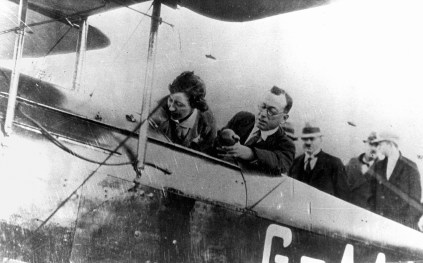
Harry and Effie worked long hours and survived the economic downturn.Amy Johnson landed on her epic flight from London, exhausted and overwhelmed by the press.She was able to rest and recover at the Corones.
Amy Johnson about to take off from Charleville. The press wanted the last word.
Harry bought shares in Qantas and many early planes were given Greek names.The first board meeting of Qantas was held in Harry’s hotel.When planes landed to refuel, enroute to Longreach, a hamper would be packed for the passengers and driven down to the airport in the Packard, to be served with linen, silver and crystal. In 1934 Qantas announced its first international flight, carrying mail to the UK through Charleville and Darwin.
My mother married in Toowoomba 1936 and the newlyweds tried their luck on a sheep farm.My grandmother married her overseer in Charlevillein 1938.My other grandmother worked as a housekeeper on a sheep station in northern NSW.They were truly “Women of the West”.
The Second World War had little effect on my parents and grandparents but Charleville was filled with American troops.It became part of the Pacific ferry route along which heavy bombers were flown to the south-west Pacific.Harry unwillingly bid farewell to one of his daughters as she became an American War Bride. Below are photos of Harry and Effie in later years.
The 1940s and ‘50s were great years for the Hotel Carones and its owners.But by the 1960s times changed, wool was no longer Australia’s greatest export, successive droughts brought farmers to their knees and people were no longer prepared to work long hours for little pay.Harry and Effie were getting old and so was the hotel.Eventually it passed into other hands and became run down. The foyer even suffered the ignominious fate of being painted mission brown!
The author Frances Harding and her husband lovingly restored the hotel to its fotmer glory but it continued to have its ups and downs in the 21st Century after it left their care. Since 2016 it has been in the hands of new owners who are working hard to get the accommodation and restaurant to the high standards that the hotel deserves.
As another Anzac Day (25th April 2006) ended and most Australians were retiring for the night, thegold miners at Beaconsfield, Tasmania,were hard at work underground.At 9.26 pm a minor earthquake triggered a rock fall.Fourteen men scrambled to safety but grave fears were held for three men, Larry Knight, 44, Brant Webb, 37 and Todd Russell, 34.
Brant and Todd had been working in a basket at the end of a vehicle called a telehandler. Larry was driving it.
The next day a remote controlled earth mover began clearing rock near the site of the collapse.Larry’s body was found.Of the other two men there was no sign.Nobody knew that the two men were trapped in a cage, buried in rubble and with a roof of unstable rocks above them.They managed to extricate themselves from the rocks by cutting at each other’s clothing and boots with Stanley knives.The space they were in was so small they couldn’t lie flat. Groundwater seeping through the rocks was collected in their helmets for drinking water.As rescuers began blasting, more rocks fell on the two men so that they both wrote farewell messages to their families on their clothes.
However things changed on the 30th April when two rescuers yelling through the rockfall heard a call for help from the two trapped men.By this time the whole country was glued to their TV sets watching with bated breath, hoping against hope that the men would be freed.
By May 1 it was possible to send fresh water, food and communications equipment to the men through a tube but it was considered too dangerous to physically get them out.Drilling continued through quartz five times harder than cement until on May 6 the machine was only metres from the men.Then it had to be dismantled and removed.After 14 nights underground the men were finally rescued.First Brent and then Todd.
Source:News Corp Australia
Most Australians can recall the sight of the two men walking out of the lift cage punching their fists in the air, wearing their fluoro jackets and lit miner’s helmets.We all watched as they switched their safety tags to “safe” on the mine out boards before embracing family and heading to the hospital.
So it was that four years later, in February 2010,we camped in the Beaconsfield Showground.
We had been travelling around Tasmania for a month after crossing Bass Strait on the Spirit of Tasmania. It was our last night before returning to the mainland so we took the opportunity to visit Beaconsfield.We needed the help of some locals to find the show ground but eventually we chose our camp site.It was quite hot that afternoon but under a big oak tree we had a cool breeze, lots of shade and the anticipation of seeing the notorious mine.
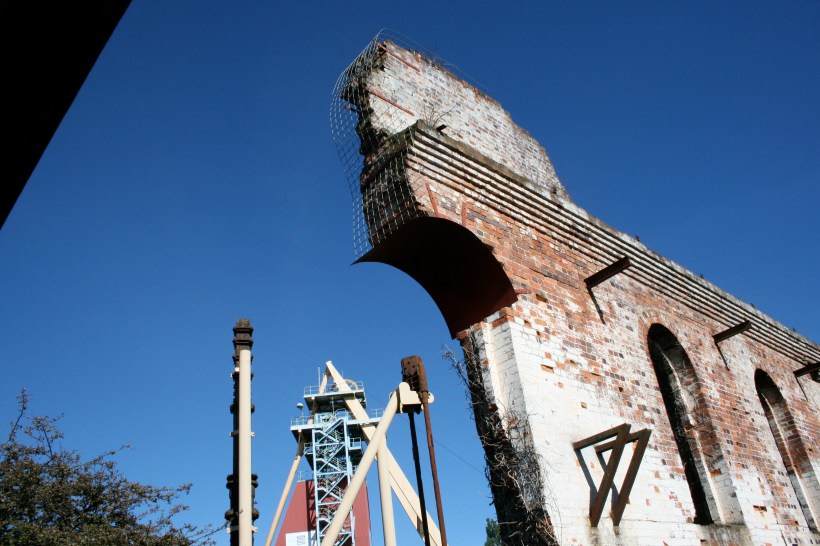
Next day we left our campsite and parked near the Mining Museum. The ruins of the original mine were still visible.After it closedin 1914 the mine flooded and collapsed.It was only when the new mine opened in 1995 that the water could be controlled, this time using electrical power instead of steam.Further on there was a viewing platform of the current mine where you could see the workers’ tags on the board showing who was underground and who wasn’t.The lift where Brant and Todd came out after their rescue was there in front of our eyes.While we watched, a miner used a forklift to put a drum of diesel into the lift before it went down below.
The display depicting the rescue of Brant and Todd and the death of Larry was very comprehensive. If you dared you could crawl into a tunnel and stand up in the space replicating that of the trapped miners.It was extremely claustrophobic so I didn’t stay there very long.At least I had a choice.
Since we visited in 2010 the mine has closed.In 2012 it was considered no longer viable at current gold prices.However the museum has gone from strength to strength and attracts tens of thousands of visitors a year.
Imagine you are a young Dutch woman setting sail for the other side of the world.The year is 1628 and the voyage you are about to undertake is extremely dangerous.Your husband waits in Batavia (now Jakarta)and you are apprehensive as to what lies ahead, but never in your wildest dreams would you believe the horror that is about to unfold.
The Abrolhos Islands in Western Australia have long been renowned for their abundant fishing grounds.The lobsters caught there are exported all over the world.The islands are even more famous for being the scene of almost unparalleled wickedness and debauchery.
John and I had read books and articles about the events so were keen to travel there and imagine what it would have been like for the passengers on board the Batavia, flagship of the Dutch East India Company. The Commander and the Captain were already enemies when the voyage began, but it was the under-merchant Jeronimus Cornelisz, a bankrupt pharmacist from Harlaam, who was largely responsible for the chaos that ensued.
The Captain and Jeronimus engineered a change in course as they planned to take over the ship and become buccaneers.However they didn’t plan to be smashed on the rocks of Houtman Abrolhos.Incredibly, of the 322 on board, only 40 drowned and the bedraggled survivors found themselves on a rocky island.Water and food was in short supply so both the Captain and the Commander set sail in a 30 foot longboat (with 46 passengers including a baby) hoping to add to the provisions or find help.
Two months later the Commander was back, having sailed all the way to Batavia where he was immediately given a ship to rescue the shipwrecked survivors (and the riches on board the sunken ship).
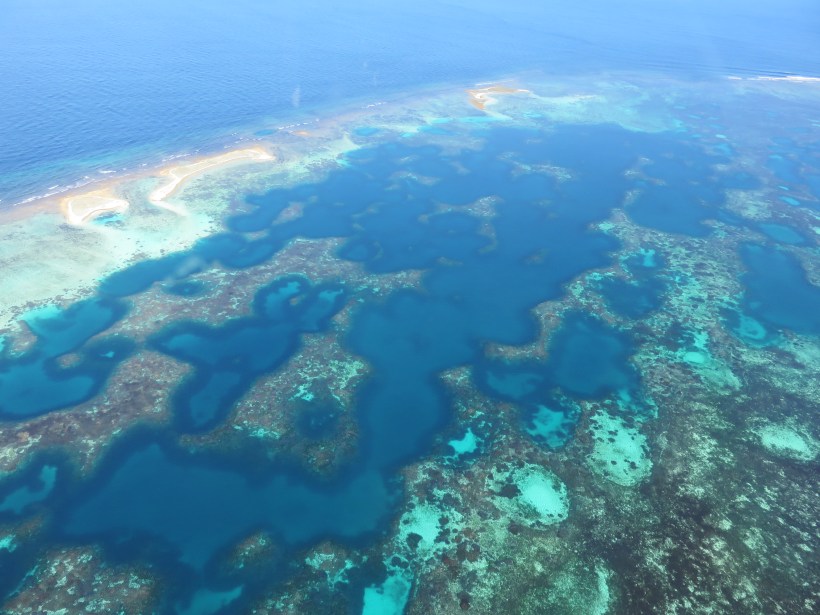
Before I tell you what he found I will drag you back to the present.We arrived in Geraldton after a long drive down the WA coast andbooked two nights in a caravan park.In the office I found a brochure on flights to the Abrolhos Islands.The next morning we were skimming over the town of Geraldton and heading out to sea across clear blue green water barely covering endless coral reefs.
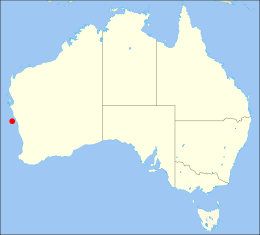
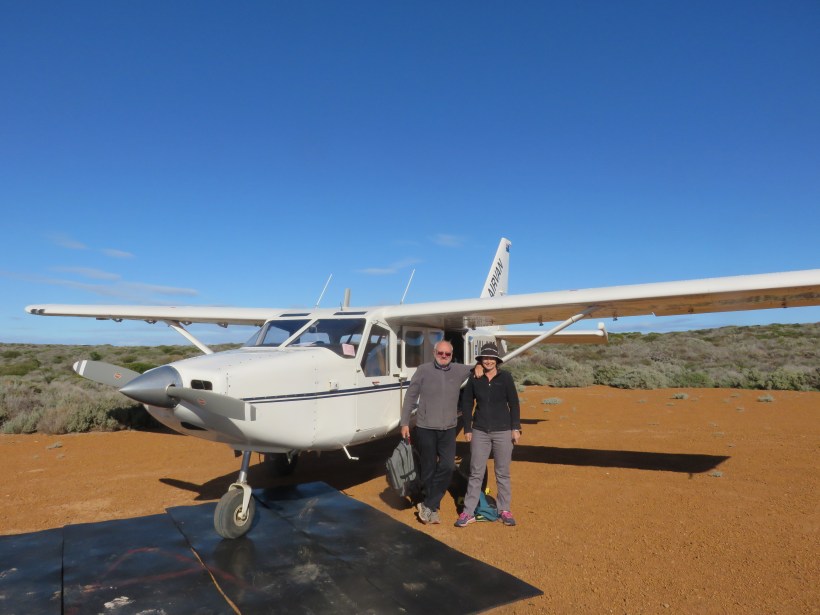
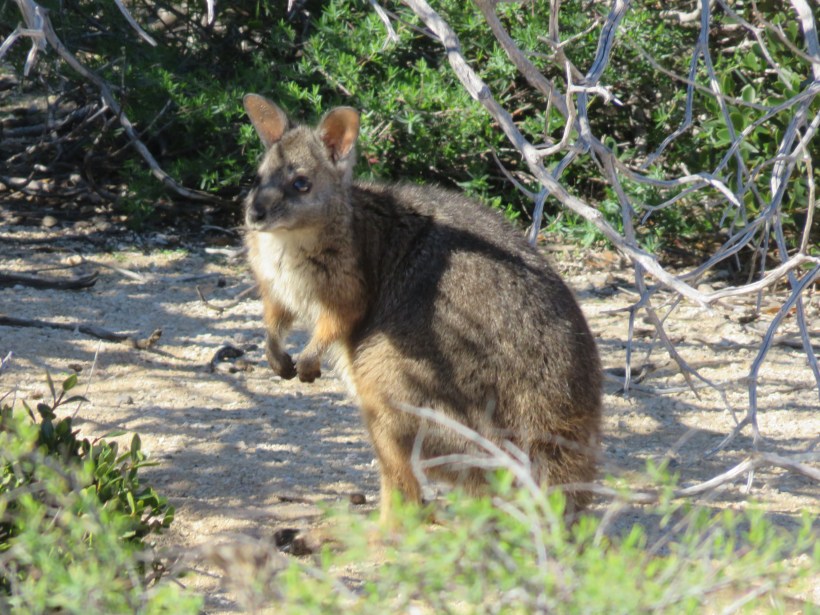
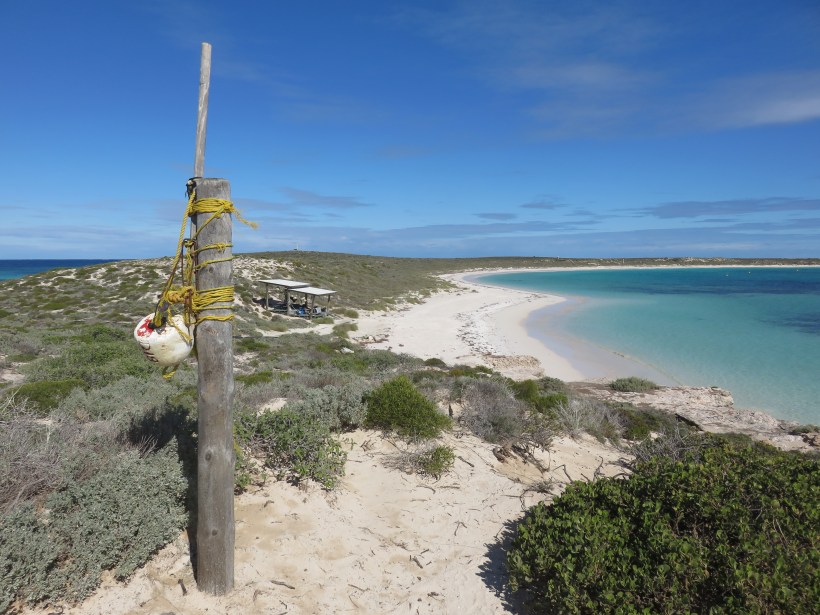
Our pilot, Josh, landed gently on the red, gravel airstrip.We were on East Wallabi Island, 80 kilometres out to sea from Geraldton.It is only one of 122 islands that make up the group.Rocky and barren, only a few have fresh water but the Tammar wallaby which still hides amongst the scrubby bushes of East and West Wallabi would have provided food for some of the shipwrecked survivors.
Maybe the men, women and children who huddled on that shore would have survived if the under-merchant, Jeronimus,had drowned.He couldn’t swim and stayed on board the damaged ship, paralysed with fear until he could no longer stay above water.Fate gave him a plank to hold and threw him up on the beach of Beacon Island.With the Captain and the Commander gone he took charge of the group.Moving most of the soldiers to West Wallabi Island under false pretences he then marooned them there to die of thirst and starvation.
Gradually, any opponents were cruelly murdered.Jeronimus did not commit murder himself but coerced his followers to perform more and more atrocious acts.By the time the Commander returned 110 men, women and children had been slaughtered.
What of Lucretia, the elegant Dutch woman travelling to meet her husband?Her beauty saved her, although becoming the unwilling mistress of Jeronimus Cornelisz, to her mind, would have been “a fate worse than death”.
You can read more about this exciting story in the book Batavia, written by Peter FitzSimons.It is not for the faint hearted. Less fictionalized versions of the events are available as well including The Wreck of the Batavia: A True Story by Simon Leys and Batavia’s Graveyard by Mike Dash.
It was hard to believe, as we snorkelled off one of East Wallabi’s pristine beaches, that the bones of murdered Dutch citizens still lie beneath the sand.
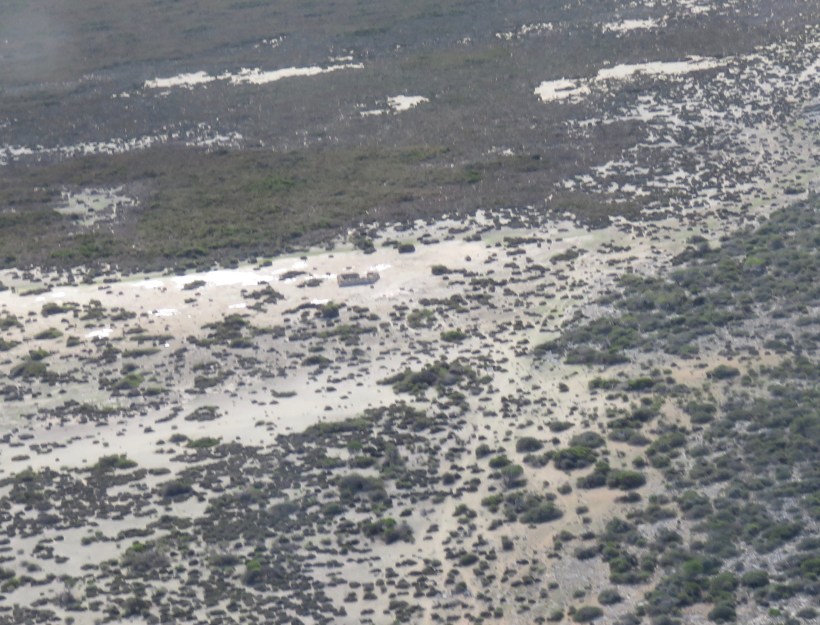
As we flew back to Geraldton, Josh swooped low over four crumbling walls on West Wallabi Island.It is the stone fortbuilt by the soldiers who were marooned there.That’s right! They didn’t die of thirst as they discovered water on the next island.It is the oldest European surviving structure in Australia as it was built in 1629.That was 151 years before Governor Phillip arrived with the First Fleet on the East Coast and changed the nature of buildings in this country forever. You will have to look hard but it is approximately in the centre of the picture. Here it was that the true hero of the story, Wiebbe Hayes, led the courageous group which stood up to Jeronimus and his followers.
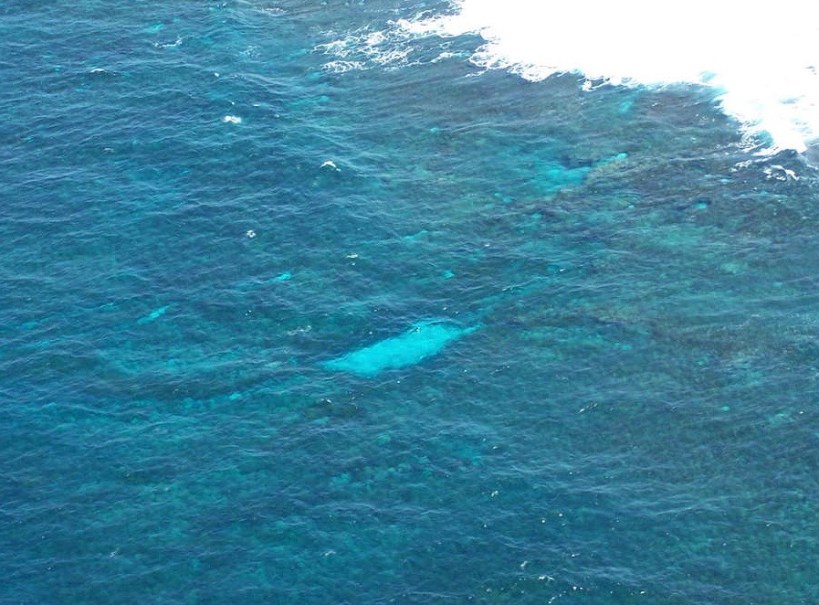
Our pilot also pointed out a white blemish on the reef. It was the actual spot where the Batavia came to grief.The coral was forever marked where the ship came grinding to a halt.
The next day we were on our way in the caravan, heading south to Perth.The Abrolhos Islands had left an impression never to be forgotten as we continued our exploration of the Land of Oz.
It is the Australian Dream. To retire from the daily grind of work and head off across the Nullarbor, drive to the tip of Cape York, explore the Red Centre, eyeball a crocodile in Kakadu, dive the Great Barrier Reef. The list goes on. What better way to do all that than in a caravan!
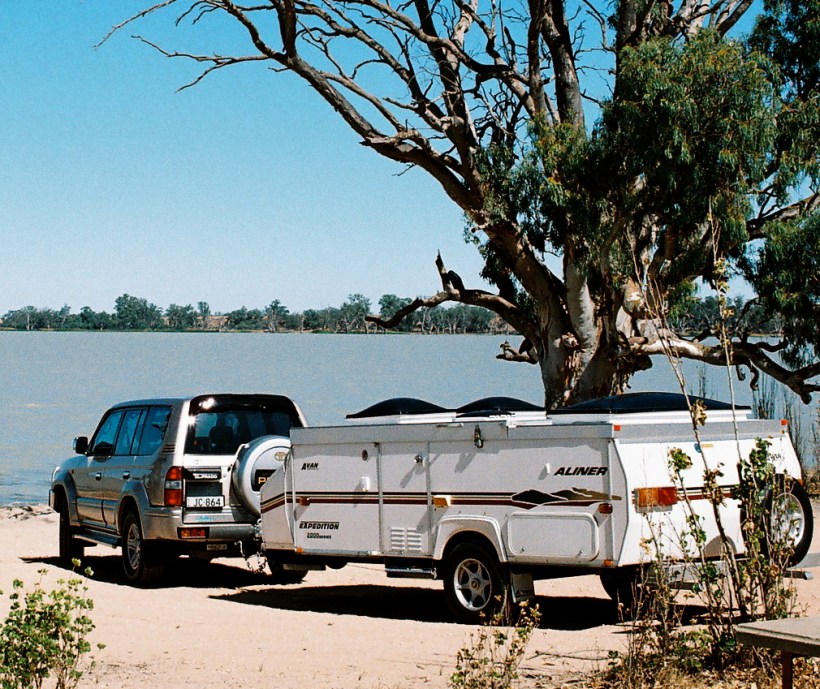
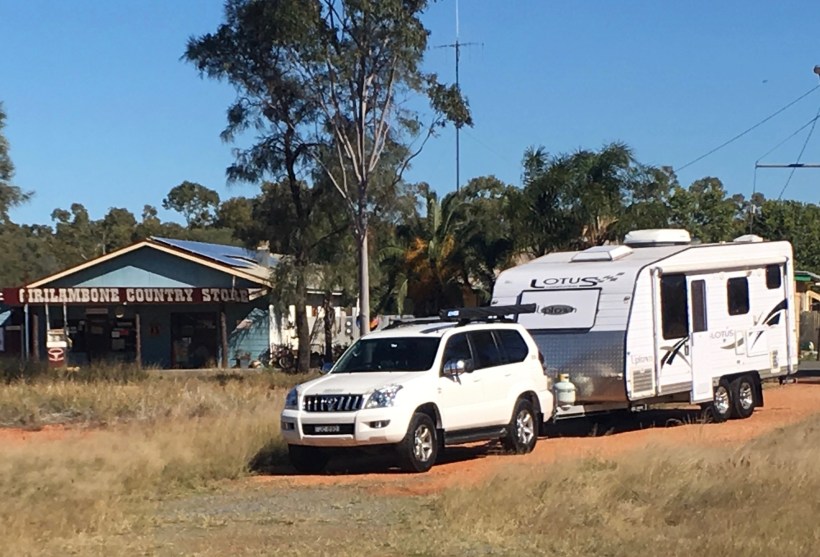
For the past twenty years, we have owned caravans (known as RVs or trailers in the USA). The first was an A-Van which popped up into an A-frame camper in less time than it takes to put on the kettle.
Although much loved, we farewelled the A-Van for the more comfortable Lotus Uptown, with its shower and toilet, washing machine and leather seats, huge fridge and roomy queen sized bed.
In this year’s A to Z we will visit some of Australia’s lesser known but nonetheless interesting places. The stories that you read will sometimes be of our own experiences but more often, they will tell the legends and chronicles of the people who lived and died somewhere on this vast, unpredictable continent we call home.
It is nearly a month since the A to Z finished but time moves on and there has been a new development.
Denise told me she was organising a family gathering centred around her mother and her mother’s sister. Her mother (Edith) is my half sister but doesn’t know how close our relationship is. The other sister lives in Tasmania and they hadn’t seen each other for a few years. In that time the sister in Tasmania had developed Alzheimers and sometimes couldn’t recognise her own family members.
As well as the sisters there would be their children who are my nieces and nephews even though they are mostly around my age. My daughter said to me I should go as otherwise I might never have the chance of seeing either of my half sisters again. My husband gallantly offered to accompany me so we set off with Jetstar for Melbourne and an Air B&B I had booked in the same suburb as the family reunion.
Flying to Melbourne
Denise, her sister and Hugh’s son were in the car that picked us up from the airport. The most exciting news for me was that Hugh, my half brother, would be there. Unlike my two half sisters he knew who I was and it was with some trepidation I looked forward to our meeting. Apparently he had come to terms with the fact we shared the same father and he had some interesting news for me. Six months after I was born he returned from a two year trip to England and Europe. He was working in a business related to his father’s and shared an office with my mother and father. He remembers them both and also recalls bouncing a baby on his knee. That was me but of course he didn’t know then that we were actually brother and sister.
The most heartwarming moment for me was when he put his arms around me and said, “Welcome to the family”.
I was delighted to meet my other half sister who despite her memory loss was still feisty and chirpy. She looked at me for a while and asked how I was related to the family. She was sure she had seen me before but I assured her she hadn’t. She was once a talented teacher and artist and until recently was able to care for herself but now lives in a nursing home. My other sister remembered me from our meeting last year with a few gentle reminders but sadly will never know our true relationship.
The nieces and nephews were all very welcoming. Some of their children and grandchildren called in as well so by the end of the second afternoon my head was spinning.
On the final day I had arranged a meeting with Alice, my first cousin twice removed. She had been one of my early contacts after the DNA results came out. She is Ted Turner’s sister’s great grandchild. We arranged to have coffee and by chance her parents had flown down from Mildura that weekend. It was good to catch up with them and amazing to think that a simple DNA test could turn up so many relatives, however distant.
I’m now home again and reflecting on the weekend. As I only live two hours drive from my half brother Hugh I am hoping to see more of him. Because he lived in the same small coastal town as some people I knew I asked if he was aquainted with them. They turned out to be very good friends of his. When I told him who they were he was astonished.
My mother was widowed at the age of 43. In her early 60s she met and married a Dutchman, Frank, who had emigrated to Australia in 1951. Prior to marrying my mother he had four adult children. One of them was Anne, who now lives in the same village as Hugh. So my half brother and his wife are friends with my step-sister and her husband. I have lost contact with Frank’s children since his death but it is still a remarkable co-incidence.
Reading through this I realise what a tangled tale it is. If you have followed through the A to Z you might make some sense of it. None of us will ever know what really happened back in 1950 but there is no doubt that I have suddenly found myself part of a large, extensive and very welcoming family.