
TV and Theatre:Living in the ’70s

It’s a horror movie right there on my TV
Horror movie right there on my TV
Horror movie and it’s blown a fuse
Horror movie, it’s the six-thirty news
And it’s shockin’ me right outta my brain

Horror Movie – Skyhooks – 1975 

Joanne bought herself a black and white television the year she started teaching, in 1971. It was a Healing, the cheapest she could find and it proved that you get what you pay for. It developed a habit of taking up to an hour before the picture would appear, so Joanne would switch in on when she arrived home from school in the hope she would get to watch something before the news.

Colour TV first arrived in Australia in 1975. Three years earlier, Bruce Gyngell (TV executive) famously quoted the then Prime Minister, Billy McMahon, who said that the Australian economy was in such a fragile state it could not afford the Vietnam War and colour TV.

It was at least two years later before Will and Joanne became the proud owners of their Sony Trinitron Colour TV. The fact that they could only receive two channels (WIN 4 and ABC 2) did not worry them unduly but it did affect their viewing habits. The ABC was the public broadcaster and favoured current affairs, British comedy and drama and some Australian made content as well. WIN provided local news and American TV with advertisements so ABC became the channel of choice.

So much British comedy was pouring into Australia and it was good. The Two Ronnies, Dad’s Army, Are You Being Served?, Fawlty Towers, Steptoe and Son, Till Death Us Do Part and The Good Life poked fun at everything British but also matched Australia’s sense of humour.

Locally produced shows were popular.  Number 96 broke boundaries in what was acceptable on TV and Graham Kennedy was banned from appearing on live television after his infamous ‘crow call’.  Countdown appeared in 1974, hosted a year later by Ian “Molly” Meldrum and lasted fourteen years.  It was the most popular music program in Australia’s TV history.  Molly was a bumbling but endearing host who is credited with turning the Australian music industry around.  Video clips were a new thing.  Joanne and Leo were amazed at the colourful costumes of ABBA as much as their catchy music.

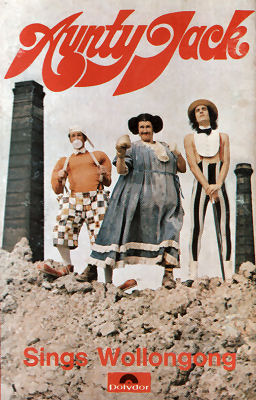
Australian comedy was quirky and a bit hit and miss.  The Aunty Jack Show hit Australian screens in 1972. Joanne and Leo watched it regularly, agreeing some parts were brilliant, some not so good. For some reason the writers chose Wollongong as the object for their satire, which had letter writers and the Lord Mayor in a flap.

Joanne was dedicated to an Australian TV series called Certain Women (1973-76).  It grew out of a six part mini-series showcasing six talented women actors and covered the issues facing women in the 1970s.

From watching mainly American TV in the ‘60s Joanne and Will had changed their viewing habits. That is not to say the US was forgotten. They (mainly Joanne) watched the Partridge Family, M.A.S.H, All in the Family, The Brady Bunch and Mary Tyler Moore. As life became busier, the time for TV watching became less.

It was later in the ‘70s that friends suggested they all meet in Sydney to see The Applecart performed on stage, starring Keith Michel.  Joanne noticed a flyer advertising a performance of Henry IV at the Nimrod Theatre.  It caught her eye because she had studied that play at university and enjoyed the escapades of Prince Hal.  It was a memorable experience. Sitting in the front row they ducked as a sword slid across the stage. At interval the actors (but not John Bell) circulated with the audience and shared Middle Ages food with them, and mead of course.  

Falstaff and Prince Hal (Frank Wilson and John Bell) from ABC News Sat 6 Nov 2021 

That was the beginning of many visits to the Nimrod on a Friday or Saturday night. They would drive up the coast after a week of teaching, or a day of sailing on the lake, eat dinner at a nearby restaurant and rush to make it to the first act before lights out. Sometimes Joanne was so tired she simply fell asleep but some plays were so good she stayed awake the whole way through. Anything with John Bell in it was sure to see Joanne paying full attention. David Williamson’s Travelling North hit a chord. Everyone could identify with it. Some of his other plays had them yawning but you can’t win them all. The most horrifying play was The Choir, where the slow dawning of how the choir boys retained their high voices had the men wincing.

The Nimrod Theatre company was founded by John Bell, Richard Wherrett and Ken Horler and while it had its share of tried and trusted plays it promoted ‘good new Australian drama’ (and some not so good) from 1970 to 1985. By the time Will and Joanne started it had moved from Nimrod Street, Kings Cross to Belvoir Street, Surry Hills but retained the name. John Bell went on to establish the Bell Shakespeare Company and is an Australian Living Treasure.

Schooldays: Living in the ’70s

We don’t need no education
We don’t need no thought control
No dark sarcasm in the classroom
Teacher, leave them kids alone
Hey, teacher, leave them kids alone

All in all it’s just another brick in the wall
All in all you’re just another brick in the wall

We Don’t Need No EducationPink Floyd- 1979

Joanne completed three years of teaching at her first school.  Now she was a fully qualified teacher and the bond to the Department of Education was automatically wiped.  She decided she would apply for a transfer closer to home and was excited to receive notification of appointment to a school nearby.

She was somewhat disappointed to discover that she was a supernumerary (surplus to requirements) and spent the first couple of weeks doing odd jobs, taking classes for an hour or so and generally feeling directionless.

The principal called her to his office.  The inspector was there as well and had an interesting offer.  If she stayed where she was she might be transferred anywhere at any time.  However, a position had come up at a nearby school teaching a class of special needs children.  The previous elderly teacher had gone off on sick leave and wouldn’t be back.  Over the past weeks there had been a series of teachers who didn’t stay for long and the children needed someone who was there for the long haul.

Joanne thought she could do it.  I mean, how hard would it be?  Sure, the children had learning difficulties but she would give them the security they needed.

It was scary arriving at the new school.  She had loved her previous appointment, with its swimming pool and happy band of young teachers. Her classroom was a separate building out in the middle of the playground.  The children filed in after Scripture lessons and stared at their new teacher.  Joanne emphasised how she wasn’t like the others.  She would be staying with them all year and they would have a great time together.

This didn’t impress one of the children.  He decided he had had enough and climbed through the window.  Joanne picked the most well-behaved child and sent her to the Principal to report the absconder.  It was difficult to continue after the disruption but she had to.  What else could she do?

The window climber was put into one of the school’s mainstream classes to cool his heels for a while.  Joanne spent hours each night preparing individual lessons for her students.  She tried to make them fun and interesting.  Whatever she tried didn’t work.  Some children swore at her, some argued with their classmates and began fights.  Joanne concluded that these children did not just have learning difficulties.  They had behavioural difficulties as well.

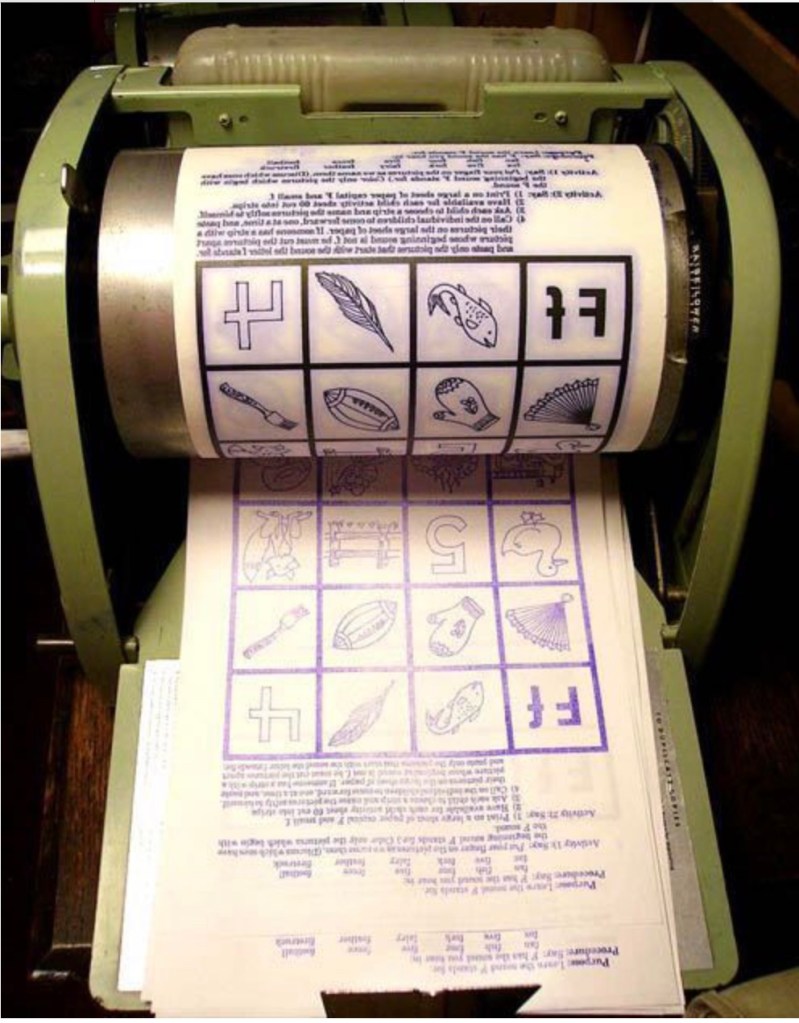
Roneo machine for duplicating pages of work

Will would come into the little classroom of an afternoon to see Joanne, her head in her hands, weeping at the desk. Stones hit the roof and rattled down the corrugated iron.

‘I’m not giving in,’ she said.  ‘They will come round eventually.’

Who knows how things would have transpired because what happened next came totally out of the blue.

One day, at recess, the principal called her into his office.  ‘I’ve just heard from the inspector,’ he said. ‘He is trying to place a teacher newly returned from New Guinea.  He is trained in the teaching of children with moderate intellectual disability.  Also one of the teachers at your last school has gone off on sick leave and may not be back for months. They need a teacher. You don’t have to decide straight away but would you consider going back to your former school?’

Of course Joanne had to say how much she would miss the children and what a difficult decision it was to make but she knew this was a gift she could not refuse. The next day she was back at the school with the swimming pool.

‘It’s a difficult sixth class,’ said the principal.  ‘They were devoted to their previous teacher who has been in the school for many years.  You might find it hard to take his place.’

Joanne assured him that nothing would be difficult after her recent experience and she was right. She spent five happy years at the school, growing in experience and confidence, always conscious of her lucky escape.

As for the replacement teacher specially trained in teaching children with intellectual disability, he lasted one day.  The class was eventually disbanded and the children returned to their own schools.

Rock ‘n Roll: Living in the ’70s

Rock’n’Roll I gave you all the best years of my life
All the dreamy sunny Sundays, all the moonlit summer nights
I was so busy in the backroom, writing love songs to you
But you were changing your direction and I never even knew
That I was always just one step behind you.

Rock ‘n’ RollKevin Johnson – 1973

Arriving at college in 1969, Joanne was impressed by people who knew a lot about music.  Her flatmates Margo and Shauna started a Folk Club which she joined, listening to Bob Dylan, Joan Baez, Pete Seeger, Cat Stevens and Woody and Arlo Guthrie.  The college library also had records, turntables and headphones where she worked on music assignments based on ‘Carnival of the Animals’, ‘The Planets’ and ‘The Grand Canyon’ suites.  She also joined the college orchestra, playing a trumpet somewhat inexpertly but enjoying the combined sound they made.

When she first visited Will’s parents’ house, she noticed they had a very modern radiogram. It was stereo, meaning it had two speakers built into a glossy timber box with gilt and plastic trim. Will played his favourite records, brought back from England. The Bee Gees equalled the Beatles as his favourite group, he said, and he loved to mime, ‘You don’t know what it’s like, to love somebody, the way I love you.’

Will’s favourite band

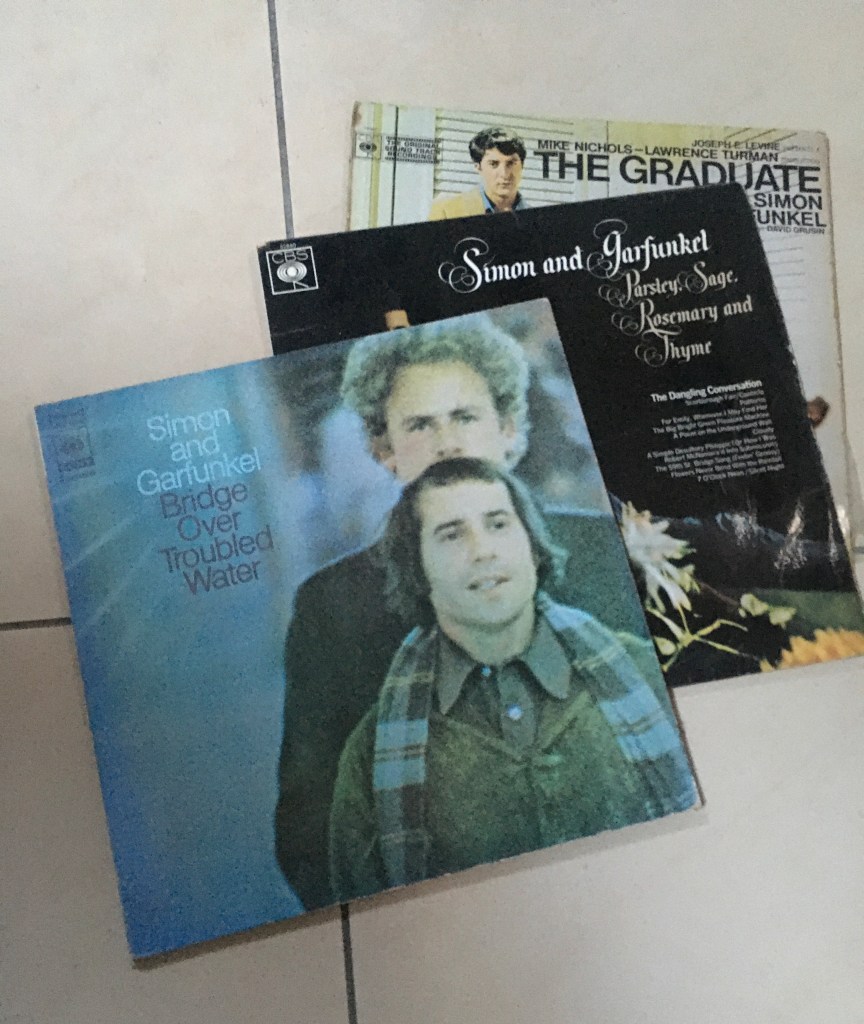
Will also had Rolling Stones, Simon and Garfunkel, Manfred Mann and the soundtrack to Hair, but it was a problem having to go upstairs his parent’s house to play music once they were married and living in the flat.

They had to buy their own sound system.  Meeting up with the Americans from the pool in Fiji, they were impressed by their music system.  ‘You have to get individual components,’ said Pete. ‘That way you get the best of each, put it together and you have great sound.’

Pete and Peta had a Marantz amplifier, Bose speakers and a Dual turntable. Joanne and Will decided to try and get the same combination. After all, it sounded fantastic.

Despite saving for a block of land, owning no furniture and receiving comparatively low teachers’ salaries, the young couple thought that a music system was more important than anything else.  They drove to Miranda Hi-Fi which was where you went if you were serious about your music.  Buying a sound system was not as easy as they had imagined.

‘You’ve got to keep up with the latest,’ said the salesman.  JVC have just brought out an amplifier that gives you Quadraphonic sound.’

‘But we can’t afford four speakers,’ said Joanne.

‘Buy two now and two later,’ said the salesman.  You can still get good quality stereo sound on all records.  There aren’t many CD4 records out now but there will be.  It’s the sound of the future.’

It seemed the Bose speakers weren’t available but the salesman showed them two large Marantz speakers with thick padded speaker grills.  They at least managed to get an automatic Dual turntable which had a tone arm that had to be carefully calibrated and balanced.  A cleaning brush that sat on the record as it spun and another brush for the stylus ensured that all would be dust free.

They were too exhausted and traumatised at how much money they had spent so they left the boxes unopened that night. Next morning Joanne woke to the sound of glorious music coming from the lounge room. Will had put the system together while she slept and it worked! ‘The Mexican Hat Dance’ had her up and jumping in minutes. She just had to be careful she didn’t bump the needle.

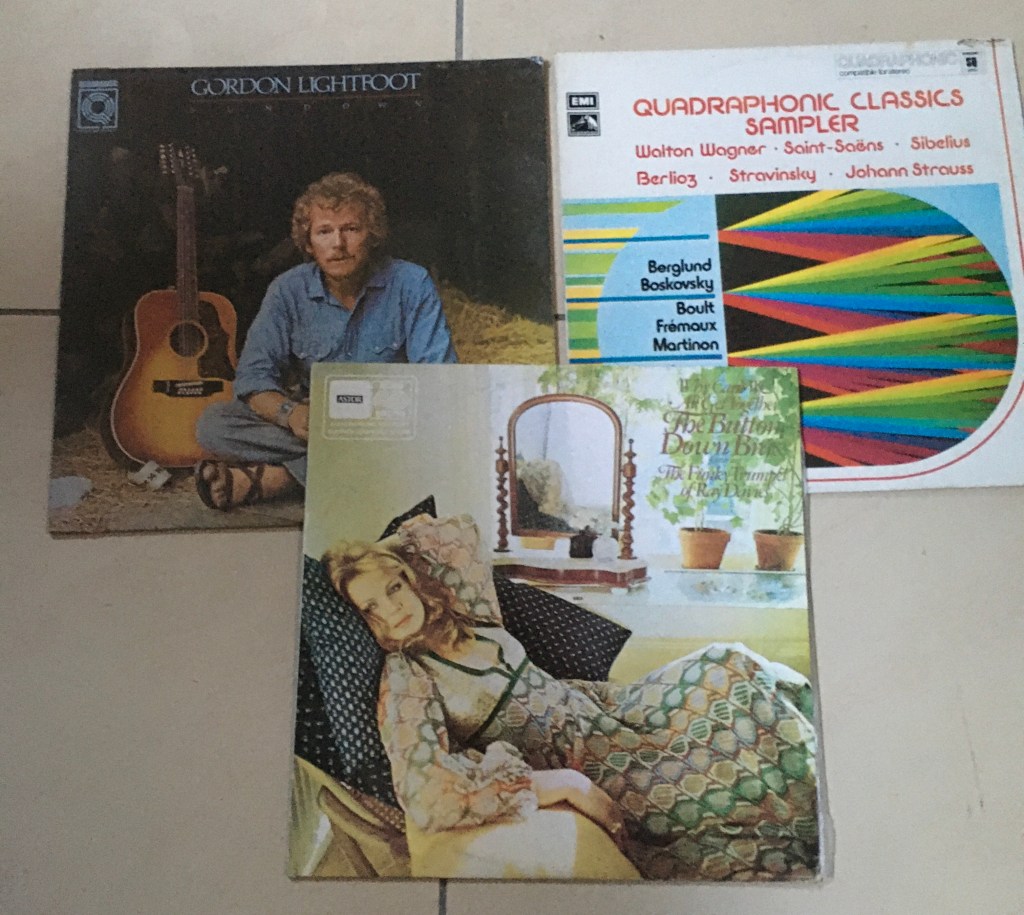
Records in the new CD4 format

While Quadraphonic Sound faded into obscurity in the 1970s it was resurrected in a new form in the 1990s with the introduction of home cinema. However this didn’t worry Will and Joanne unduly as they could play regular records with no loss of sound quality.

The purchase of a Sony Tape deck, attached to the JVC amplifier, heralded the era of copying records onto cassette tape.  Visiting friends for the weekend involved hours spent in front of the record player, recording their music and writing all the songs in tiny print on the cassette case.  The same would happen when friends came to visit.  Of course this wasn’t strictly legal, and some people recorded their own records to “save” them from wear and tear.  The cassettes could be played in the car, except when they got stuck and spools of tape went everwhere.

CDs were a thing of the future. They wouldn’t appear until 1982. Records were still the most popular way to play music, although Will and Joanne did buy some pre-recorded tapes.

Records were expensive so their collection was never large. Saying that it included Elton John, Air Supply, Carole King, Ike and Tina Turner, John Lennon, Wings, Kate Bush, Bryan Ferry, Bread, Gordon Lightfoot, Glen Campbell, Bob Dylan, Melanie, Fleetwood Mac, Neil Diamond, ELO, Billy Joel, Boney M and the Little River Band so they didn’t do too badly.

Quant, Mary: Living in the ’70s

Hey there, Georgy girl,

Why do all the boys just pass you by?

Could it be you just don’t try

Or is it the clothes you wear?

You’re always window shopping but never stopping to buy

So, shed those dowdy feathers and fly

A little bit

Georgy Girl- The Seekers-1966

Mary Quant is now 92 years old but in the 1960s she was one of the designers who took credit for the miniskirt and hotpants. Quant has been quoted as saying, ‘It was the girls on the Kings Road who invented the mini.  I was making easy, youthful simple clothes, in which you could move, in which you could run and jump and we would make them the length the customer wanted.  I wore them very short and the customers would say “shorter, shorter”.’

Will told Joanne of his arrival in England in 1967. He met up with the girls from the ship at Earls Court a few days after arrival and noticed they were all wearing mini-skirts. Apparently they had spent their first day in England taking up their hems.

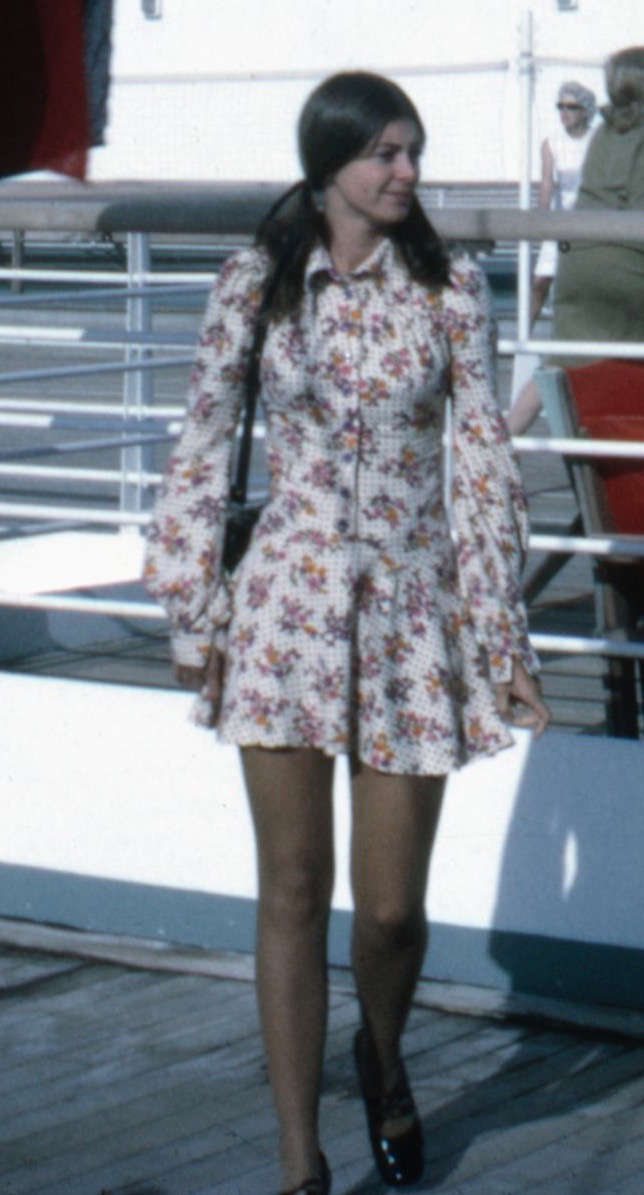
Joanne in 1972

It wasn’t long after this that Joanne looked through her wardrobe of homemade dresses and decided which ones could be shortened. When she finally began earning a wage in 1971 she spent quite a bit of it on clothes.  Her most daring purchase was a black velvet pair of hotpants with a bib and brace, worn with a long-sleeved white shirt, black tights and knee high boots.

Joanne’s mini dress 1972

Teaching with a mini skirt required very careful bending to retrieve items off the floor.  It must have been about 1973 that Joanne started wearing midi skirts.  These were long, well below the knee, but had a split up one side or the front to allow for easy movement.

Joanne loved long dresses for evening wear.  Dinner dances were very popular so she had quite a few in her wardrobe.  Her favourite was a long pink and white gingham dress she called  ‘Ryan’s Daughter’  after the film of the same name.

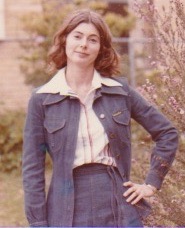
Denim on denim was popular, as was velvet and delicate floral patterns 1978

Will was not to be outdone. His green velvet suit was almost as eye catching as his black jacket trimmed with tartan ribbon from the House of Merivale in Sydney. When Joanne first met him he wore the teachers’ uniform of shorts (quite short), knee high socks, coloured short sleeved shirt and a tie.

The Premier of South Australia, Don Dunstan, took the short shorts to extreme in this famous photo.

Flinders University Library Dunstan Collection

Joanne started wearing slacks to school, usually with a long jackets but later, more daringly, with a close-fitting top.  The bell bottoms became wider as the tops became smaller and tighter.

When Joanne’s mother remarried in 1978, skirts were just below the knee.  Joanne bought an outfit which brought cries of horror from her mother-in-law.  The material resembled a hessian bag, maybe a little smoother.  The skirt and waistcoat were beige in colour, worn with a loose cream shirt and a brown beret.  This is quite a contrast to fashion of the early 1970s.

Politics: Living in the ’70s

It’s time for freedom,

It’s time for moving, it’s time to begin.

Yes it’s time

It’s time Australia,

It’s time for moving, It’s time for proving,

Yes It’s time

Written by Paul Jones and Mike Shirley arranged by Pat Aulton lead singer Alison McAllum

Advertising jingle for the Labor Party in the 1972 election

Gough Whitlam with the singer Little Pattie, wearing T-shirts announcing ‘It’s time’ as part of his Labor election campaign in 1972.
Photograph: Graeme Fletcher/Hulton Archive The Guardian Newspaper Tue 21 Oct 2014 

11th November 1975.   Joanne kicked her off her shoes and flopped on the bed. The second English exam was over and she was free of university until next year.  She idly switched on the clock radio beside the bed.  What she heard made her sit bolt upright.  The Prime Minister, Gough Whitlam, had been dismissed by the Governor General.

She heard the words of Gough Whitlam as he said, ‘Well may we say God save the Queen, because nothing will save the Governor-General’

The Labor leader addresses reporters outside parliament in Canberra after his dismissal by the governor general during the constitutional crisis of 1975.
Photograph: Keystone/Hulton ArchiveThe Guardian Newspaper Tue 21 Oct 2014 

There would be a general election to determine a democratic outcome.  Meanwhile the opposition leader had become PM.

How had it all come to this when three years before half the country was rejoicing over the end of twenty three years of conservative government?  For people like Joanne politics had become exciting.  It actually was affecting the lives of people including herself.  The university course she was now undertaking part time was free since the Labor Party had come into power.  Even her grandmother approved of the new no-fault divorce laws because she had been through a nasty divorce herself.

The new government voted in on 5 December 1972 was unusual to say the least.  Two people, the PM and the deputy, Lance Barnard, held 27 portfolios between them. The duumvirate, as the mini ministry was called, made 40 significant decisions in a short time, including release of all draft resisters from jail, the removal of troops from Vietnam and recognition of Communist China.   The Governor General, Sir Paul Hasluck made the third in the quorum so that there was no breach of propriety. Thirteen days later the 27 ministers were sworn in.  A new era of reform had begun.

What went wrong?

Well, there were scandals and dodgy loans and accusations of overspending. In October, 1975, the Senate refused to pass supply, which meant the Commonwealth would soon run out of money and thus not be able to function. The Whitlam government decided to tough it out (bad decision). The Opposition Leader said supply would be passed if an election was called for the following May or June 1976. Whitlam refused. That meant there would be no money over the long Christmas break

The Governor General then dismissed the Prime Miinister and his government, appointed the Opposition leader as caretaker Prime Minister and called for an election in December. The Opposition led by Malcolm Fraser, had a resounding win.

Looking back at the 1071 days the Whitlam government was in power, most would agree Australia was never the same again. Reforms to education, Aboriginal and Torres Strait Islanders rights, women’s rights, foreign affairs, human rights, healthcare, social security, defence, multiculturalism, the arts, the law, heritage etc left a lasting legacy.

How the Whitlam government handled the economy has been the source of much public controversy. Inflation, the 1973 oil crisis and other factors saw the end of the post-war boom and coincided with the huge increase in expenditure by the government. Of course the Opposition was scandalised by the Khemlani loans affair and the state of the economy and because Labor did not have a majority in the senate, the Opposition was able to block supply and bring them down.

Surprisingly Whitlam and Fraser formed an unlikely friendship in later life.

Just to take you back to the heady days in the lead up to the 1972 election I will add this website showing the musical advertising campaign.  For those of you who live overseas and know nothing of Australian politics it might still be fun to watch.

https://aso.gov.au/titles/ads/alp-its-time/clip1/

Thanks to The Conversation for their reference material Australian politics explainer: Gough Whitlam’s dismissal as prime minister Published: April 19, 2017 1.56pm AEST 

Our House: Living in the ’70s

Our house is a very, very, very fine house

With two cats in the yard

Life used to be so hard

Now everything is easy ‘cause of you

Graham Nash  (Crosby, Stills, Nash and Young) 1970

1973-1974 – House and land prices were rising at a phenomenal rate. Will and Joanne would look at blocks of land, decide they liked one, only to find it was sold and the one next door had almost doubled in a matter of weeks. They had to move fast. Will was keen on Mt Warrigal where the land had views over Lake Illawarra and the beaches to the east.

They were able to borrow enough money to become the proud owners of a steep block of land in Cuthbert Drive.  Sitting in the long grass where their house was to be they imagined the view from their balcony.  To the east they could see waves crashing on the white sand. To the north  the sun was shining on the placid waters of Lake Illawarra, and to the west was the escarpment, looming over the Illawarra with its rugged outline silhouetted against the sky.

All that remained was to choose a house plan.  Every weekend was spent visiting show homes in north-western Sydney.  They finally narrowed it down to a split-level house designed by Pettit and Sevitt.  Suitable for a sloping block, it was designed on three levels.  On the ground floor was a lounge room, a study and double garage.  Up a few stairs and the kitchen, dining room and family room faced the back yard.  Up some more stairs and the three bedrooms with two bathrooms faced the front.  Joanne imagined waking up each morning and looking out at that view.

Dream home by Pettit and Sevitt

One slight problem was the matter of finance.  On their first visit to a bank they were dismissed almost immediately as having insufficient funds to service a loan.  Joanne’s income wasn’t even counted as she would be having babies and giving up work.

Will was most put out and declared he would be banking elsewhere in future and moving all his money out this very day. The bank manager was probably not concerned with the loss of an account that dwindled to nearly zero once a fortnight.

The National Bank was more accommodating.  They would loan them the full amount, with a variable interest rate of 10.38%.  

They were all set to go.  What could go wrong? Everything, it seemed.  Pettit and Sevitt had severed all ties with the Illawarra because of problems with building contractors. Not to be daunted the couple redesigned the house, moving the living area upstairs and the bedrooms below.  They then found a draftsman to draw up the plans and presented them to a builder for a quote.

The quote came in at twice the cost of the Pettit and Sevitt home.  They found most builders wouldn’t even bother giving them a quote.  They just shook their heads and said it would cost too much.

It was time for a rethink. Will had started a University degree which involved attending lectures several afternoons a week after school. Maybe they could sell their land and buy a block near the University? Then they could build a house (not their dream home, but a cheaper, locally built project home) which would get them started.

That is precisely what they did. In May of 1975 they turned the key of their brand new home, exactly three years after their wedding.

Building a house

It was designed by a local building company called Radnor, but Will and Joanne introduced many of the ideas they had picked up from the Sydney show homes. They replaced the windows in the living area and front bedrooms with floor to ceiling glass doors, they squeezed an ensuite beside the master bedroom, they chose colourful benchtops, lime green in the kitchen and orange in the bathroom, cork tiles for the kitchen floor and a luxurious synthetic shag pile through the rest of the house. Marimekko curtains in red, black and white added a vivid burst of colour while the various shades of green in the dining room curtain matched the kitchen benchtops. A Tessa dralon velvet lounge, glass coffee table and the silky oak round table and chairs completed the furnishings.

Of course this didn’t happen all at once.  Sheets were pinned up on the windows until Joanne got around to sewing the curtains and making fabric blinds.  A borrowed cast-off lounge sufficed until the new one could be purchased.  A new cat arrived.  Selina was a Siamese with magnificent blue eyes, dark coloured points and creamy coloured fur.  Despite her beauty she had a quirky nature like her predecessor.

It may not have been the house of their dreams but it was a place where dreams were made.

Not in the Fondue: Living in the ‘70s

Gimme head with hair

Long, beautiful hair

Shining, gleaming

Streaming, flaxen, waxen

Hair – 1968 original broadway cast

The book has lost its dust jacket, and a strip of dark blue masking tape holds its faded covers together. Inside the Australian Women’s Weekly Cookbook an inscription reads, ‘To Joanne with love from Grandma 1971’.  Grandma didn’t want it as she said she was too old to be following recipes.  She thought that Joanne, with her new flat, new job and new boyfriend, might like to use it.

Joanne studied it assiduously. Will often dropped around for a meal so she decided to impress him with oxtail casserole. The recipe asked for four oxtails. She wondered if that meant the tails from four oxen? Maybe it meant four pieces of oxtail?

Haricot beans were needed but hard to source.  She found them in the Health Food store and covered them with water the night before.  On Saturday morning she boiled them in salted water for an hour while preparing the onions, carrots and tomatoes.  She had never peeled tomatoes before but her flatmate told her to drop them in boiling water and the skins would come off easily.  A large can of cream of tomato soup was added to the mixture with a pint of red wine.  She had bought the second cheapest wine at the local Bottle Shop.

The casserole cooked for four hours, cooled in the fridge and then Joanne inexpertly skimmed the congealed white fat off the top.  She drained the haricot beans, added them to the mixture and reheated for an hour in the oven.

When Will arrived he commented on the appetising aroma. Four of them sat at the red Laminex table donated by Annie. Joanne placed one oxtail piece on each plate with the rich red sauce. Mashed potatoes and green beans filled the empty spaces.

‘Um….where’s the meat?’ asked the flatmate’s boyfriend.

They all tried in vain to find something resembling meat but even with the aid of toothpicks little could be retrieved.  

Joanne had more success with Sweet and Sour Pork but the dish that became Will’s favourite was Savoury Lamb – ‘a colourful combination of vegetables and simple but subtle seasonings make this the perfect family or party casserole’. The secret was the combination of sherry, brown sugar, lemon juice, Worcestershire sauce and dry mustard.

The International Cookery section introduced Joanne to chicken and almonds from China, smorgasbord from Scandinavia, cannelloni from Italy, beef vindaloo from India and sate kambing from Indonesia.

The coveted beaten copper fondue pot

It was the Fondue section of the book that intrigued her the most. She read that fondues could be based on cheese, chocolate or oil. It was the oil based fondue that attracted her, as morsels of beef could be speared, cooked and slipped onto the plate, smothered in sauce and eaten. She purchased a book called Fondue Cookery and created elaborate dips to go with the kidney, veal, chicken, pork and prawns. In the interests of health she moved from oil to stock. Her first fondue dish was red painted metal although she coveted the beaten copper one depicted in her cookbook.

On the night of her first fondue dinner half a dozen guests happily speared their morsels, but leaning across to grab a piece of garlic bread Joanne’s long hair caught fire in the fondue flame.  It only singed the ends but left an acrid scent of burnt keratin in the air.

Me and My Arrow: Living in the ‘70s

Straighter than narrow

Wherever we go, everyone knows,

It’s me and my Arrow

Harry Nilssson 1970

The cat clung desperately to the boy on a bicycle as he rode into the school yard.

‘Here’s the cat I was telling you about,’ he called out to his teacher.

‘I thought you said it was a Siamese,’ replied Will. This cat looks like a bit of everything’

‘It’s mum is Siamese but as for its dad, who knows?’

Will had never seen an uglier cat. It was tortoiseshell in colour, skinny but strong and not averse to showing its claws and teeth.

I wonder what Joanne will think?

He needn’t have worried.  She was used to cats and decided to keep it without question.  

They both agreed on the name Arrow after watching an animated  TV  show called ‘The Point’ where Oblio, the pointless boy, had a dog called Arrow.

Arrow had inherited a Siamese cat temperament.  She didn’t like to be held for long, exploring the flat from top to bottom, including shimmying up the curtains.

Will and Joanne were horrified as Arrow made herself at home. They had been working every weekend to give the flat more of a modern vibe. Will’s parent gave them free reign. They painted the kitchen cupboards white and lined the walls with red, black and silver patterned contact paper. The dark bathroom became known as ‘the sunny’, with yellow walls contrasting with the green painted water pipes.

Honan matting squares brightened up the floor (but were a devil to clean). Will made book shelves which filled two walls above the lounge and Joanne sewed purple curtains shot with red. The bedroom had a bright orange quilt to make up for the dark heavy wardrobe.

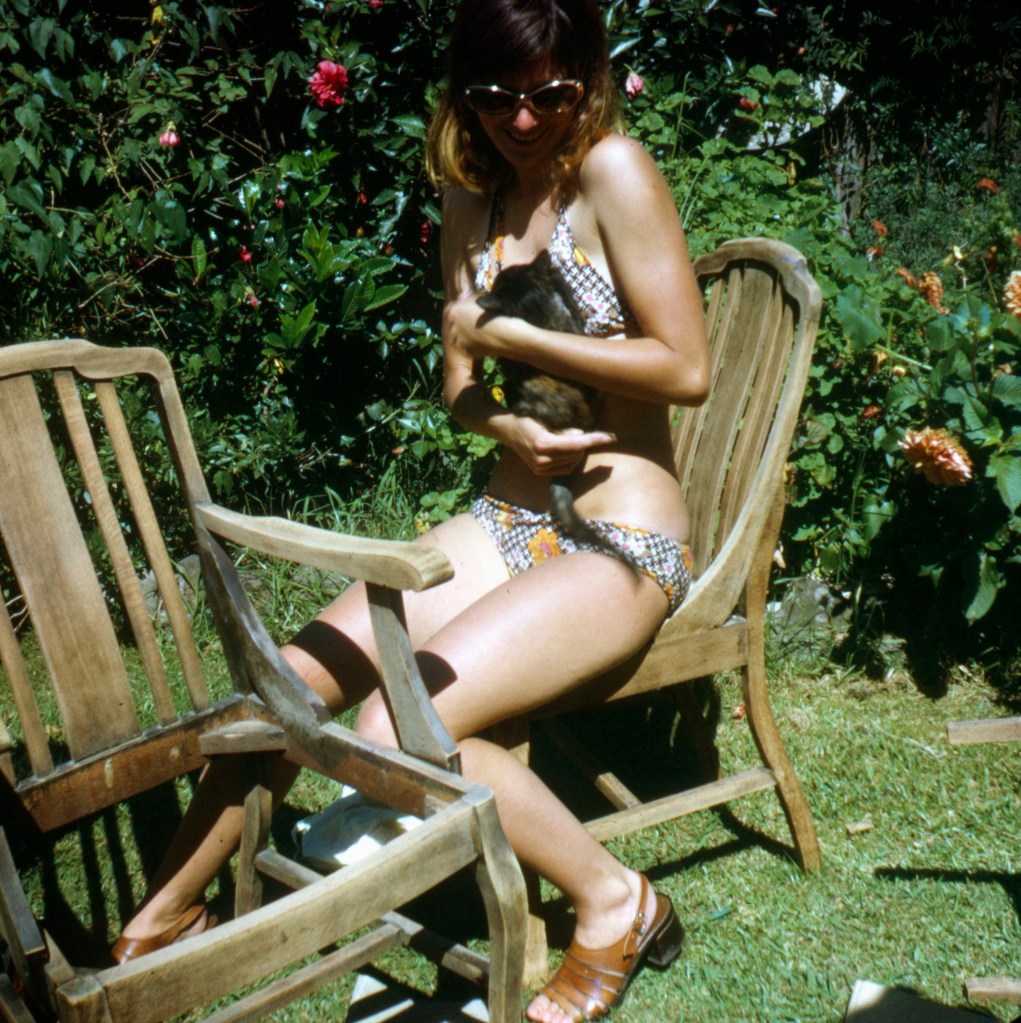
They both loved antique furniture and spent many hours searching antique stores for their future home. They couldn’t afford the coveted writing desk, the marble topped hall stand or the chiffonier but they both fell in love with a silky oak round table and six chairs. Many hours were spent in the backyard, sanding the accumulated grime of many years off the legs, arms, splats and spindles. Arrow happily leapt from chair to chair.

Furniture restoration with Arrow

Once they went camping to St Georges Basin, taking Arrow with them. She disappeared on the first day and they thought they would never see her again. She must have used up some of her nine lives but on the day they were to leave she reappeared.

Arrow became sick. They took her to the vet and found she had an incurable condition commonly found in Siamese cats. How unfortunate for Arrow to have missed out on the good looks but to have inherited a health condition. Arrow’s pointy little face looked at Joanne anxiously as she said a last goodbye. Hers was a short life but she would be remembered as a cat with a prickly personality, much loved by her young owners.

L for Lay, Lady,Lay: Living in the ‘70s

Lay across my big brass bed

Stay, lady,stay

Stay with your man awhile

Until the break of day,

Let me see you make him smile

Lay, Lady, Lay  Bob Dylan 1969

May 1972

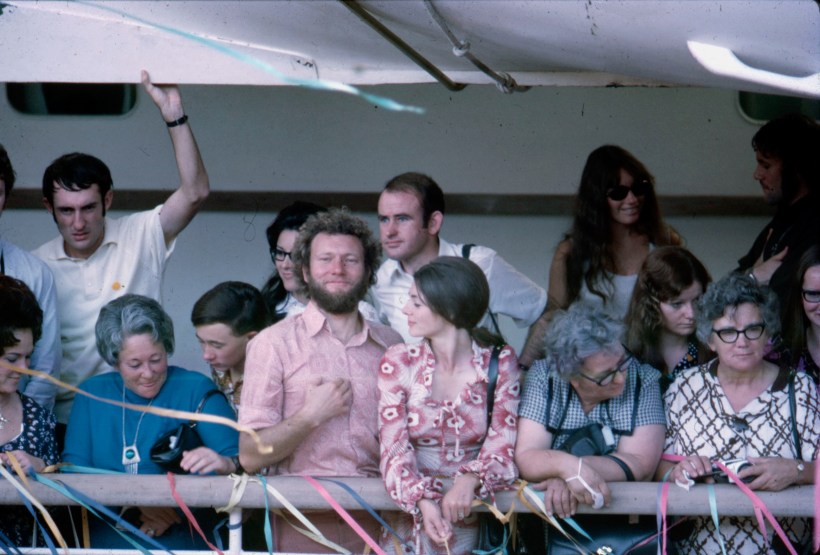
The Oriana pulled away from the wharf, the streamers broke and the faces of family blurred into the distance. Joanne and Will rode the lift down the bowels of the ship and found their cabin. It was small and dark, with narrow double bunks and only just enough room for their suitcases.

Reuben Goossens Maritime Historian, Cruise‘n’Ship Reviewer, Author & Lecturer source of this photo

‘It’s not as if we will be spending much time in here,’ said Joanne. ‘We’ll be outside doing lots of activities, won’t we?’

She had heard so much about Will’s voyage to England on the Fairsea. Stories of swimming like seals in the ship’s pool, dancing and drinking all night, and performing in a magnificent Roman themed extravaganza had all seemed so exciting.

They arrived at the dining room and were shown to a table where they met their dining companions for the next seven days. They found they had very little in common with the singles they met. The first course was always consommé.  In fact, Joanne felt that the entire dining deck smelt of consommé.  She could sense its pervasive aroma it as soon as she stepped out of the lift.

Every morning at 6.00am there would be a knock on the cabin door, the lights would come on in the pitch dark room and a steward would bring them two glasses of orange juice. There was no such thing as a ‘Do Not Disturb’ sign to hang on the door. There was no such thing as ‘tipping the steward’ either, or at least Will and Joanne didn’t.

The storm hit the next day, with grey skies and huge waves rolling the ship from side to side.  The pool was closed and the dining room emptied out as more passengers took to their beds.  There was a washbasin in their cabin but the bathroom was at the end of a long corridor.  Joanne had to step over the remains of people’s meals to reach the shower but she was determined she would not succumb to seasickness.

It severely tested her strength when she decided to iron one of Will’s shirts in the laundry room. The heat from the dryers and the roll of the ship was almost too much for even her strong stomach.

They gathered on the deck in the wind as Ball’s Pyramid and Lord Howe Island slipped by.  How inviting the curved beach looked.  It would be so wonderful to stand on level, still, unmoving land.

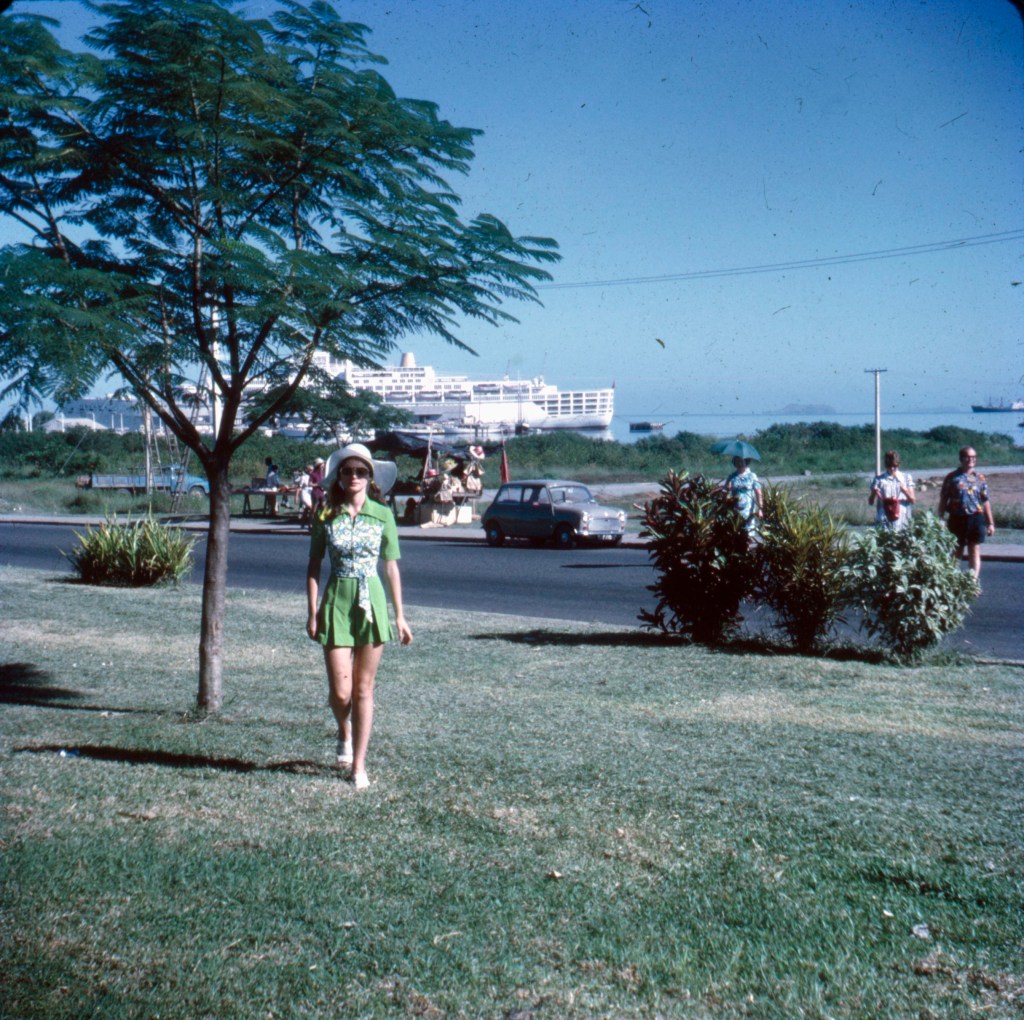
Finally they could go ashore.  The ship had pulled into Suva, Fiji and they gazed over the railing at the dancers performing below them.

‘Let’s find a taxi and get to a beach,’ suggested Will.

They were both astonished and underwhelmed at their destination. Beside a plain rectangular motel was a cement pool with absolutely no charm whatsoever. Behind the motel were rows of mangroves where glimpses of water indicated the possibility of an ocean beyond.

‘At least the pool hasn’t got huge waves in it,’ laughed Will.

It wasn’t long before they made the acquaintance of two Americans. Pete and Peta were heading to Australia. With the shortage of teachers in Australia Pete had accepted a position as a science teacher at Picton High School while Peta would try to get work in a laboratory somewhere. They would be living in the same geographical area as Will and Joanne, so promised to catch up later in the year.

Oriana in the background at Nadi, Fiji

The Oriana set off for Nadi, but not before Joanne and Will bargained for a huge woven clothes basket which was stored in the ships’s hull. Some passengers decided they would cross the island and meet the ship on the other side. The less time spent on the Oriana the better, as far as they were concerned. On the other side of the island of Viti Levu the ship docked at Nadi and then sailed on to Noumea where they arrived in an ugly industrial port.

‘It looks just like Port Kembla,’ said Joanne.  Somehow the image of idyllic Pacific Islands was fading rapidly.

Precariously they jumped aboard the tenders, and reached the shore where a bus rattled into Noumea, the capital of New Caledonia. Joanne was left with an image of muddy roads full of potholes and rain drenched markets but Will saved the day. They entered a magnificent patisserie and ordered a concoction of icecream, meringue and fruit called Chantilly Glace.

Boarding the ship they found themselves accidentally in the First Class section.  Expecting at any moment to be evicted they looked with admiration at the grand dining room, ballroom and lounge areas. Tourist class looked very plain when they finally made their way back.

At the Captain’s Cocktail party Joanne wore her long blue and black dress, once intended for the wedding. Probably a wise decision to leave it for the honeymoon.

They had one more interesting event before they left the ship.  As they had to put their suitcases out into the corridor on the last night of the voyage, they had to make sure they had clothes ready for the next morning.  Waiting on the deck until their number was called for disembarkation they saw an amazing sight.  Mini skirts were the norm at the time, and leaning over the railing was a girl who obviously had forgotten to leave out her underwear the night before.

Built in 1959 for the Orient Steam Navigation Company, the SS Oriana became part of P&O in 1966. She changed to a one class cruise ship in 1973, the year after our honeymooners’ brief voyage and was based in Sydney from 1981 to 1986 after which she was retired and sold to become a floating hotel in China. As a result of being badly damaged in a storm she was subsequently scrapped in 2004.

Knock Three Times: Living in the ‘70s

Knock Three Times

On the ceiling if you want me

Mmm, hmm, twice on the pipe

If the answer is no

Tony Orlando and Dawn-1970

‘Let’s make it legal.’

Joanne stared at Will, wondering what he meant.

I think he is proposing!

There were all sorts of reasons to say no.  In two years Joanne could proceed with her plan to travel to London, teach and travel.  On the other hand, if she married she might never have the chance to fulfill her dreams.

However, might it not be more fun to travel the world with a soulmate? She envisaged the two of them teaching somewhere in the snowy Canadian mountains, using their holidays to explore the continent of North America. Of more immediate importance, Will said they could paint the flat under his parents’ house in bright sunny colours with only $10 a week rent.

Suddenly Joanne wanted it all to happen straight away but Will thought they should wait until the following year. After all they had to plan a wedding!

The first task was to buy an engagement ring.  They looked in the window of Angus and Coote for a few minutes before stepping inside.  As soon as they mentioned ‘engagement’, they were ushered to comfortable chairs and presented with trays of glittering rings. Joanne liked a flat gold ring with a small diamond flanked by triangular metal buttresses.  

Joanne had never been to a wedding.  All she knew was that she didn’t want the flouncy white dress, the father walking her down the aisle (there was no father) and a minister officiating.

In 1972 the options were a church wedding or the registry office. Marriage celebrants did not exist although some outdoor weddings took place with a person of the cloth in charge.  They heard stories of people who visited their priest or minister several times for counselling before the wedding and of some who had been refused a wedding because they were not regular church goers.  

Joanne’s mother Annie was horrified at their plans for a registry office.  

‘People will think it’s a shotgun wedding!’ she said. ‘I’m not allowing it!’

But Joanne would be 21 the month before her wedding so she could legally do what she wanted.  Fortunately, Annie came around in the end although she did tell enquiring friends that her daughter was getting married at the Anglican Church in Wollongong.

The wedding took place at the Wollongong Courthouse, just across the road from Wollongong’s Anglican Pro-Cathedral. Will decided to wear white trousers, a black and white paisley shirt, white tie and a black and white tweed jacket. At first Joanne planned to wear a long blue dress with a black yoke but relented when she saw the perfect unconventional wedding dress. It was made of figure hugging white crepe, the hood and bodice trimmed with a tapestry of mauve and yellow flowers surrounded by green leaves on a cream background. She could wear the hood until she said ‘I do’ and then pull it back off her head.

The registry office was small. Joanne sat beside Will, his brother on one side and her flatmate on the other. Joanne’s mother and Will’s parents stood behind them. The District Registrar made a short statement about marriage and then proceeded with the vows. When Joanne’s name was spoken with the word ‘spinster’ attached, the flatmate gave a loud snort. The laughter was infectious, and Joanne tried grimly to stifle any sound by holding her breath and biting her tongue. They signed the register, followed by Will’s brother and the flatmate, who were ‘best witnesses’. It was with great relief that Joanne walked out onto the courthouse steps to pose for a photo taken by the flatmate’s boyfriend.

In the months preceding the wedding Will and Joanne discovered a new reception centre in Atchison Street only a block away from her old flat. It was called The Barclay and had three themed rooms for small, medium and large receptions. They chose the smallest, the Moroccan Room. Joanne, in her naivety, told Will’s parents that her mother was paying for the food and that they would be paying for the drinks. As it turned out they also paid for the band which continued to play late into the night because no one would go home.

The best wedding ever

They had invited a few friends and lots of relatives.  Joanne didn’t have any relatives to speak of, just her mother and grandmother.  Her flatmates from Teachers College had not arrived and she looked anxiously at the empty seats.  Where were they?  The main course had arrived when they walked in looking somewhat dishevelled.  It seems they had ridden down from Sydney with their current boyfriends on the back of motorbikes and had a number of problems on the way.

Soon they were all in a circle dancing ‘Zorba the Greek’.   The dessert arrived, a flaming Bombe Nesselrode and the drinks flowed. Joanne agreed with everyone that this was the best wedding ever.

Back at Will’s parent’s house his mother tentatively brought out a wedding cake she had secretly made. Will and Joanne had been adamant they didn’t want ‘tradition’ but Joanne could see how worried she was and gave her a big thank you hug.

Downstairs at last in their own little flat still there was no peace. A friend of Will’s challenged Joanne to a chess game and to her surprise she found she was winning. Then it was time for everyone to leave because tomorrow the newly married couple were off on their honeymoon, a cruise on the Oriana.