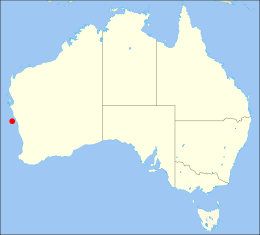
 You might think you have already been here on your A to Z journey. There is so much more to Geraldton than the Abrolhos Islands so I had to give it its own post.
The evening of our arrival we were drawn to an impressive monument at the top of Mount Scott. It was the memorial to the HMAS Sydney, sunk in 1941 with the loss of all 645 on board.
The story is surrounded by conspiracy theories and wild conjecture as the loss of every man on board is a mystery. Books have been written about what may have happened but the facts are that HMAS Sydney was on patrol duty in Australian waters when it observed an unidentified ship. As it moved to intercept, the ship identified itself as Straat Malakka, a Dutch merchant. Suspicious, because it had refused to reply with the secret call sign, the Sydney moved closer. It was then that the Kormoran, a German auxiliary cruiser, “decamoflaged” and opened fire.

The Sydney was mortally wounded and disappeared in a south-southeasterly direction, sinking almost vertically, her bow torn off.
The Kormoran had also received crippling wounds and the ship was abandoned by the German sailors. 318 out of 399 from the Kormoran survived and were later interred in prisoner-of-war camps in Victoria until 1947.
The wrecks were not found until 2008, although many attempts had been made. An American shipwreck hunter David Mearns entered into a partnership with not-for-profit company HMAS Sydney Search. With considerable government grants, they succeeded where others had failed, finding the Kormoran first and later the Sydney.
The first, temporary memorial was installed prior to 19 November 1998 and was used in a remembrance ceremony in that year. During the playing of the Last Post, a large flock of seagulls flew over the participants and headed out to sea in formation.

This inspired part of the permanent memorial. It has four parts, a stele in the shape of the ship’s prow, a granite wall listing the ship’s company, a bronze statue of a woman looking out to sea and waiting in vain for the cruiser to come home and a dome (of souls) onto which 645 stainless steel seagulls were welded. The memorial was almost complete by 2001 but it took another 10 years to complete the stele. A pool of remembrance has also been added showing the position of the wreck on a map.


Before we headed south, we visited the Museum of Geraldton, overlooking the Indian Ocean. In the Shipwrecks Gallery, we found remains from the ships Batavia, Gilt Dragon, Zuytdorp, and Zeewijk.
As well as the famous Batavia mutiny, there were lesser known tales such as the inspiring saga of the Zeewijk survivors and the unknown fate of other European shipwrecked souls stranded on Western Australian shores.
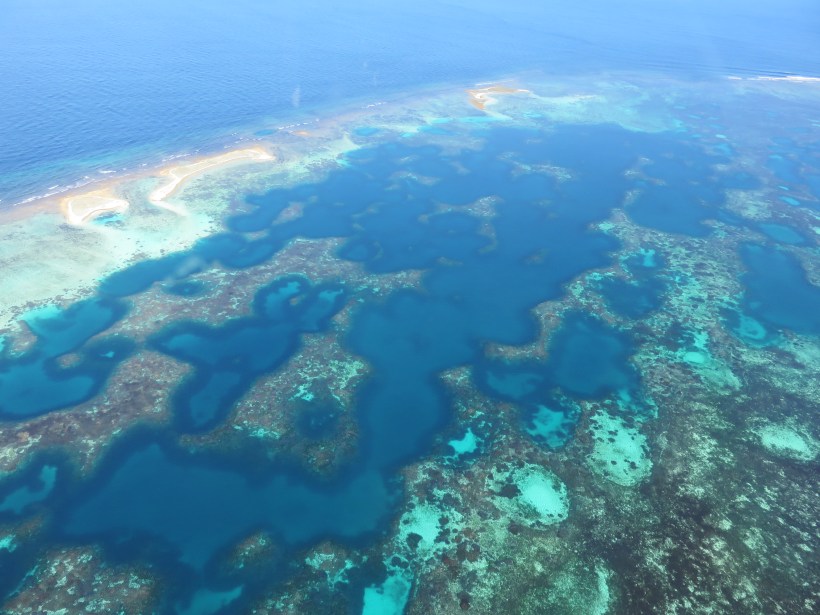
Like the survivors of the Batavia, it was decided by the Captain of the Zeewijk that a rescue group of eleven of the fittest men and First Mate Pieter Langeweg would take a longboat to Batavia to get help. They were never heard of again. Those left behind on Gun Island, on the edge of the Abrolhos, had enough water and food to survive until they built the first European ship ever made in Australia, the Sloepie, 20 metres by 6 metres. Of the original 208, 82 made it to Batavia.


The gallery features artefacts, clay pipes, silver coins, cannons and the original stone portico which was used as ballast in the ship and was destined to be used in a building in the city of Batavia.

From the windows, we could see a full-sized replica of the small long boat used by the group consisting of Captain Jacobsz, Francisco Pelsaert, senior officers, a few crew members, and some passengers. They left the wreck site in a nine metres (30 ft) longboat, in search of drinking water. After an unsuccessful search for water on the mainland, they abandoned the other survivors and headed north in a danger-fraught voyage to the city of Batavia, now known as Jakarta. Pelsaert was able to return and rescue the survivots as well as punishing the perpetrators.
Something I find fascinating is that after the trials and executions, Wouter Loos and a cabin boy, Jan Pelgrom de By, considered only minor offenders, were marooned on mainland Australia, never to be heard of again. Many theories abound, including that they were taken in by the Aboriginal people, that they had children and that their descendents still live in Australia today.
 The winters in the Illawarra




 Before we owned a caravan we would take our two children on road trips, staying in caravans or cabins in caravan parks. Squashed in the back seat, with an Esky between them, they travelled through NSW, Victoria and Queensland, soaking up the history of the countryside and visiting many “dead and dying towns” as our son called them.
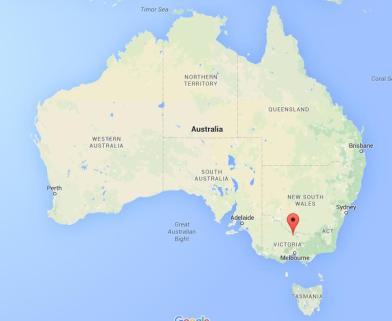 Echuca was not dead or dying when we visited but had history oozing out of every corner.


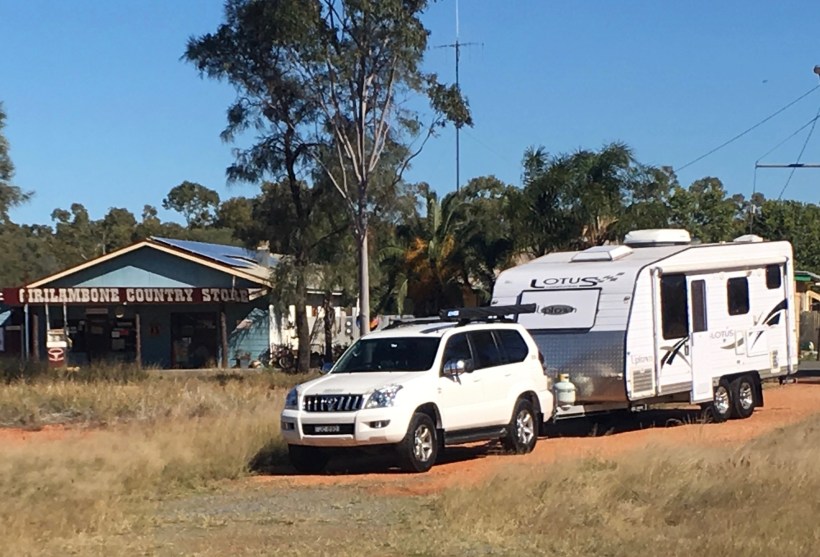
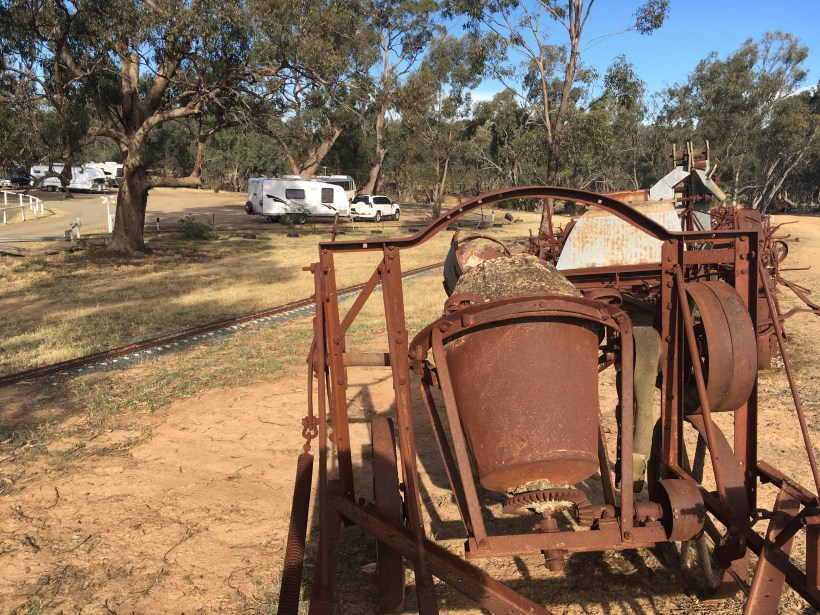 In 2017 we stopped there again, this time in our Lotus,


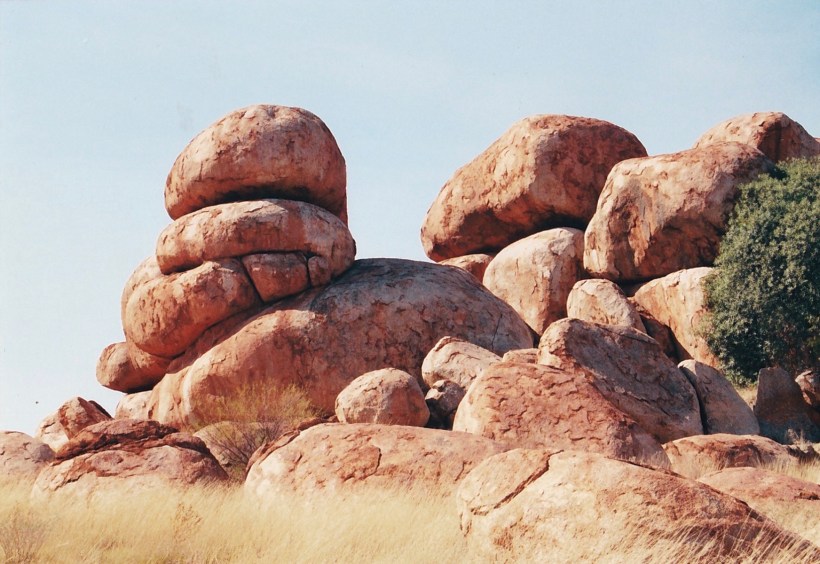
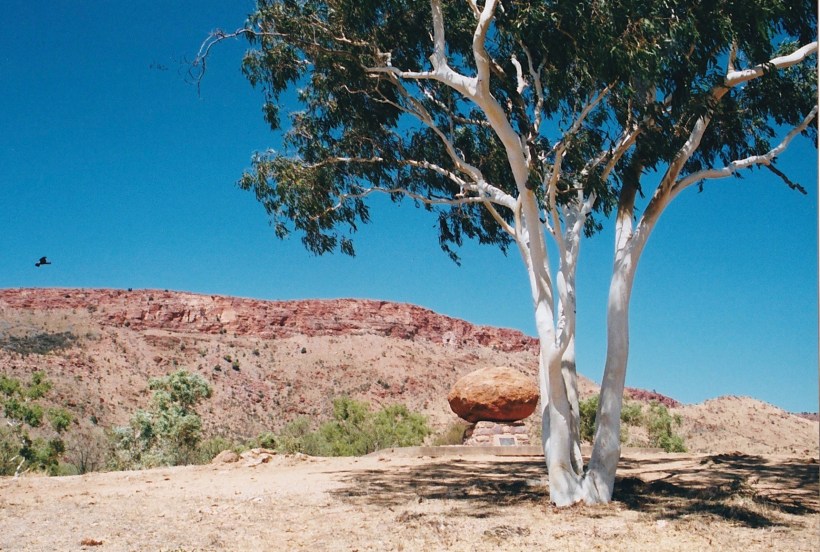
 The Devils Marbles are 393 km north of Alice Springs and 760 km south of Katherine. In other words, in the middle of nowhere. The Stuart Highway between Darwin/Katherine and Alice Springs goes right past the reserve.








 As another Anzac Day (25th April 2006) ended and most Australians were retiring for the night, the



 It is the Australian Dream. To retire from the daily grind of work and head off across the Nullarbor, drive to the tip of Cape York, explore the Red Centre, eyeball a crocodile in Kakadu, dive the Great Barrier Reef. The list goes on. What better way to do all that than in a caravan!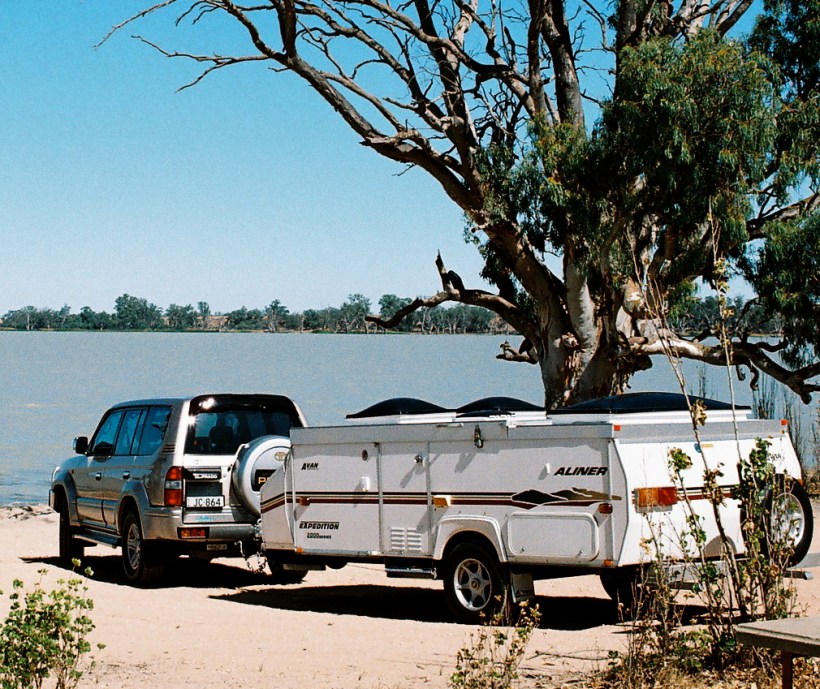

![A-to-Z Reflection [2018]](https://argonautsite.com/wp-content/uploads/2018/05/a-to-z-reflection-2018.jpg?w=421&h=200)
 The Curry Apple Orchard