
You might ask what Q Station stands for? It is short for Quarantine Station but is not where people were isolated with Covid. Instead it is a comfortable, quirky and different type of accommodation in a stunning setting on North Head, Sydney Harbour.
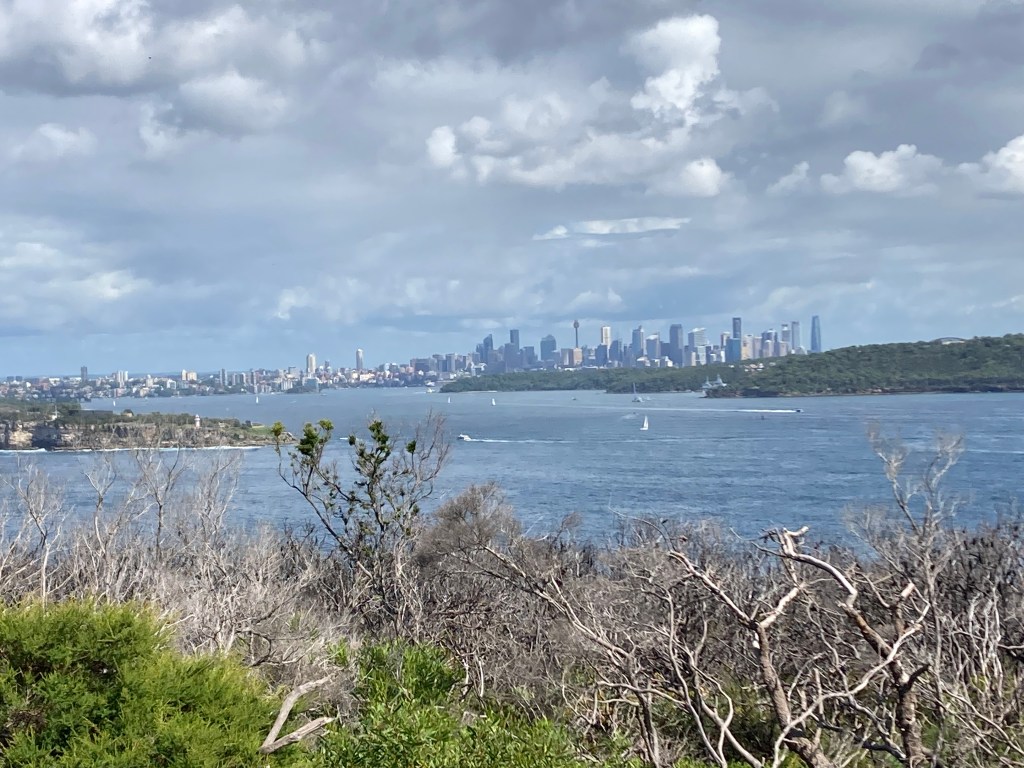
We decided to give ourselves one night there for our birthdays which are not too far apart. To get there we caught a train to Sydney, changed at Central for Circular Quay, then took a ferry to Manly and a bus to the Q Station. The bus driver insisted we stay on the bus so he could drive us up to the lookout to see what he thought was the best view in Sydney. He even stopped to let me off for a quick photo before dropping us back at the Q Station.
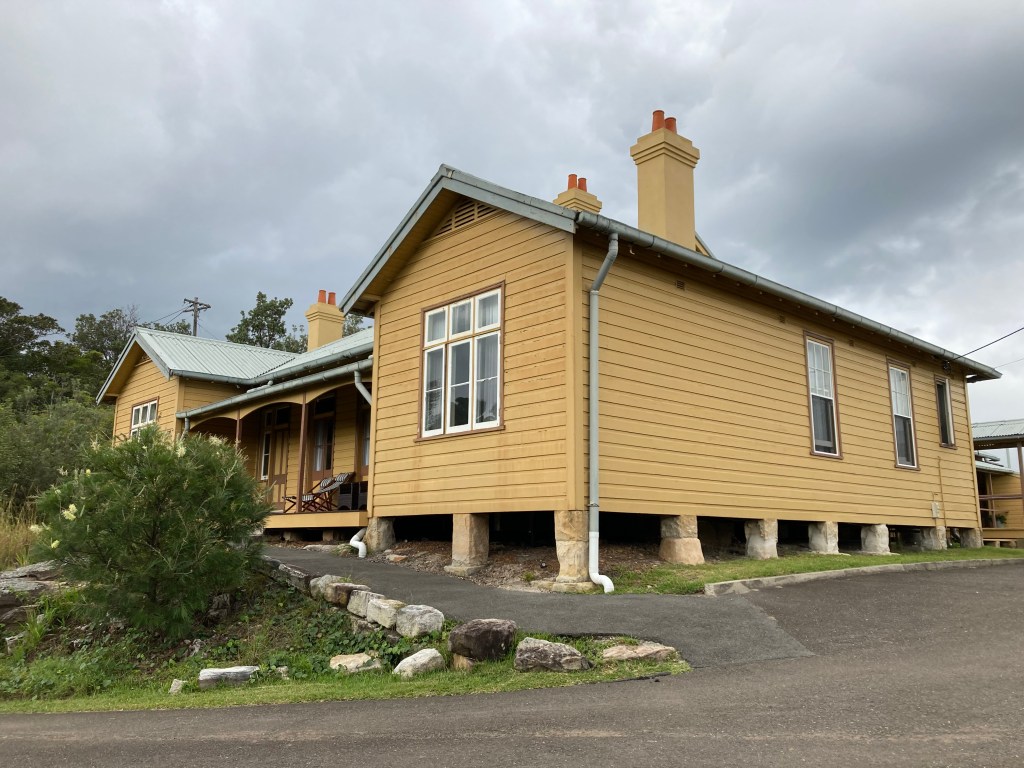
We arrived two hours before check-in, thinking we could leave our small bags somewhere and have lunch in the café at the beach. Reception rang the room and it was ready so we hopped on a minibus and were driven down a steep hill to our accommodation. It wasn’t luxurious but it was clean, had an ensuite and a verandah with two chairs and a table.

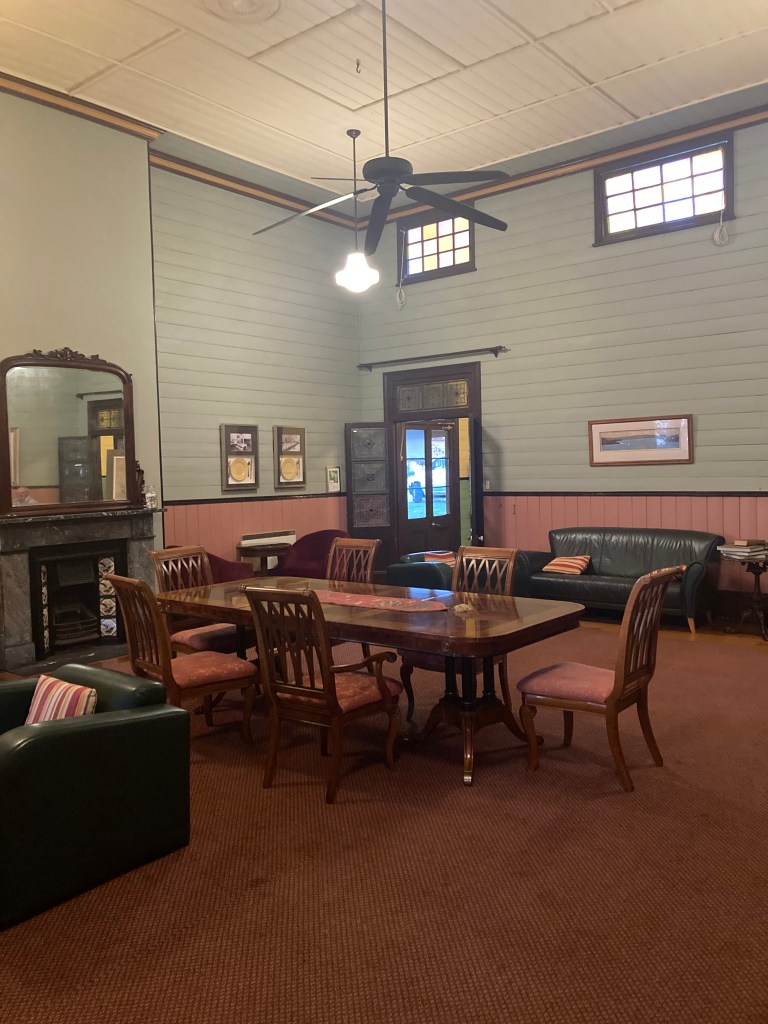
Our view was of the buildings opposite, but some exploration brought us to the First Class dining room next door which opened onto a deck overlooking the water. It is no longer a dining room but where we were staying was for the First Class passengers arriving by ship years ago. We decided to keep that spot in mind for a pre-dinner drink later in the evening.
There used to be a funicular railway to the beach but that has been removed and instead we walked down 230 steps. We could have called for the minibus to take us but decided we needed the exercise. Next to the café is a small museum which tells the story of the Quarantine Station. We ate bagels filled with ham and pickles and watched school children on an excursion, glad that we were not the teachers.
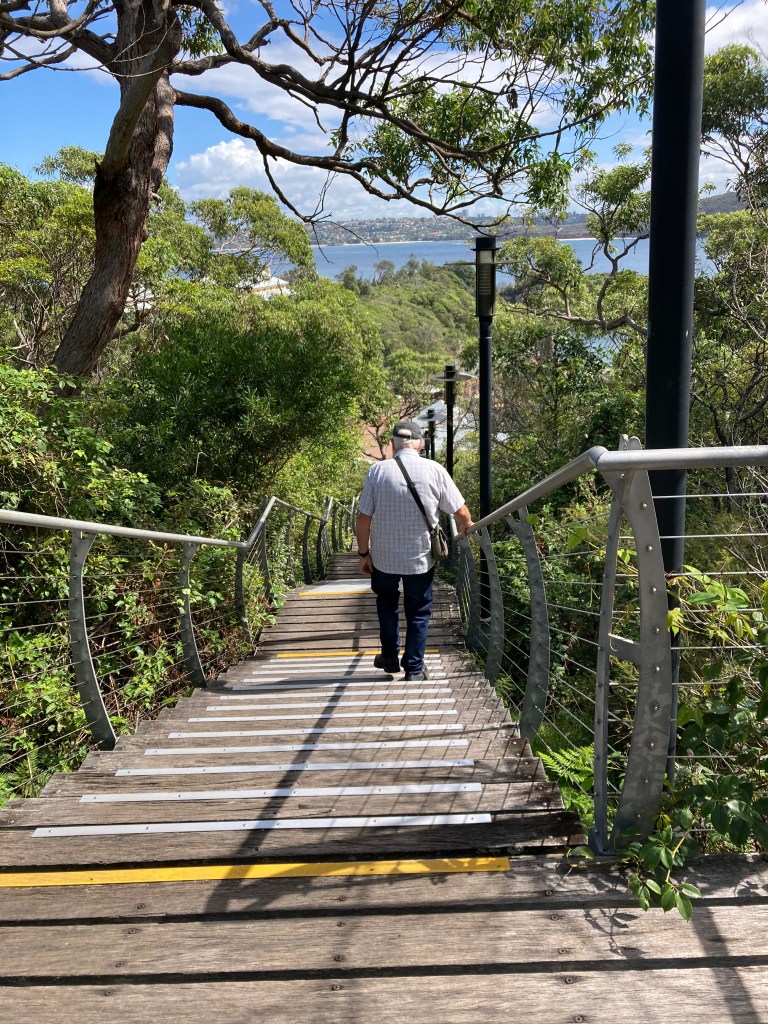
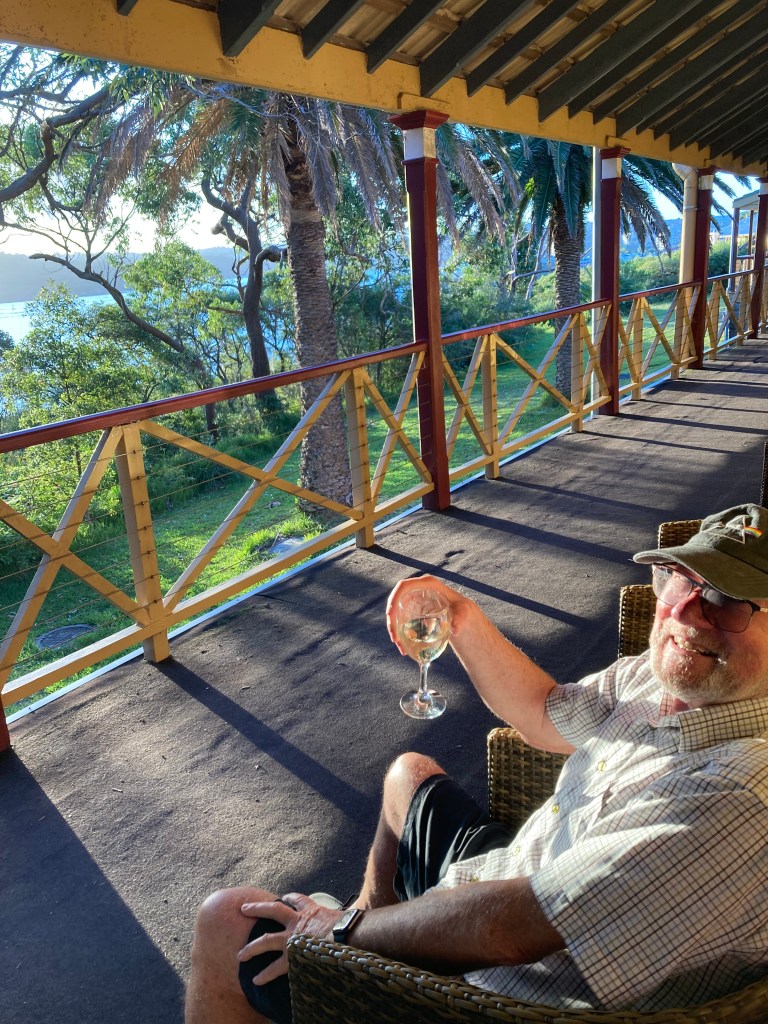
After exploring the museum we walked back up the 230 steps and spent the afternoon poking around the extensive buildings spread across the hillside. A brief rest in our room was followed by a shower and a glass of white wine on the First Class Dining Room verandah. We thought we were observing a dramatic life and death rescue by helicopter out on the water but fortunately it turned out to be a drill.
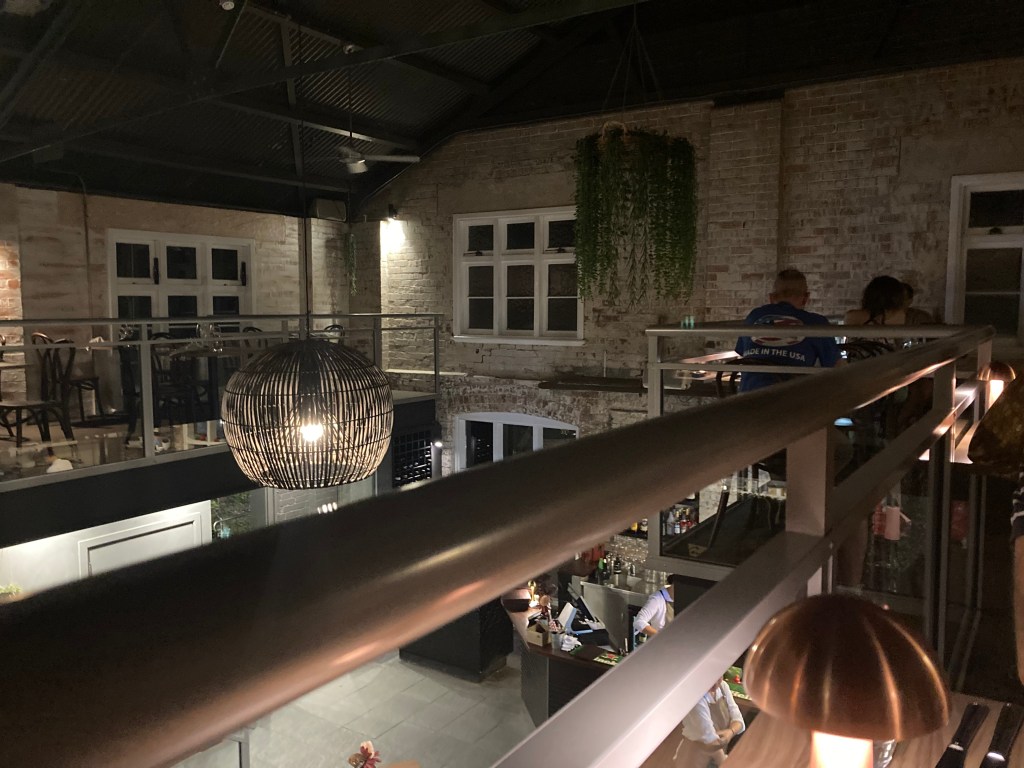
It was time to walk back down the 230 steps for dinner at the Boiler House. There were corporate groups outside under pavilions but we were escorted up more steps to a mezzanine level built inside the old building.
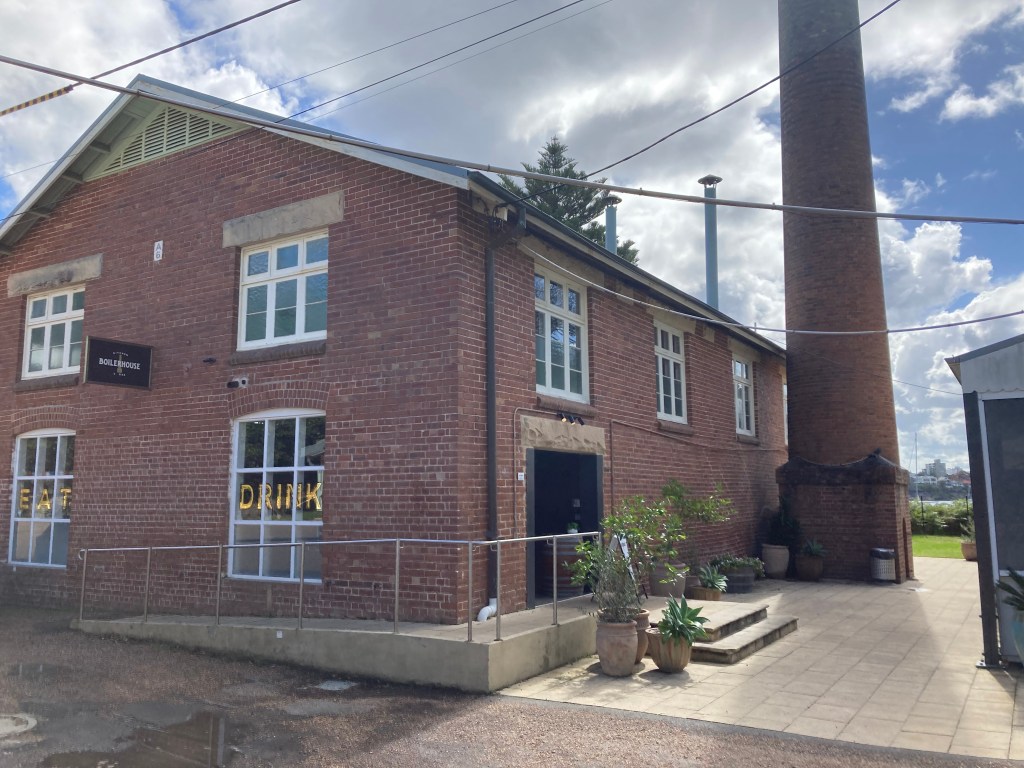
Our two-course meal with a glass of wine was excellent and was followed by a stroll around the jetty and beach before climbing the 230 steps to our room. It was time to do some research on the history of the Q Station.
In 1836 the immigrant ship Lady Macnaghton left Cork, Ireland. Of the 444 passengers on board, 56 had died from typhus and scarlett fever by the time it reached Sydney. The sick were left on board and the rest were housed in tents on the site of the Quarantine Station at North Head for two months. Seventeen more people died on shore owing to the exposed living conditions, lack of warm clothing and unpredictable weather. An inquiry was held into conditions on emigrant ships which resulted in considerable improvements and stricter rules. It was also the catalyst for the establishment of permanent buildings for the purpose of quarantine.

From the 1830s until 1984, migrant ships arriving in Sydney with suspected contagious disease stopped inside North Head and offloaded passengers and crew to protect the residents of Sydney.

As Australia’s longest continuously operating quarantine station, it has changed considerably over time. The heritage buildings reflect the typecasting of people by gender, race and class.
After its closure on 16th March 1984, ownership of the Quarantine Station was transferred from the Commonwealth to the State Government. The National Parks & Wildlife Service (NPWS) established guided tours and a conference and functions centre.
Largely owing to lack of funding many of the buildings fell into disrepair.
In 2006, Mawland Group signed a lease with NPWS and repaired and improved the facilities to their current standard. In 2022 the site above Quarantine Beach was sold to a successful northern beaches hotelier.
We studied the map and found a myriad of uses for the structures around us.
The shower block was the first stop for quarantine arrivals, where they were forced to strip for carbolic acid showers. This was to erase fleas and body lice which could host infectious diseases. What a traumatic introduction to Australia for would be residents!

One building, which contains a single, windowless room, was used as a gas-inhalation chamber, under the misguided belief a good dose of zinc sulfate would kill a virus in the lungs.
Another building contains large-vaulted chambers that were used to fumigate passengers’ luggage on arrival with the aim of killing vermin.

More than 800 carvings and inscriptions by inmates have been discovered around the property. There is a large sandstone rock face that’s covered with painted, carved and scratched inscriptions from many of the 12,000 people incarcerated at the quarantine station during its time in operation.
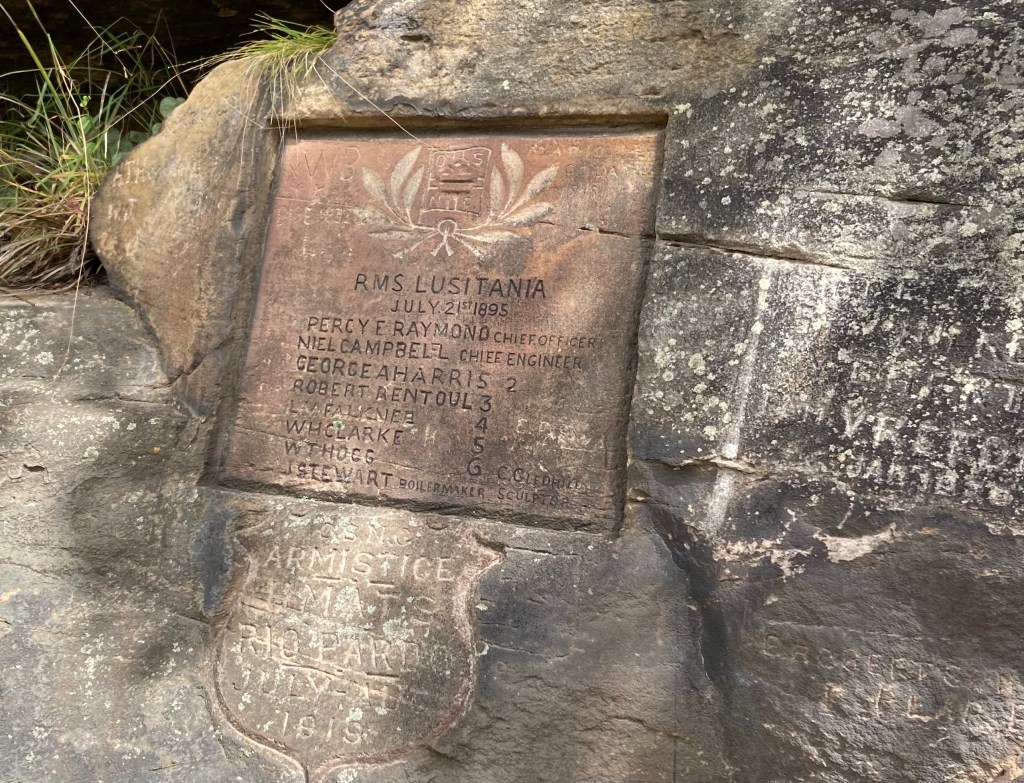
Some are initials, others are drawings, and many describe the misery of life in quarantine, written in many languages.
One inscription from 1917 by Xie Ping De from He County, China:
Sky … Ocean,
I am very frightened of having the disease.
Moreover the doctor is helpless to control the sickness.
Feeling pessimistic and despondent.
I am not used to maintaining hygiene yet.
If you asked me the feeling about the voyage.
I shall persuade you never come here for pleasure.
Wish you good health and a long life.
(Translated from Chinese)
It wasn’t all misery for the detainees. The Sydney Morning Herald in 1913 described some of the leisure pursuits that passengers had available to them.
Those who are merely detained as contacts have about 500 acres of ground to ramble over. In good weather the days pass like a picnic. There are retired paths and retreats and open well-grassed plots. Cricket has been played and though the inclines are steep football has been attempted. Fishing is open to all, and those who like swimming have opportunities in abundance.
The Migration Act of 1958 legalised the detention of “illegal immigrants”, a term referring to anyone without a valid visa. What was originally built as a staff dining room became a detention area for people awaiting deportation. An inscription in this building (translated from Turkish) goes like this.
The Cruelty
Where did you come from Adam or Noah
My wrists! Where did you get this chain?
The cruel capitalists can exploit and kill
The poor people and enslave them
I’m not strong enough!
The cruel and the cruelty
My wrists! How did I get this chain?
In the final stages of the Vietnam war, the Quarantine Station provided refuge for children hastily evacuated from Vietnam as it fell. Many of the 200 children brought to Australia were cared for by staff there as they waited to meet their new adoptive families.
I wondered what happened at the Q Station during the Covid lockdowns. Apparently you could stay in a cottage (at a slightly reduced rate) for weeks at a time, with your groceries delivered, and live in complete isolation from the rest of the world, ensuring your safety and good health. It wouldn’t be a bad spot to retreat from the world.
All photos by John and Linda Curry
 The Curry Apple Orchard
Some sad stories but a nice setting. I am glad they are preserving the stories of those who stayed there.
LikeLike
Good to read about this, giving me a little more of the personal history of the place.
LikeLiked by 1 person
Such a combination of beautiful surroundings and sad stories for some.
LikeLiked by 1 person
Beautiful surroundings, if a bit sad.
Ronel visiting for Q:
My Languishing TBR: Q
Queen of the Gods: Hera
LikeLiked by 1 person
Thanks for filling us in on the history of the Q Station. It was only the first of many attempts to keep pests and diseases from our shores.
LikeLiked by 1 person