 Before I begin let us go back to P for Point Nepean. I mentioned that the German ship “SS Pfalz “ had a cannon fired across its bows as it tried to escape Port Phillip Bay after the declaration of World War 1. The captain decided discretion was the better part of valour and turned around. The crew was free to roam Melbourne and report to the police once a week. Alas the good times could not last and they were all interned in Prisoner of War Camps.
Now here is the Y for Yerrinbool connection. It was my birthday and there is nothing I like more than a day in the Southern Highlands, checking on my old home in Yerrinbool (see picture of the Curry Apple Orchard at top of page), eating out at one of the many restaurants or cafes and just breathing the fresh mountain air.
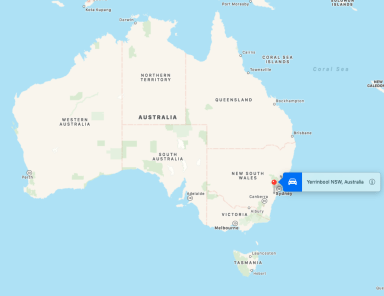
I’m afraid the “Waterhole” where I grew up is just a shadow of its former self, but the highland air remains unchanged so it was with some enthusiasm we drove to Berrima where I wanted to visit a particular museum.
I had heard that this was where some of the men on the “SS Pfalz” had been sent and that the museum was dedicated to their story.
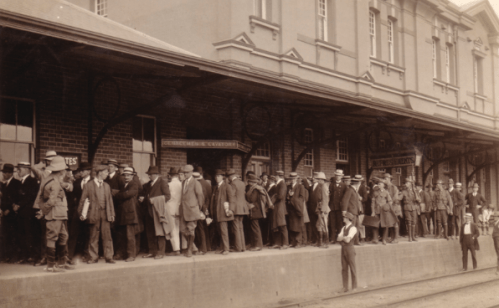
In March 1915 the first group of internees arrived at Berrima, walking from the Moss Vale Railway Station. Although the weather would still have been quite mild (Autumn) there was no furniture in Berrima Gaol which had been empty for six years. The luggage hadn’t arrived but there were basic sleeping materials and food they had to cook themselves. The men were understandably depressed and called the gaol Ahnenschloss (Castle Forboding).

There was considerable inequality depending on the internees circumstances. Those from the German Australian Line were allocated beds from the company store. Some were receiving a salary from Germany and were able to order beds from furniture stores. Most had to build furniture from timber found in the forest.
The Berrima winter is very cold so the cells in the sandstone gaol were freezing once the cold weather set in. Built for 140 prisoners, Berrima gaol was already overcrowded by 1915 with 200 internees, By 2018 it had 300.
While you might think a prisoner of war camp would be a place of misery and deprivation it would seem that life was not all bad for the internees at Berrima. The day to day management of the camp was left to a Camp Committee consisting of ship’s captains, officers and seamen.
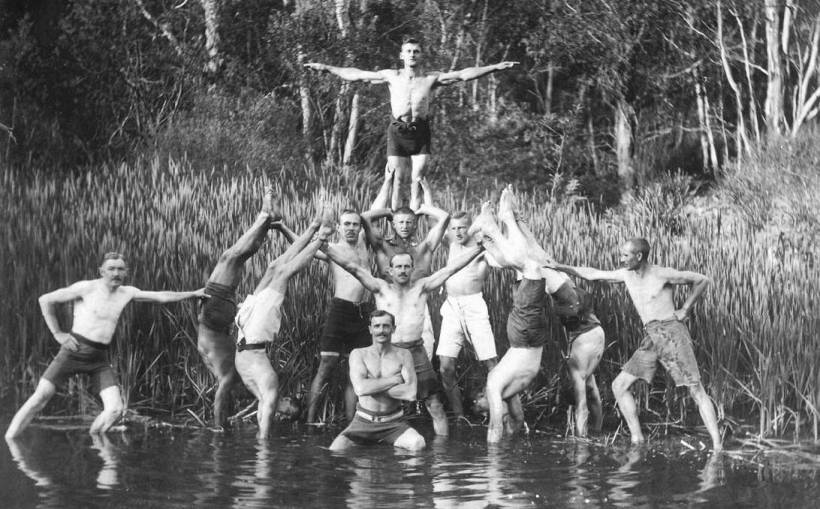
The largely German committee organised gymnastics, wrestling, football, swimming and athletics to promote health and fitness. Sporting areas and vegetable gardens were constructed. A commercially run camp canteen raised money for purchase of seeds, renting of ground for gardens, adding to the camp orchestra and buying German delicacies from Sydney. Classes were run by those with skills in theatre, music, carpentry, joinery, shorthand, photography, sketching and painting. Education classes in English were popular as all letters sent home had to be written in English.
The captains gave classes on navigation and marine skills to juniors who wished to take examinations after the war. Crystal radios were made in wireless courses enabling the internees to know the latest world news.
The skills of the internees knew no bounds. They designed a water supply from the river and installed a generator for power long before the village had electricity.
There were a number of families interned in Berrima as well. They had been living in Australia before the war and many were shore-based employees of the German shipping companies. They asked their Australian friends for books and as a result the library was well stocked.
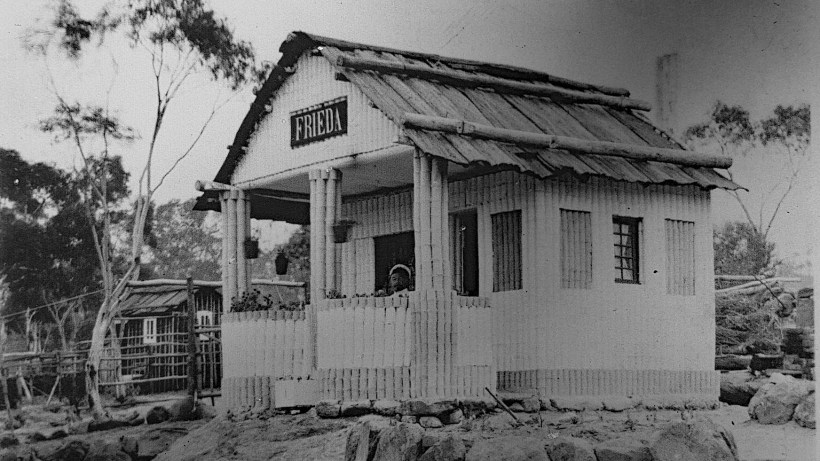
Five families sought to be close to husbands and fathers in the camp. The house you see below was shared by two families. The only downside was it had been previously occupied by soldiers and required considerable work to get it to a suitable state of cleanliness

Frau Hurtzig wrote in her diary, “I pray never again to have to clean up after a mob of soldiers”.
The most interesting effect on the environment made by the internees was the damning of the Wingecarribee River, the building of a bridge and numerous huts and gardens around it forming a “Pleasure Garden”.
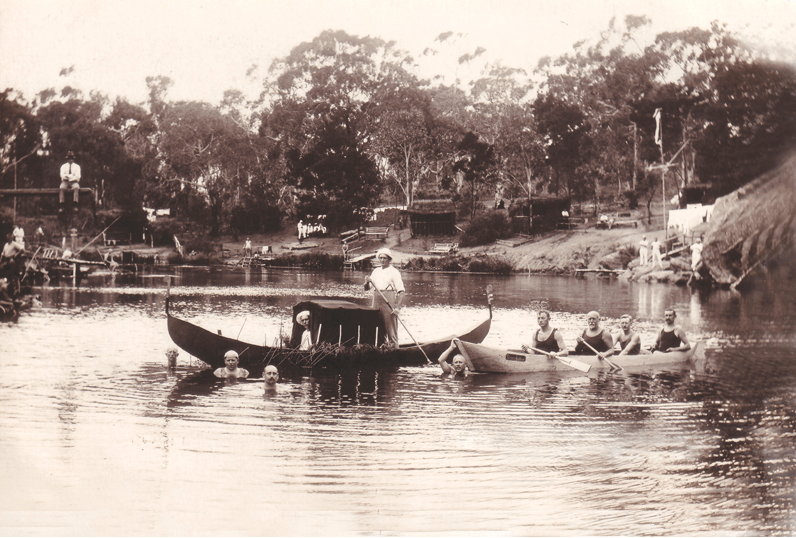
Canoes were made out of hollow trees and races and regattas formed entertainment for the men and families.
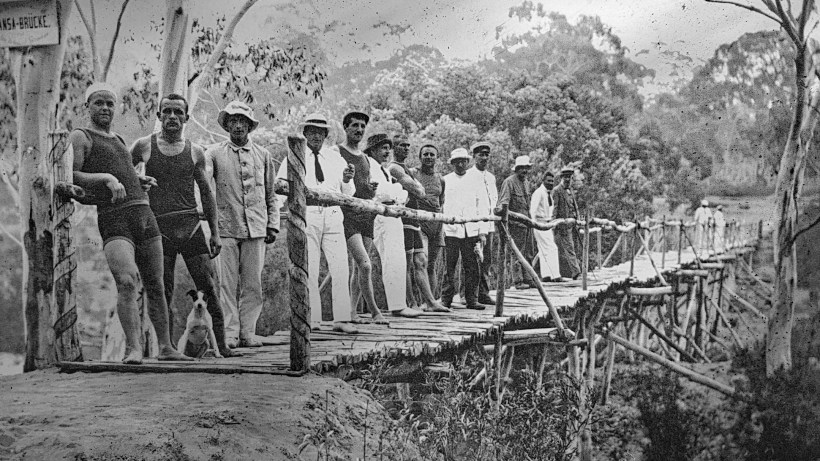
The fame of the German’s work spread far and wide so that they were responsible for Berrima’s first tourist industry. Not all tourists were friendly so the internees chose to erect a high barbed wire fence enclosing 17.5 acres on the left bank of the river known as “The Compound”. The right bank was free for the tourists. Villas and huts were supposed to be built only within the compound but spread beyond.
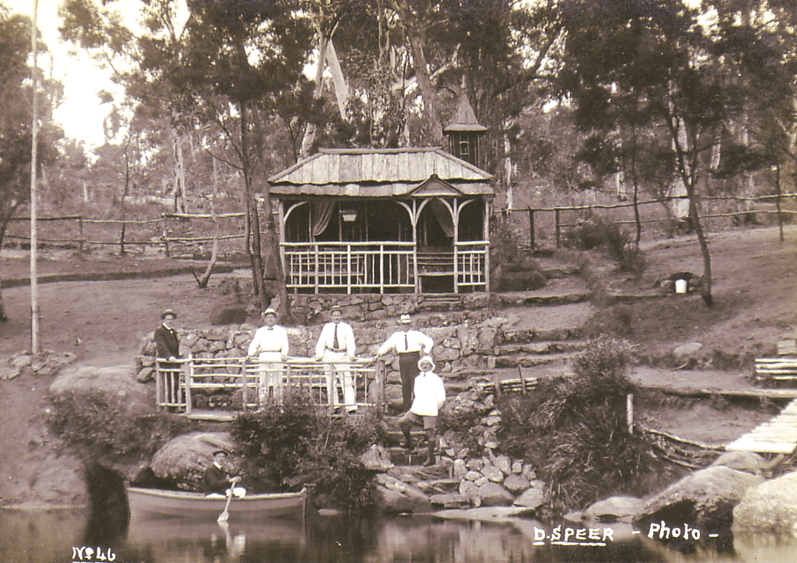
I was fascinated by the huts. The men were only allowed to use them by day but they would have provided some peace and tranquillity in a trying time. If you had to be in a prison camp then this one sounds like it would be the one to choose.
When the war ended the internees were keen to go home but were kept waiting until Germany signed the Peace Treaty in June 1919. On the day they departed the Berrima Guard took the head and rear of the column and the band struck up Muss i’ denn, muss i’ denn aus Städlein (Now, now must I from this little town). At the Surveyor General Hotel the procession stopped and the men gave three cheers before marching to Moss Vale Railway Station.
The train took the internees directly to Pyrmont Wharf in Sydney. There the 950 internees from Berrima and Holsworthy and 200 men, women and children deported from other parts of Australia, boarded the SS Ypiranga bound for Germany.
 The Curry Apple Orchard
Another fascinating story. Definitely if you had to be a prisoner it seems these people made the best of it.
LikeLiked by 1 person
I wonder if life was as cushy as these (terrific) photos suggest? Perhaps they were putting a brave face on it, or as you mention, it might have been a lot harder for some than for the privileged among them. Or perhaps Australian internship camps were kinder, gentler places than most.
LikeLiked by 2 people
Those POWs were given a lot of freedom and didn’t have to work. I think Australia didn’t know what to do with them. I have read that WW2 POWs had a much harder time.
LikeLiked by 1 person
I rather got that feeling from your post. Apparently in India during WWII, the British interned German Jews with German Nazis, who made their lives a misery. I think I first read about it in Anita Desai’s novel, Baumgartner’s Bombay.
LikeLiked by 1 person
How could they do an insensitive thing like that? I wonder how long before they realised what they were doing?
LikeLiked by 2 people
I don’t think they did, in the novel; but I don’t know what happened historically. Will have to go back to it.
LikeLiked by 1 person
Doesn’t like like too much hardship for a POW camp! I see you got two Ys in there. 😉
LikeLiked by 1 person
I had never heard the story of these POWs, Linda! What an interesting story.
We’ve been through Berrima a few times, but haven’t thought of looking for the museum. Next time we must do that. My husband is very interested in all things related to WWI & WWII.
LikeLiked by 1 person