P for Paris

Now we have travelled back in time to the last year of WWI.

On New Year’s Eve 1917 Ted and friends arrived at the Gare du Nord by train from Péronne. They were driven to the YMCA at Penenepe Barracks and given breakfast and a lecture.
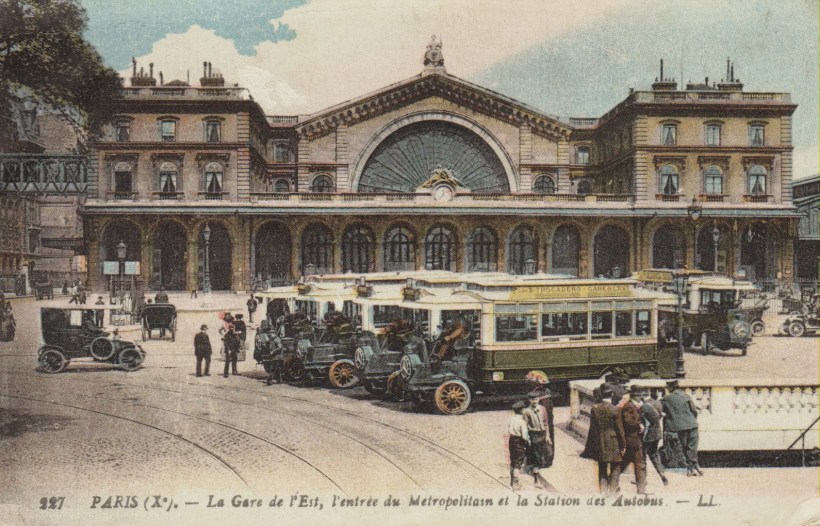
 

dest gare
Le Gare d’Est, Paris. (Not Gare du Nord but you get the idea) Cherylg (fightingthekaiser.blogspot.com.au)

In France, the YMCA made arrangements for rest and recreation centers where particularly American soldiers could leave the front and relax away from the fighting.

Then they were free to take the metro to the Place de la Republic where they booked rooms at the Hotel Moderne.

Clean and refreshed they walked the streets, visiting Les Invalides and Napoleon’s Tomb before dancing the evening away at the club.

The first day of 1918 saw Ted exploring Notre Dame Cathedral, strolling across bridges and around Place de la Concorde and Champs Elysees. A concert in the evening was followed by a dance and games.
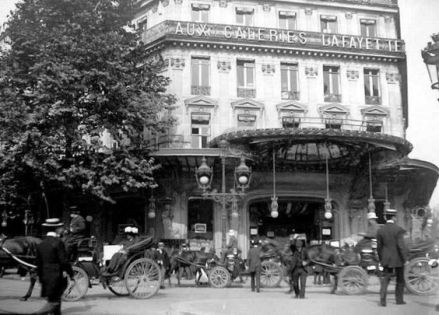
lafayette1
Galeries Lafayette a few years earlier

It is hard to imagine it was 100 years ago as the next morning was spent at Galleries Lafayette and Au Printemps to look at the shops.  Then it was off to the Arc De Triumph followed by an afternoon at the Alhambra where Ted met some rather nice people.

On the afternoon of the 3rd Ted and his friends visited the Louvre and “The Big Wheel” (demolished in 1920).  At the casino that evening Ted was impressed with Gaby Deslys and found the “staging and dressing very fine.  Also the dances”.  Gaby Deslys died in 1920 of influenza at the age of 38.

It was the next day at Versailles where Ted became eloquent in his admiration.

“Versailles … surpasses anything that I have ever seen.  The rooms at the palace were simply gorgeous and the views and landscape magnificent…best of all I liked the Gobelin Tapestry work”.

Ted was able to translate the French signs and explanations to his friends in the Chamber of Deputies.
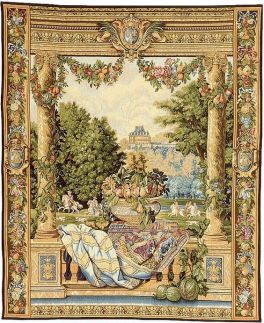
versailles
Versailles I (Vertical) Wall Tapestry – French Chateau Tapestry
Screen Shot 2018-04-03 at 9.43.16 pm
Jeanne-Marie Bourgeois,Folies Bergère

That evening Ted and a friend went to the Folies Bergère.  He says, “the show was very dressy and the theatre promenade very fine.  At the interval the hall is packed with crowds of the demimonde* who are painted and powdered like dolls.”

Wikipedia  *The term was often used as one of disapprobation, the behavior of a person in the demimonde being contrary to more traditional or bourgeois values. 
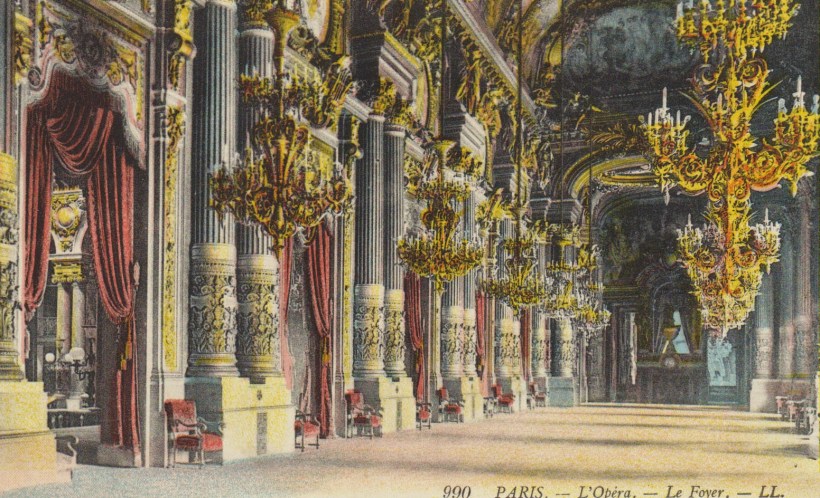
opera
The foyer of LÓpera, Paris. Cherylg (fightingthekaiser.blogspot.com.au) found this postcard in an antique shop in Oatlands, Tasmania. It was dated March 1918.

The next day’s highlight was the opera Hamlet which had marvellous scenery, singing and music. The orchestra contained 100 instruments and Ted thought the Grand Hall was a magnificent piece of architecture. Walking down the Rue de la Paix Ted recognised the fashion icons of Paquins and Worths.  At the Bois de Boulougne he watched thousands skating on the ice.  Lunch was at the Pyramides after which he booked seats for Aida.
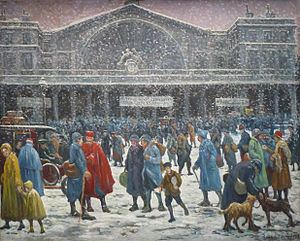
Maximilien_Luce-La_Gare_de_l'Est_sous_la_neige-1917Arriving at the Tuileries Ted and his friends went sliding on the ice to the great amusement of the onlookers. 

Aida that night “was beautifully staged and the whole play a grand piece of singing and art”.

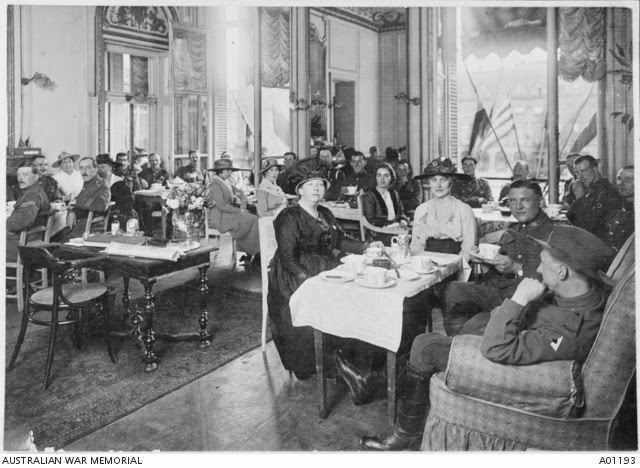
It was snowing all the next day when Ted and his companions walked to the Corner of Blighty*.

Miss Lily Butler opened a very popular leave club for men in Paris called A Corner of Blighty in Paris for Our Boys from the Front.  This club was particularly popular with servicemen from Australia. 
A01193_paris

In the Place de la Vendome, in central Paris, it ran for two years.  There was no charge for its services and Lily Butler and her group of forty five female volunteers also arranged outings for groups of the men.

Blighty


Ted was having a “rattling time’. Lunch at Cafe Boulant, then to the Olympia and sleeping at the Hotel Lafayette.  It was the last day so Ted bid a sad farewell to Paris and went off by train to Péronne in search of his unit.
O for Obstetrician

This is rather a large leap from sailing home across the Pacific with Ted in 1919 but that is the nature of A to Z.  It takes you where it wants with the letter of the day, a bit like a Ouija Board.  This is the only place I can  write about my mother’s favourite doctor who has been referred to as “a formidable Mildura institution”.

I felt I knew a lot about him before the DNA results came through.  My mother often talked about him as the  doctor she visited when she found she was pregnant.  She was impressed with his qualifications and his professional manner.  He may have seen both my parents before my conception to determine why my mother had not become pregnant but any speculation is pure fiction because we will never know what really happened.  He did bring me into the world however so I thought I would pay him this tribute.

John Strahan Bothroyd’s parents were both teachers and he attended a different school every year of his primary education.  After attending Scotch College in Melbourne he graduated in medicine at the University of Melbourne.  Before arriving in Mildura he worked at Royal Melbourne Hospital, Royal Children’s Hospital and Royal Women’s Hospital up until 1931.  To further his studies while based in Mildura he made the long train journey to Melbourne many times to obtain qualifications from the Australasian College of Physicians and the Australasian College of Surgeons.  During World War 2 he was a Squadron Leader and Specialist Surgeon in the RAAF.

It is said in his obituary that he was one of that group of early specialist trained doctors who chose to live in provincial areas and in doing so established medical standards there comparable to city based practice.

hospital 2
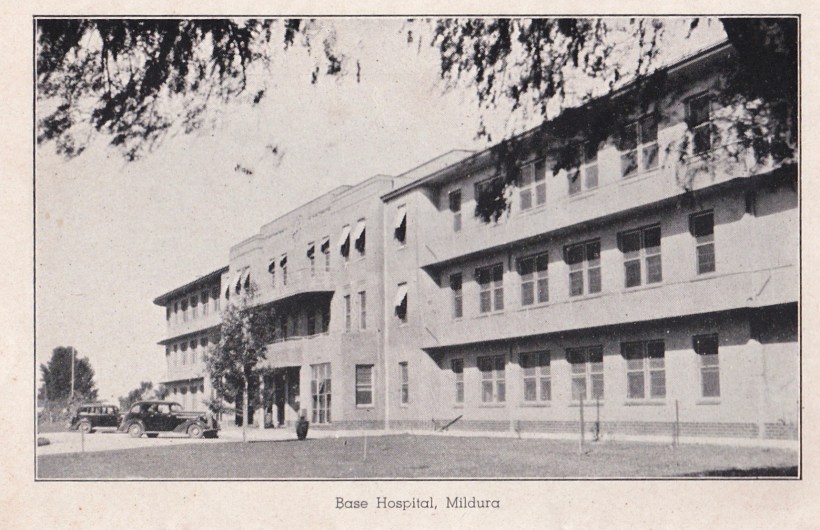
From a Pictorial Souvenir of Mildura  GV and WR Hiscock Newsagents

According to N Fleming, who wrote in his College Roll, Bothroyd is credited with some revolutionary ideas for his time. He performed a novel technique of open prostatectomy with tonsillectomy instruments, explored internal fixation of fractures  and realised earlier than most the inherent risks of smoking. He took a delight in being difficult with people he thought were incompetent.  Nevertheless he cared for his patients with meticulous attention.

He would have known Edward Turner as he was on the hospital board and their two families also later became related through marriage.  That is all I know and the rest is conjecture.  His name is one of the few clues I have of my conception and birth in Mildura.

For whatever reason, thank you Dr Bothroyd for helping me come into the world.


N for New York

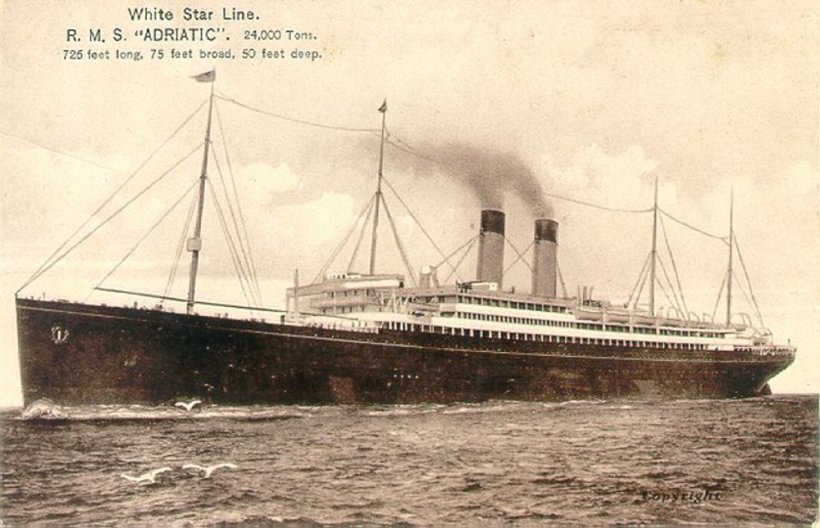
On January 26th 1919 Ted sailed on the “Adriatic” from Liverpool bound for New York.  There were a few regrets as he talks wistfully of walking along the Southport seashore with Doris.  The ship carried 2,000 American soldiers plus ten Australians. The berths were comfortable and the meals plain but good.  Ted describes arriving in New York Harbour at sunset with the skyscrapers reflecting the the last rays of the setting sun.


RMS_Adriatic_postcard

For four and a half weeks Ted attended a succession of social functions and enjoyed being in demand and meeting some very fine girls.  The only problem with New York was the need to spend a great deal of money.  This time a woman named Olive rates a mention as Ted explores the wonders of the Stock Exchange, the Woolworths Building and of course the Statue of Liberty.

One of the parties he attended was at the Vanderbilt mansion on Fifth Avenue. The function was designed to organise relief for the Armenians but the Australians present, under the influence of too much strong liquor, vowed to help exterminate the entire Armenian nation much to the consternation of the other guests.  His story of mistaking Cornelius for the butler and handing him his great coat was later believed by some to be a slight exaggeration but a little digging into the Vanderbilt story makes it quite possible.

Cornelius Vanderbilt the Third was estranged from his father after marrying his wife Grace, against his father’s wishes.  As a result he was disinherited and only received a comparatively small amount upon the death of his father.  He did however inherit 640 Fifth Avenue plus one million dollars from an uncle in 1914.  It was one of two houses sharing the block known as the “twin” mansions.  Grace and Neily (as Cornelius was known) spent $500,000 refurbishing the house.  There were many parties held in the newly decorated mansion.   In the last year of WWI  Neily became a Brigadier General. Grace was all too pleased to call him “the General” in front of guests.

ballroom
The French Ballroom Could Hold 500 People And Was Used At Least Once A Month For Balls, Events or Parties

After mixing with high society in New York,  Ted headed off to Buffalo where he wasn’t over impressed with Niagara Falls.  In Chicago he was offered three jobs but kept travelling to Kansas, Albequerque, the Grand Canyon, Los Angeles and San Francisco.

During the war Ted received “Comfort Parcels” from some women in California. 

Orange351-1992

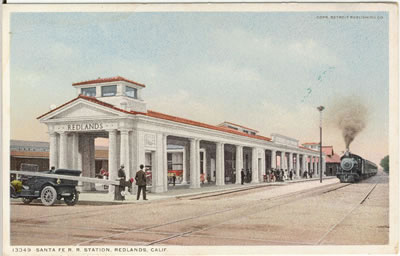
He had written to them rather exaggerated accounts of the exploits of the “boys at the front” and so was hugely embarrassed when he hopped off the train at Redlands (60 miles west of Los Angeles)  to be met with cheering crowds, bunting, flags and party invitations to welcome the hero.  They even believed him when he told them he had an emu farm in Melbourne.

On April 8th, 1919,  Ted boarded the SS Ventura bound for home via Honolulu, Pago Pago, Sydney and Melbourne.


M for Military Medal

Ted was unwilling to talk about how he earned his medal.  According to the official war records “Turner was awarded the Military Medal on 26 August 1918 for remaining at his post and issuing supplies whilst under heavy enemy shellfire on 10, 20 and 21 April 1918”.

He preferred instead to tell the story of a glorious party in the cellar of the Corbie Chateau which took place around this time. 

Ted was in charge of a platoon at Corbie which was told to go in and destroy everything of use to the Germans who were only a short distance away. They entered the chateau and were captivated by the opulence of the family home.  They found an open cellar filled with marvellous wines and so proceeded to sample them.  Laughing and talking they came up the stairs but were quickly subdued by the sound of a large group of Germans in the dining hall a few rooms away.  Fortunately they were able to beat a hasty retreat  and headed for the escape road.  The Germans had taken the bridge they had to cross but with courage enhanced by good French wine they managed to blow it up, thereby stopping  a heavy German transport from crossing. 


Corbie
A chateau at Corbie used as brigade headquarters for Australian troops

When he first enlisted Ted thought that you would be put somewhere near the front line and fight it out until you were were either killed or the war finished.  He was surprised at the extensive sections servicing  the front line and that the infantry were so often withdrawn and spelled.

Despite efforts to transfer to other departments Ted seemed destined to remain with the 26th ASC (Army Service Corps) supply section.   Corbie is 4 kilometres north of Villers-Bretonneux which became the focus of a series of great battles in 1918.  During March and April the German offensive attempted to capture Villers-Bretonneux and open the way to Amiens. 

Reading from his diary on March 25 he says “we passed a rather exciting time as rumours were current everywhere and there was a chance of being cut off”.

He goes on to say “Fritz has attacked with immense numbers and forced us to retire…Household articles are plentiful, as are also pigs, fowls etc and wine as the civilians have evacuated.  Our brigade is doing fine work.”

On April 6th he writes,  

Have had several shifts and are now comfortably established at Ebart in a large farm, the owners of which have evacuated.  Shelling is very lively but not too close to us.  The Brigade were badly caught yesterday morning and had several hundred casualties.  The prevailing question is whether he will take Amiens.  We seem to have no support here and our chaps are standing the brunt of the attacks all along the line.

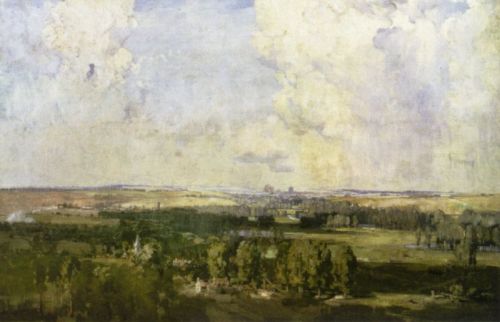
Amiens_the_key_of_the_west
Amiens the Key to the West
by Arthur Streeton
Painted while Streeton was an Australian official war artist during the First World War. The French city of Amiens was a critical British base that was an original objective of the German Spring Offensive. The painting depicts the view to the east, overlooking the city, with gunfire on the horizon. Australian and British troops halted the German advance east of Amiens at Villers-Bretonneux.

The diary then simply names places where Ted was stationed until April 17 when he says:

For some days I have been stationed at Corbie salvaging forage left close to the line.  Corbie has been a fine town but has been cruelly wrecked.  We have as a billet a fine house and have the best of carpets and furniture.  We have a cut glass service for mess gear and live well. I have done some good salvaging which makes one feel more pleased.  So far we have sent to the rear some thousands of bales of forage and several tons of potatoes.

From here Ted moved on to a coal dump facing  Amiens.  With shells hitting the water and marsh around he expresses hope that Amiens Cathedral will survive the relentless attack.  In May he was in charge of 11 men gathering fresh vegetables from deserted plots in and around Amiens.  In June he had to move again further along the river  By July things were quiet, shelling had ceased, people were returning and some American divisions were in the village of Camon.  Nothing personal is written about the next few months or the now famous battles which brought about the end of the war.

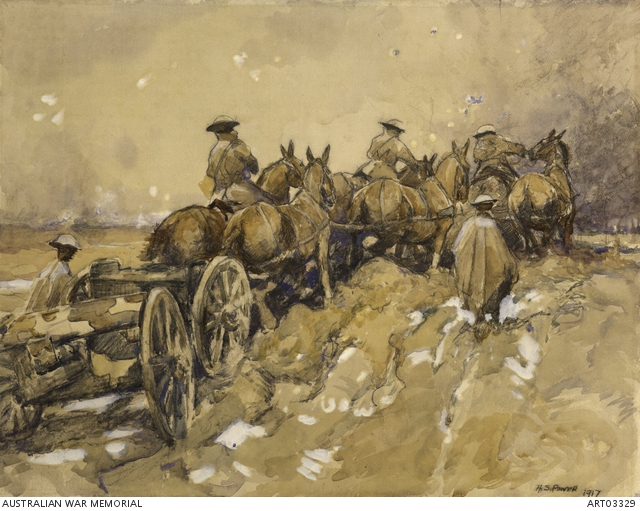
battery
A 1st Australian Division Artillery battery moves into position through the mud, with mules and horses pulling an 18-pounder gun and half limber wagon. Two soldiers on foot are wearing cape groundsheets to guard against the wet.

By the time the war officially ended on November 11, 1918, Ted was in England training for another role.

Peace has left me practically unmoved having experienced no emotion whatsoever, so apathetic have we become.

He returned to France and describes a cold, wet desolate country with the “wan, apathetic faces of returning prisoners” and the “dull, hopeless faces of the civilians”.  Ted couldn’t wait to get out of there but he wasn’t quite ready to go home yet.

L is for Living Off the Land

Ted moved onto his allocated block ahead of his wife, until a house was built for her.

It was a very comfortable and charming little house with two bedrooms and a huge living room where the family ate their meals around a large round table. At one end was a huge fireplace where a log blazed cheerfully, and glass doors opened out onto a verandah, kitchen and bathroom.
“Against the Odds” by Mary Chandler

At a meeting held by the Fruit Growers Association in April of 1922, Ted gets a mention. He notified the growers that the formation of a Co-operative Society was mooted and a meeting of all growers was to be arranged shortly.

The Red Cliffs branch of the Australian Dried Fruits Association was formed. Ted addressed the group to say that 40,000 acres of vines would soon be coming into production for dried fruits and 80% of this was expected to be exported overseas. The role of the AFDA was to expand overseas markets so the growers needed to support it.

In 1923 the Red Cliffs Co-operative Society erected a packing shed.  Some of the first allocation growers were producing their first crop of grapes so Ted convened a meeting to discuss methods of marketing. Grapes sent away so far were being sold for less than it cost to produce them. It was decided the fruit would be marketed in 6lb cartons to be handled by the Red Cliffs Co-operative Society. This worked for a while but a glut occurred, the fruit was held over in Melbourne and so was not best quality. Marketing strategies would have to improve.

The first two overseas consignments of sultanas, 112 tons in all, left Melbourne by ship after four years of hard work.

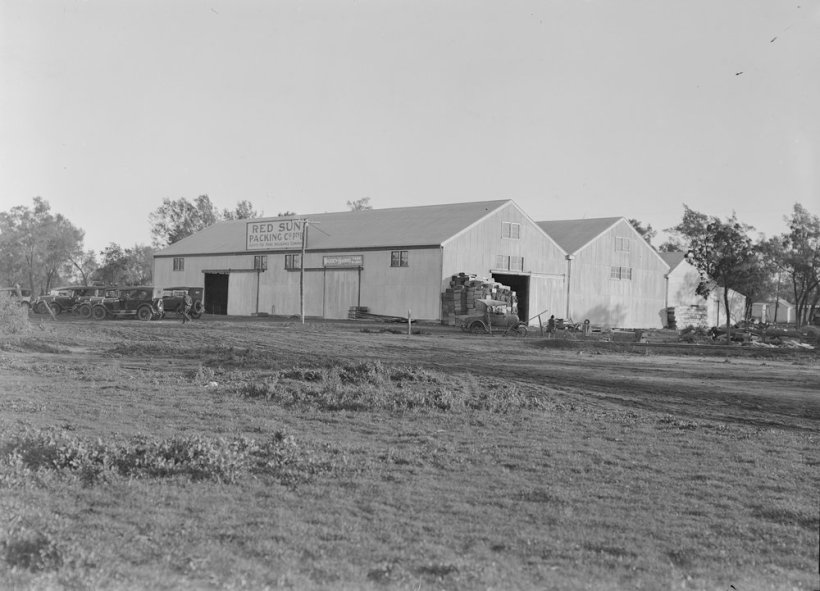
Ted quickly realised that there was no fortune to be made on a block, so began some auctioneering. With a partner he opened the Red Sun Packing Shed which prospered until he sold it to the Red Cliffs Co-op Packing Company in 1931.

download
The Red Sun Packing Shed

The early fruit had been processed by hot dip but it soon became apparent that the London market only wanted the golden sultana from Greece. Changes had to be made to emulate the Greek method of cold dipping. The fruit matured in mid February. It was picked into perforated tins known as dip tins and loaded onto an iron tray in the vineyard. This was lifted by a crane and lowered into the dip. After sitting in the solution for a few minutes it was raised and taken to the drying racks, tossed out evenly and allowed to dry. After about two weeks the fruit was shaken down onto hessian. Fine weather was then needed for the fruit to obtain the right colour. Once dried properly the fruit was packed into “sweat boxes”, loaded onto lorries and taken to the packing sheds. This is where Ted’s and other packing sheds cleaned, stemmed, graded and packed the fruit.

By 1924 prices for dried fruit had halved which made it difficult for the growers to make a profit. Many growers left the land but also many survived.  In 1929 Ted set off to New Zealand on a mission to develop the dried fruit trade between the two countries. At the time American imports were of superior quality partly because of inefficient shipping methods used in Australia. Our fruit had been packed many months before arriving in New Zealand. He pushed for a large publicity campaign to sell the fruit.

Ted was an entertaining and witty speaker and became the first Red Cliffs settler to stand for Parliament. He opened a vigorous campaign, standing as a Country Party candidate but was unsuccessful.

After moving to Melbourne for a short period to act as an agent for Wendell and Company he returned to Mildura to invest in the newly formed Milne-Gibson Packing Company. As the other shareholders wanted to sell during the worst years of the Depression he vowed never to put money into anything he didn’t have absolute control over. In 1933 he formed a partnership with an army friend becoming an Estate Agent. At the outbreak of WW2 the front window of his shop featured his maps of Europe with pins marking the progress or otherwise of the Allied Forces.

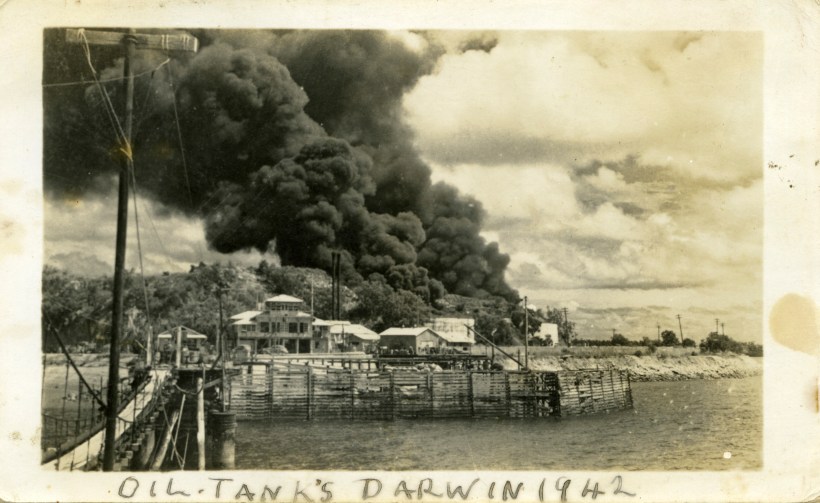
By 1941 he was unable to stay out of the war any longer so he joined the RAAF as a recruiting officer. Although based in Adelaide at the Recruiting Centre his new job required extensive travelling. From 1941 to 1944 he travelled nearly 36,000 miles around Victoria, South Australia and the Northern Territory. During this time he received a promotion to Flight Lieutenant and was wounded in the bombing of Darwin.

Darwin

It is here that I find he was diagnosed with cancer in 1944, receiving a medical discharge. Unlike his 1952 death certificate, where the doctor says he was diagnosed 18 months before, it appears he was suffering severe symptoms eight years earlier.

K for Khaki to Soldier Settler

It was in 1916 that Ted first mentioned Mildura.  He was stationed near the Suez Canal and writes in his journal, “Have been considering taking up a block in Mildura and will give it big consideration if I get back”.

Following the war, a soldier settlement scheme was introduced in each Australian state to help repatriate servicemen who had fought overseas.  The program saw the creation of around 23,000 farms nation-wide across 9 million hectares.  Districts along the River Murray in New South Wales, Victoria and South Australia were obvious choices to establish fruit industries.   ABC Rural Reporters 2015

Arriving in Mildura in 1919, Ted wasn’t over impressed with what he saw and decided to return to Hamilton. As he sat in uniform on a park bench waiting for the train a young woman asked him if he would care to have refreshments at her parent’s house.  The rest is history.  He later married the  young woman and was granted a block the following year.

I decided to find out more about the soldier settler blocks.  In Ted’s case it was at Red Cliffs, seventeen river miles above Mildura. Here the Victorian Government purchased more than 15,000 acres to be presented in 15 acre blocks to 700 selected men who fought in the Great War.  The land was £16 an acre but could be paid off over thirty six years.  £625 in advances was given to each soldier settler to be repaid on reasonable terms.  The Melbourne/Mildura train line ran through the settlement and the new township was to be laid out under the direction of the soldier settlers themselves.  Water of course was paramount and the government promised a world class pumping plant to bring water from the Murray River.

Screen Shot 2018-04-05 at 10.09.47 pm
The Red Cliffs pumping Station

The settlers were not only from Australian forces.  There were British, Canadians, New Zealanders, South Africans and Northern Irelanders.  Very few knew anything about grapes but they were given the opportunity to serve six months apprenticeship in the Mildura vineyards.

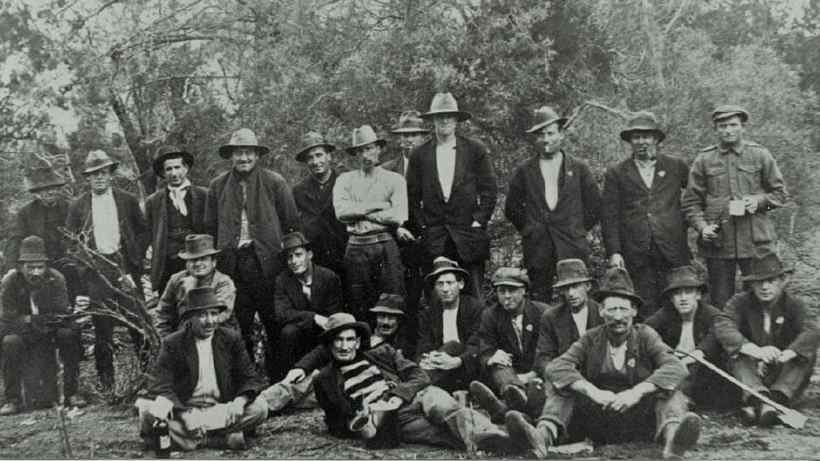
work gang
A work gang at Red Cliffs (Red Cliffs Historical Society)

With 15,000 acres to clear it was like being in the army all over again.  The weapons were axes and long handled shovels.  The aim was to remove the multi stemmed mallee which grows from a single lignotuber to a height of up to 10 metres.

Mallee Cliffs National Park
Mallee  Australian Wildlife Conservancy

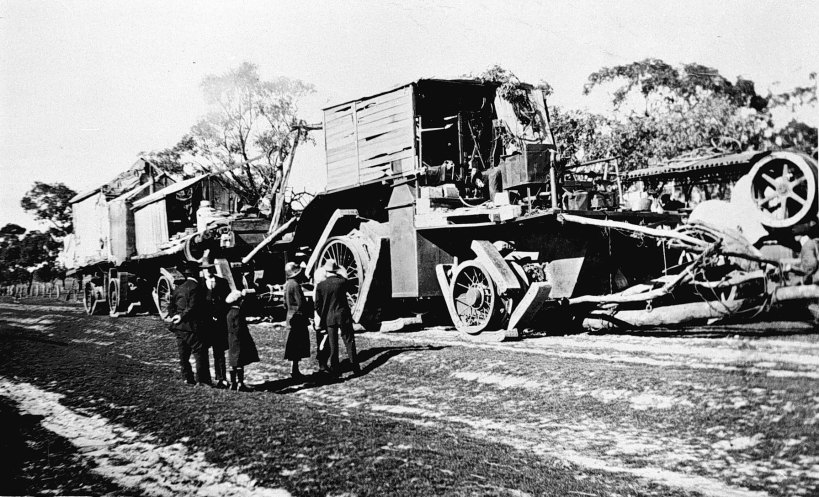
The men were given a tent, an axe,  a billy can and a blanket as well as 16/- a day.  The heat and flies may have been reminiscent of Egypt.  One giant mallee took a week to hand-grub and then was set on fire in the hole.  Finally machinery arrived, most famous of all being Big Lizzie, a huge tractor with a 9 h.p. crude oil Blackstone engine which ripped out trees six at a time and cleared 4,000 acres.

big-lizzie-198007-large-1
Big Lizzie      Creator: James Batson
Museums Victoria
https://collections.museumvictoria.com.au/items/766535

Roads were built, cement channels constructed, land was fenced and ploughed and graded.  The first allocation was made in December, 1920.  Priority was given to married men so weddings were commonplace including Ted’s to Amy* on 21st April, 1920.  For a time Red Cliffs had the highest annual birthrate in the world for its population.  Two roomed houses of pine and tin grew up alongside the sultana vines.

mildura-soldier-settlements
A typical Soldier Settler’s house 1926

The promised pumping plant was built “flooding five acres a foot deep in a day”.  It was considered, in Ernestine Hill’s 1939 book “Water Into Gold” to be the largest in the Southern Hemisphere and possibly the world.

* Not her real name

J for Johnny Turk

J for Johnny Turk (The Australian soldiers landed on the Gallipoli Peninsula on April 25, 1915 and evacuated in December 1915. During their time there a number of slang terms used by the soldiers came into currency. Several names were given to the Turkish enemy, for whom the Australian soldiers developed a certain respect. These names included Abdul, Johnny Turk and Jacko.) Ozwords

Who was this man who somehow shares my DNA?  I suppose I am  fortunate to have more information on this stranger than I do about my real father.  Incredibly, my probable biological father, Ted, was born way back in 1892 in the town of Hamilton in the Western District of Victoria.  He attended the local primary school and the Hamilton and Western District College where he was dux.  For a time he worked as a cadet reporter for the Hamilton Spectator before landing a Public Service position in the Meteorological Branch of the Home Affairs Department in Perth.  Sensing that there might be a war in Europe he took an evening class in French conversation. He was also accepted into the Western Australian Artillery and for something to do sat for and passed an exam for Drivers of the Battery. Little did he realise what an impact passing that exam would have on his future in the war.

On August 4, 1914, war was declared with Germany.  In December of that year Ted returned to Hamilton and enlisted at the age of 22 years and six months.  When he embarked on the SS Chilka he was a Driver in the 3rd Light Horse Brigade Train. After spending three months in Cairo he arrived in Gallipoli on 20th May, 1915, leaving the horses behind.   On July 31 he was wounded with shrapnel in his right upper arm and shortly after was admitted to the AS Hospital in Lemnos, Greece and later transferred to Cairo.  He may have been fortunate to depart Gallipoli as one of the wounded because 8,709 Australians were killed there in the ten month battle.


Gallip
Landing at Gallipoli Photo by Charles Bean

In 1917 he was transferred to the Supply Section of the 26th ASC (Army Service Corps).  The next year he was awarded the Military Medal six months before the Armistice.

On his way home to Australia he visited New York and San Francisco.  He was back home in Hamilton in May 1919 and two weeks later met the woman who was to become his wife and the mother of his children (except for one!).

I is for Illness Causing Death

One of the compelling reasons to know your parentage is to be able to examine their medical history.  If they have a disease or health issue it could be passed on to future generations.  My father, Linden, died aged 53 of a heart attack.  His father died aged 39 from the same thing.  I often wondered if the heart condition could be passed on to me or my children.  Now I was interested to discover Ted Turner’s cause of death.  My “niece” Denise told me the family legend was that he had died from cancer caused by a war wound.  No-one in the family could tell me what sort of cancer it was.

I sent away for Ted’s death certificate which thanks to modern technology can be obtained in five minutes for around $25.  The cause of death was quite intriguing. The cancer was a fibrosarcoma of the left axilla (armpit), a condition he had been diagnosed with  for 18 months. For the last ten days of his life he had cachexia and terminal broncho pneumonia.

This diagnosis led me to the internet to find out exactly what these words meant.  A sarcoma is a cancer that develops from certain tissues like a bone or muscle.  Adult fibrosarcoma usually affects the fibrous tissue in the legs, arms, or trunk.  Reading Ted’s diary I found that he suffered a war wound to the right upper arm and shrapnel had remained in his body for the previous thirty years.  However the cancer was in the left armpit according to the death certificate.  Had it metastacised to the other side of his body?

Cachexia is seen in people with cancer and is basically a wasting syndrome with loss of weight, muscle atrophy, fatigue, weakness and loss of appetite.  Bronchopneumonia is inflammation of the lung and bronchi (the air passages that feed into the lungs).  

As Ted died in July it would have been winter in Mildura.  His cancer was obviously seriously affecting his health by then and the bronchopneumonia would have been the last straw.

11-months.jpg
Me at 11 months old

I wonder did he see me or even know of my existence before he died?  I would have been 15 months old.


H is for Happiness

Now that I am almost certain of the identity of my biological father, the next question is “Why?”  Ted was 58 years old when I was conceived.  He was a well respected business and family man with a loving wife and grown up children.   My mother was 32, married to a man ten years her senior who was running  a successful business.  Although I never suspected my parentage I did ask my mother when I was a teenager why I was born at that time, 15 years after she married my father.  Her reply was that it was the happiest time of her life.  The business was doing well, there were no money worries.  The lack of stress, healthy climate and general feeling of well being resulted in a pregnancy.  I presumed that the rest of her married life was so stressful she failed to become pregnant ever again.  It was only when my father died I gave up hope of ever having a brother or sister.

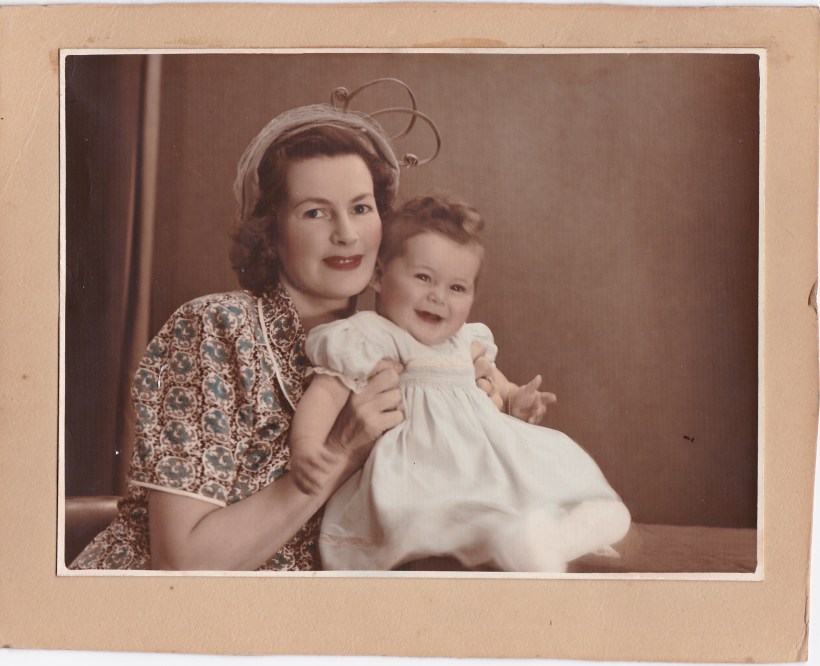
mum and bub
The Happiest Time of Her Life

I have a couple of theories.  I don’t want to just assume that Ted and my mother had a relationship  and I was the result.  I think it could be more complex than that.

I have considered the possibility of Donor Insemination.  Very little is written about this topic in Australia.  In her blog, “A Brief History of Donor Conception” Wendy Kramer suggests that DI was carried out discreetly by private medical practitioners.  Parents were told to never tell anyone, not even the child. By 1951 the number of children in the United States born as a result of artificial insemination was estimated to be 20,000.  However the first successful human pregnancy using frozen spermatozoa wasn’t reported until 1953.

The Submission to the Senate Enquiry into “The past and present practices of donor conception in Australia” on behalf of the Fertility Society of Australia and its subcommittees states:

Because of the lack of available treatment for male infertility, donor insemination (DI) using fresh sperm, unscreened and unmatched, has been practised in Australia since the 1950s.

There is an Australian case reported in the Daily Telegraph March 12, 2007, of three children born as a result of sperm donation in the 1950s, before the advent of IVF.  A woman wanted children but her husband was infertile.  She asked an acquaintance to become a sperm donor for her three children. The children didn’t find out the truth until after their social father died but pursued a successful claim on their biological father’s estate.

This is a potential problem for donor fathers and establishes a worrying precedent.  I haven’t gone into the full details of the case but imagine that the legal system will have to sort out the repercussions of donated sperm.  With DNA tests so readily available the number of people likely to find their father isn’t their father will increase dramatically.

Margie Ripper’s paper on Australian Sperm Donors (Department of Gender, Work and Social Inquiry, The University of Adelaide) looks into the nature of parenthood.  She says:

Sperm donation does not constitute ‘fatherhood’ in any meaningful sense because parenthood is a social relationship based on the act of parenting rather than on biological links per-se.

I agree wholeheartedly, so when I talk about my father I am talking about Linden.  Ted may be my  biological father but my interest in him is somewhat detached.  However he led such an interesting life and left so many clues I feel I need to follow them.

IMG_20170725_0005
My mother holding me beside the Murray River in 1952

It may be the case that my mother desperately wanted a child and had realised that it wasn’t going to happen with my father. This may have been confirmed by her doctor.  She may have asked for help from a family friend and Ted obliged.  As with DI maybe nothing was said to anyone, not even my father.  I was never made to feel I wasn’t his.  Surely I would sense something in his manner if he knew I wasn’t his biological child.  As for my mother, her secret went with her to the grave.  Never in her wildest dreams would she imagine that I would do a DNA test and find out my biological father.

Even if my mother and Ted were attracted to each other, the affair would have ended faster than anyone could imagine.  In 1951, just months before I was born, Ted was diagnosed with cancer and the next year he was dead.

G for Grapes

grapes 2

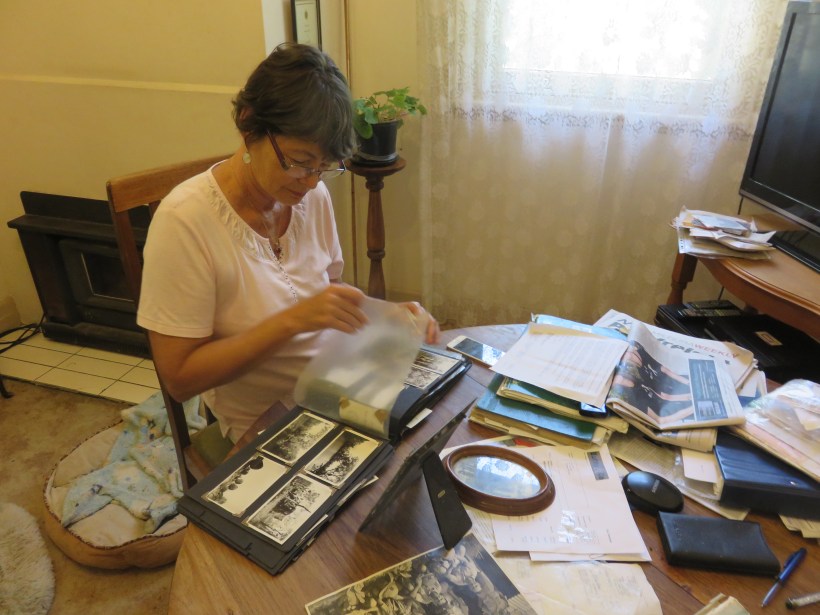
There was still one thing left to do.  Edith lives a few kilometres out of town so Denise and I visited her in the house she has lived most of her life.  Vineyards once surrounded the house but now the area has been subdivided into residential lots.  The inside probably hasn’t changed much in fifty years.  The walls were covered with family photos but most prized of all was Edward’s Diary of his experiences in WWI.  I was allowed to borrow it for one night only as copies are in short supply.

IMG_0661 2
I’m surrounded by memories that are not my own.

Edith played for us on the piano and then asked if I would like to play.  I must admit that although I  have had lessons on and off throughout my life I have never had the determination to keep practising and so I declined the offer hastily.  It seems this family is very musical.  Edward would play the violin with his daughter Edith accompanying him on the piano.  Edith asked hopefully if I also played the violin but I hadn’t inherited this trait from the family either.

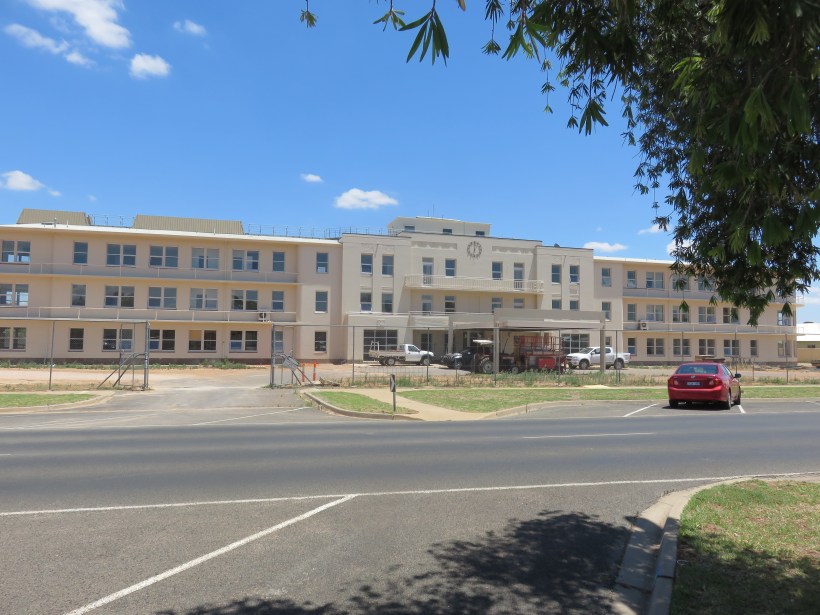
On our way back I had to stop and look at the Old Mildura Base Hospital where I was born.  It has been empty for a number of years but I was pleased to note that it is being redeveloped as 63 self contained apartments, keeping its Art Deco exterior intact.  I remember my mother being very proud of the hospital, her doctor and the town of Mildura.  The hospital was once surrounded by vineyards but urban development has crept up to it on all sides.

IMG_0679

Built in 1934 it heralded a new era of health care for the surrounding area.  A local told me its design was based on a paddle steamer but the Heritage Alliance Report says that “the continuous balconies and steel pipe railings evoked the ocean liner, a common association in the work of progressively oriented architects of the period.”

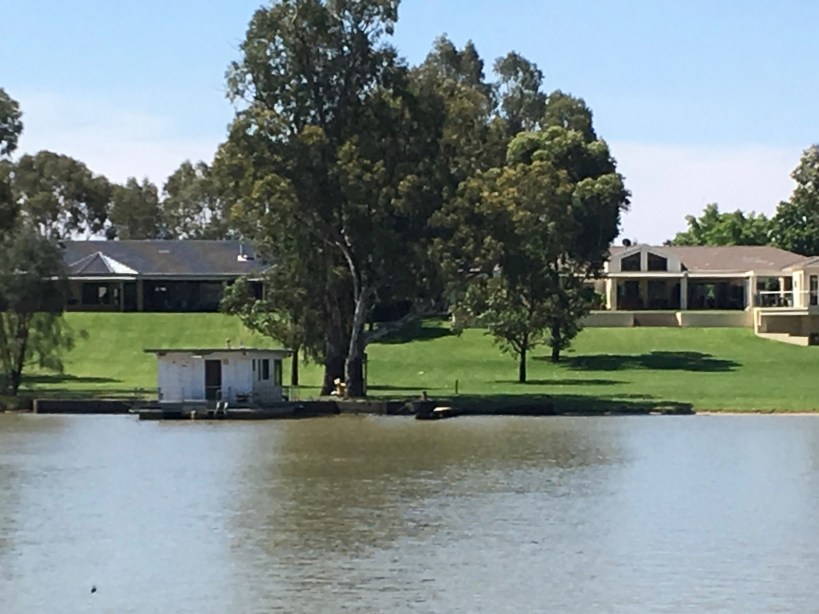
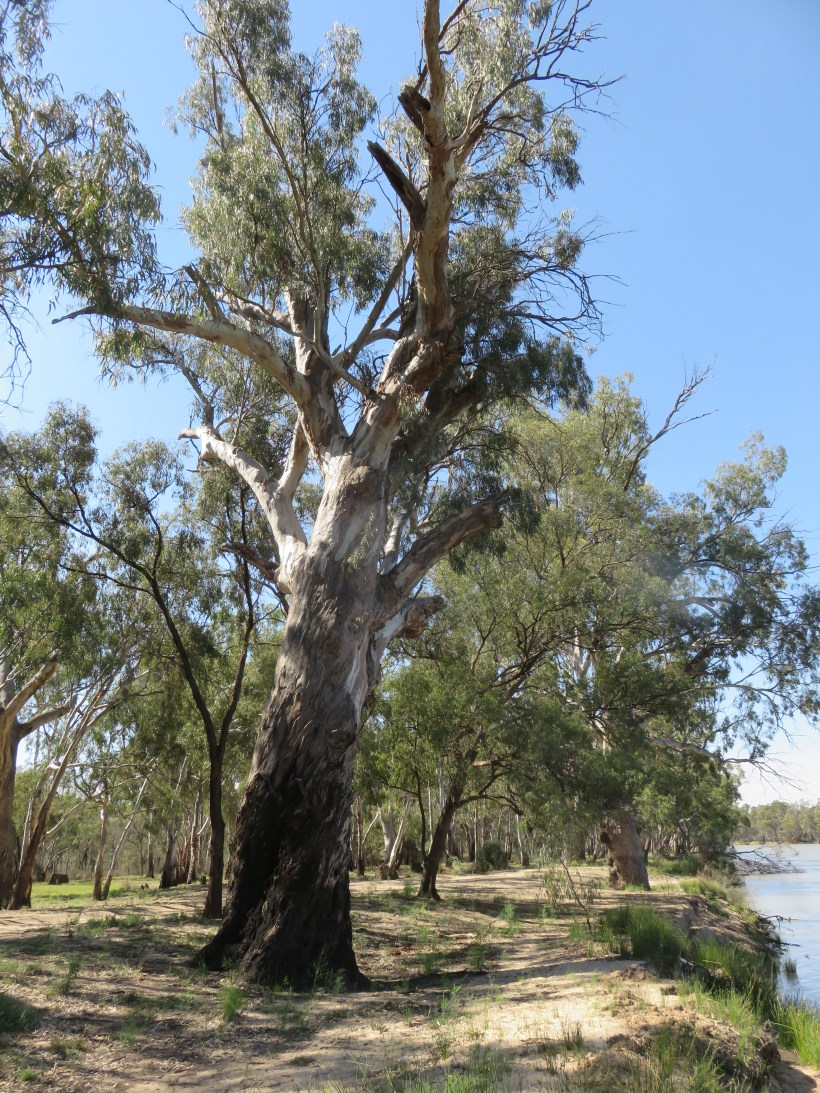
Denise begged us to stay one more day so she could show us around Mildura.  The locals are very proud of their town and rightly so.  I learnt how to tell the difference between grapes grown for wine, dried fruit and table by the type of trellis they grow on.  Denise drove us through rough tracks to a camping spot by the Murray River.  Prosperous houses could be seen on the NSW side but our river bank was blissfully peaceful and remote.

IMG_9115

  It was not a place to be caught in heavy rain as Denise could testify.  Her caravan was trapped in there for weeks until the muddy track dried sufficiently for them to tow it out.

IMG_0708

It was time to go home and sort out all the material I had on Ted and his early life. We said goodbye and headed the thousand kilometres east back to our home on the coast.