Now that I am almost certain of the identity of my biological father, the next question is “Why?” Ted was 58 years old when I was conceived. He was a well respected business and family man with a loving wife and grown up children. My mother was 32, married to a man ten years her senior who was running a successful business. Although I never suspected my parentage I did ask my mother when I was a teenager why I was born at that time, 15 years after she married my father. Her reply was that it was the happiest time of her life. The business was doing well, there were no money worries. The lack of stress, healthy climate and general feeling of well being resulted in a pregnancy. I presumed that the rest of her married life was so stressful she failed to become pregnant ever again. It was only when my father died I gave up hope of ever having a brother or sister.
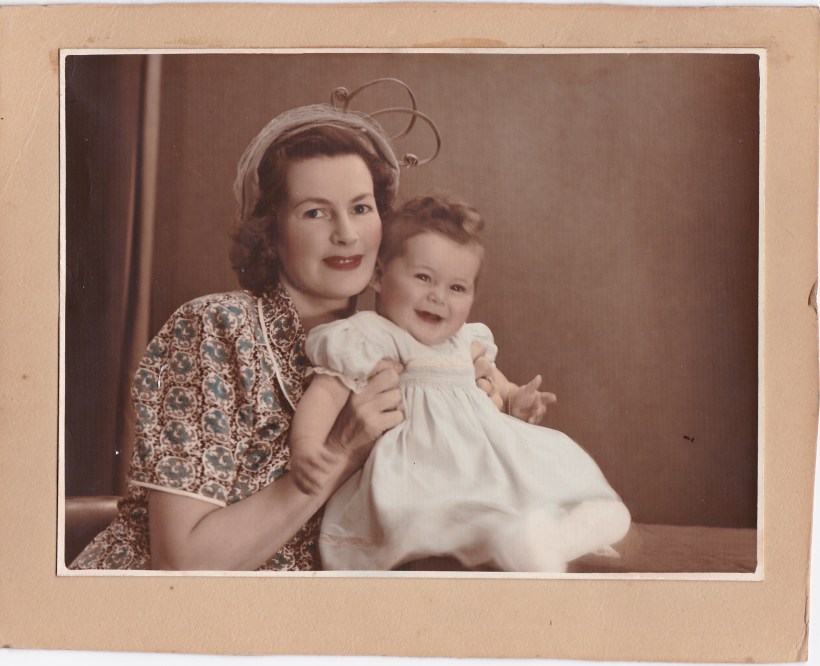
I have a couple of theories. I don’t want to just assume that Ted and my mother had a relationship and I was the result. I think it could be more complex than that.
I have considered the possibility of Donor Insemination. Very little is written about this topic in Australia. In her blog, “A Brief History of Donor Conception” Wendy Kramer suggests that DI was carried out discreetly by private medical practitioners. Parents were told to never tell anyone, not even the child. By 1951 the number of children in the United States born as a result of artificial insemination was estimated to be 20,000. However the first successful human pregnancy using frozen spermatozoa wasn’t reported until 1953.
The Submission to the Senate Enquiry into “The past and present practices of donor conception in Australia” on behalf of the Fertility Society of Australia and its subcommittees states:
Because of the lack of available treatment for male infertility, donor insemination (DI) using fresh sperm, unscreened and unmatched, has been practised in Australia since the 1950s.
There is an Australian case reported in the Daily Telegraph March 12, 2007, of three children born as a result of sperm donation in the 1950s, before the advent of IVF. A woman wanted children but her husband was infertile. She asked an acquaintance to become a sperm donor for her three children. The children didn’t find out the truth until after their social father died but pursued a successful claim on their biological father’s estate.
This is a potential problem for donor fathers and establishes a worrying precedent. I haven’t gone into the full details of the case but imagine that the legal system will have to sort out the repercussions of donated sperm. With DNA tests so readily available the number of people likely to find their father isn’t their father will increase dramatically.
Margie Ripper’s paper on Australian Sperm Donors (Department of Gender, Work and Social Inquiry, The University of Adelaide) looks into the nature of parenthood. She says:
Sperm donation does not constitute ‘fatherhood’ in any meaningful sense because parenthood is a social relationship based on the act of parenting rather than on biological links per-se.
I agree wholeheartedly, so when I talk about my father I am talking about Linden. Ted may be my biological father but my interest in him is somewhat detached. However he led such an interesting life and left so many clues I feel I need to follow them.

It may be the case that my mother desperately wanted a child and had realised that it wasn’t going to happen with my father. This may have been confirmed by her doctor. She may have asked for help from a family friend and Ted obliged. As with DI maybe nothing was said to anyone, not even my father. I was never made to feel I wasn’t his. Surely I would sense something in his manner if he knew I wasn’t his biological child. As for my mother, her secret went with her to the grave. Never in her wildest dreams would she imagine that I would do a DNA test and find out my biological father.
Even if my mother and Ted were attracted to each other, the affair would have ended faster than anyone could imagine. In 1951, just months before I was born, Ted was diagnosed with cancer and the next year he was dead.
 The Curry Apple Orchard
I think your theories are very plausible and I can understand the concept of the social father being your father. It is only now with widespread DNA testing that the paper trail and social family structures are being challenged. It obviously takes a bit to work through and examine your own feelings.
LikeLiked by 1 person
Thanks for your comments Anne. Writing this has been a great way to come to terms with what I found out. Those letters in A to Z certainly take you off in different directions!
LikeLiked by 1 person
Hari OM
… I know two people who discovered similar for themselves and it had very different effects. One of them very dramatic indeed and not at all pretty (yes it involved legal stuff, but not quite as you mention above). I find myself a little torn at the whole DNA thing – a bottle opened and the genie out; not something that interests me at all but can totally understand why it does others, particularly for women who wish to understand prevailing health patterns. Such a huge and emotive thing. Thank you for sharing your story with us Linda – it does make for fascinating reading and I agree that writing is a cathartic process! YAM xx
LikeLiked by 1 person
Hi Linda – sounds so interesting .. and yes I’m sure your mother never would have thought you’d be investigating … cheers Hilary
LikeLiked by 1 person
This is such a fascinating story, Linda. I still have so many questions and wonder which ones you will continue to answer from I – Z!
LikeLiked by 2 people
You could ask if you like but maybe wait until the end. There is a lot more to come and maybe some of it I don’t even know myself.
LikeLiked by 2 people
I had so many thoughts and questions as I read through your post and I wonder how you felt. I like what you
Mother said to you though – that you were born after 15 years because it was the happiest time of her life.
LikeLiked by 1 person
I had never considered that someone could sue for a share in an estate.
LikeLike
I don’t know how they could have won the case. It should have been thrown out of court.
LikeLike
I didn’t realize that sperm donations were being done that far back. It’s certainly a big thing now. I wonder how you can find out whether or not that was the case. Would there be records if everyone wanted it kept so quiet back in those days? Weekends In Maine
LikeLiked by 1 person
I’m pretty sure there would be no records. I thought of it because of my mother’s admiration for the doctor.
LikeLiked by 2 people
I hadn’t even thought of sperm donors. This is such a complex situation.
LikeLiked by 2 people
You are certainly making an extensive study if this subject. Thanks for the information Linda.
LikeLiked by 1 person
I know of a couple who used sperm donation (from a friend) to have their own children (x2) …interesting that they would be able to chase after their ‘natural’ father’s estate.
LikeLiked by 1 person
Hi, Linda – Great to see you on the #AtoZChallenge Road Trip. You are my 52nd stop so far — I am going in the order written on the A to Z list. It’s been great to discover so many new blogs, and to visit again blogs that I am already following (like yours). Hope all is well for you.
LikeLiked by 1 person
Stopping by from the #AtoZChallenge Road Trip! What a discovery for you to have made. There are so many things about our parents that we will never know.
LikeLiked by 1 person
Stopping by from the #AtoZChallenge Road Trip! What an interesting way to go with AtoZ! Sounds like you’ve got a nice perspective on ‘social’ versus ‘bio’ dads, and I wish you the best in your continued journey!
Jamie Lyn Weigt | Writing Dragons | AtoZ 2018 Road Trip Post: X is for Xiang: The Wise by Maria Dedevesi
LikeLiked by 1 person
Fascinating to learn that it isn’t just modern women who turn to medicine to fill their empty arms aching for a baby — women from the fifties were just more discreet about it. Thanks for sharing your journey of discovery.
Ronel from Ronel the Mythmaker A-Z road-tripping with Everything Writerly: H is for How
LikeLiked by 1 person