F is for Fermanagh

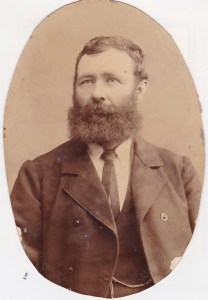
All that I had been told by my paternal grandmother Ella about the Irish connection is that her husband’s parents came from Fermanagh in Northern Ireland and he had something to do with the railways.

Screen Shot 2017-04-03 at 2.16.23 PM

I found that William Price and Margaret Anne Elliot  were married in 1859 at Magheracross, Fermanagh, Ireland.  Three years later their first son, John H Price was born but he is not my John Henry Price (grandfather), for he died shortly after their arrival in Sydney on the ship “Trebolgan”.    John was 3 and Margaret pregnant with Emma (born on the voyage) when they left Garvary, Enniskillen, Fermanagh for Australia.

Screen Shot 2017-04-03 at 2.39.44 PM
Enniskillen, Fermanagh

William was 29 (or 26 according to the NSW Immigration Deposit Journals) and his wife 22 when they arrived in Sydney on the 28th June, 1865.  William’s brother Aaron was 23.  They were sponsored or funded by Mary Jane Elliot who was probably Margaret’s sister or sister-in-law.  Both men are listed as labourers but it seems that their destiny was in the railways of NSW.

Screen Shot 2017-04-03 at 3.48.21 PM

After their arrival in Sydney they had a son William (1867) and in the same year they lost their first born John. Aaron was born in 1870, Margaret Anne in 1873 (Bathurst), John Henry (my grandfather) in 1874, Elizabeth in 1877, Laura in 1878? and James 1884.

Death overshadowed the family as Aaron,the brother who emigrated with them, died in 1898. William, their eldest son, died in 1903 of rheumatic fever while he was stationmaster at WeeWaa. James died in 1904, Elizabeth died in 1907.    Finally William himself died at the age of 72 in 1908.

What a lot of sadness for Margaret Anne!  Laura died  in 1911. Her son (my grandfather), died while stationmaster at Bogan Gate in 1913.  Mary died in 1924.  Aaron died in 1927. Margaret  lived to be 88 and died in Marrickville, NSW in 1931.

I was very excited to find an obituary for Alderman Price.  At first I thought it must be some other William as the men in my family were largely a ragtag lot.  My husband’s family is full of respectable people but mine – well I will leave you to judge for yourself by the time you get to Z.

William was an Alderman of Anderson Ward, Parramatta in his later years.  Upon arrival in Australia he worked for the Sydney City Council, later joining the railways, working as Foreman at Parramatta Railway Station.  He then became Station Master at Rooty Hill.

Railway_Station_-_Rooty_Hill_old1
Old Rooty Hill Railway Station  NSW State Archives

Now this part doesn’t sound like my family at all!  “He was for some years a prominent member of the Sons of Temperance and for many years held office in several branches of the Loyal Orange Lodge.”

Well that clears up whether he was Orange or Green doesn’t it!
E is for Emma

In 1862 Emma Moore was alone, 17 years old,  sailing to the opposite side of the world. She would never see England or her family again.

My grandmother said. ” My father’s parents were both English.  They were sweethearts in England.  He came to Australia first, she followed later.  They were married at Warrnambool and reared their family there”.

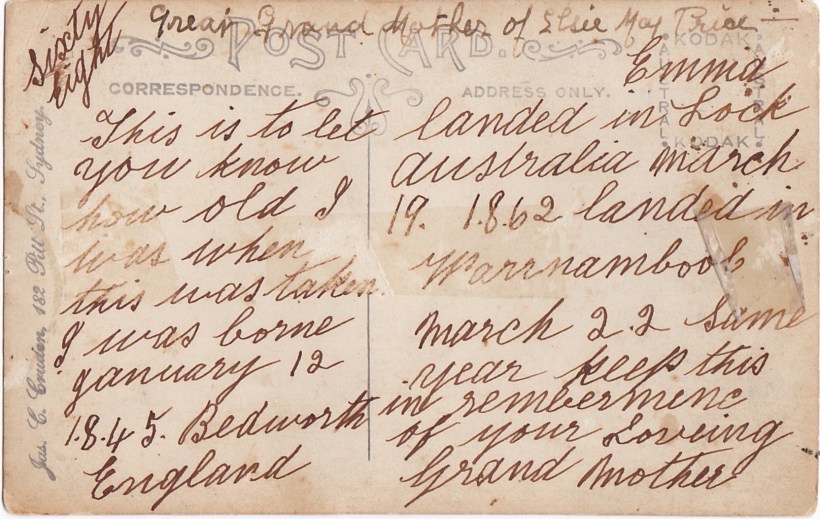
I even have a postcard written by Emma who states her date of birth and her birthplace as Bedworth, Warwickshire, England.

Emma Lock letter

Unfortunately I can’t find a record of her birth that fits the dates she supplied.   Either the dates are wrong, or the birthplace is wrong.  Maybe some people just didn’t have their births recorded or it isn’t on the internet.  I do have two records of her travelling on the Shackamaxon to Australia.  One says she is 17.  The other that she is 18 and can read but not write.  She is to work for a Mrs Dooley of Warrnambool as a servant for 20 shillings and sixpence a week.  The passengers of the Shackamaxon were mostly single females, optimistically seeking a new life and a husband in the Colonies.

SHIPPING INTELLIGENCE

The Ship Shackamaxon, with her Government Immigrants on board, was towed alongside the Government Railway Pier, Williamtown, yesterday morning. Her passengers were forwarded to Melbourne by special train.

The Argus (Melbourne, Vic. : 1848 – 1957)    Thu 20 Mar 1862  Page 4

Henry
Henry Lock

I can find a Henry Locke on the Anglesey in 1861 but his age is recorded as 30 and he is a “Trader”.  Our Henry Lock was only 22 but maybe he put up his age.


They married in 1865 in Warrnambool so it makes sense that Emma would work as a servant until Henry was able to establish himself.  By 1868 they were in Port Fairy (known as Belfast), in 1870 in Warracknabeal and by 1878 back in Warrnambool.  They had six children with my great grandfather, Reuben Benjamin Lock, arriving last but one in 1872.

Emma
Emma Moore

My grandmother said they had a boat called “The Rookie” which ran between Warrnambool and Melbourne but I can’t find anything about it.  Henry later worked on the railways which would have been hard work for an ageing man.

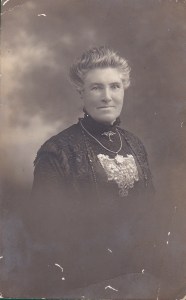
This photo was taken when Emma was 68.  This was the year (1913) that her husband Henry died at the age of 74.  She lived to be 81.

D is for Divorce

When I was a child I was told my grandfather Walter Sydney Hall died when my mother

myrtle 25
Myrtle aged 25

was eight.  This wasn’t true as my grandmother left Walter and took her only child with her to Sydney.  Interestingly this event coincides with the death of Myrtle’s mother Christina.  I am unable at this stage to find any records of a divorce although I was later told this took place.

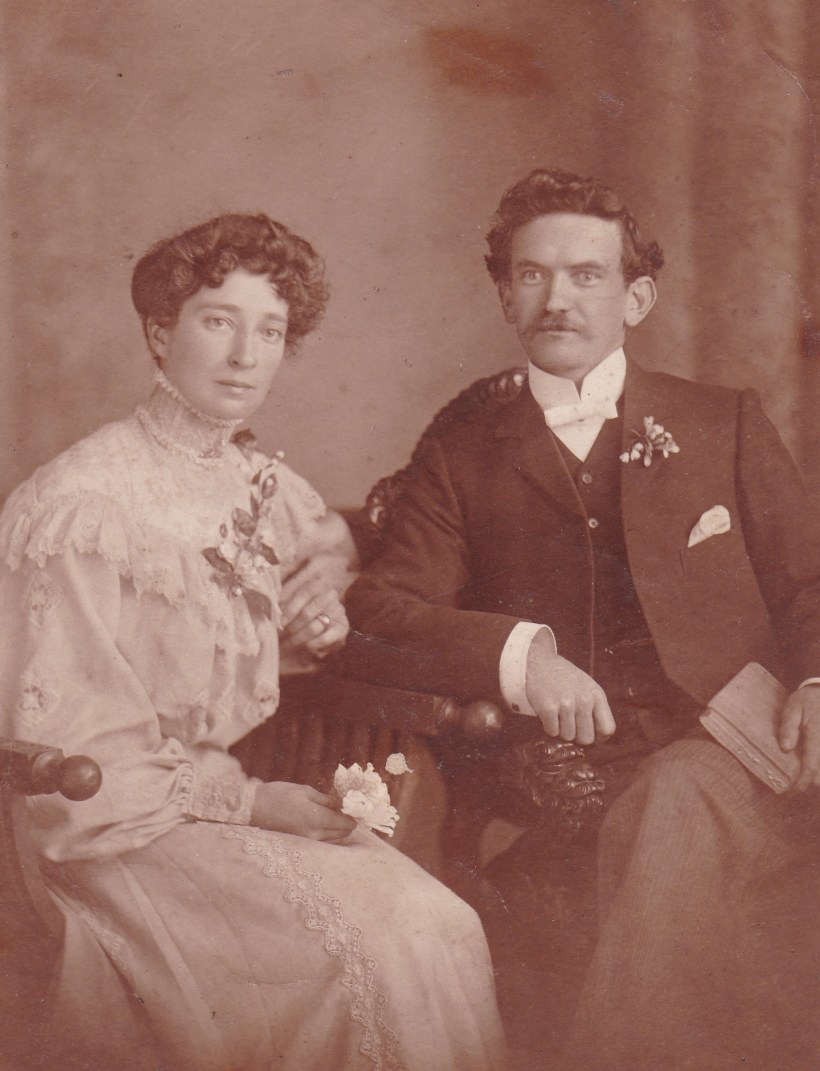
wedding
Myrtle with her first husband and my grandfather Walter Sydney Hall

As a trained dressmaker Myrtle was able to support herself and her daughter but I am guessing when the Depression arrived around 1928 the demand for bespoke gowns declined considerably.  Myrtle next appears in Queensland at my mother’s wedding in 1936 but now her name is Dighton.  Walter Hall died in 1933 so whether she married after she became a widow is unknown. Like my other grandmother she worked on properties as a housekeeper so probably met her second husband in that capacity.

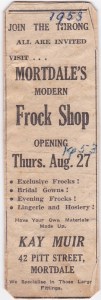
Frederick George Dighton was an overseer and in 1943 they were living at Gidyea Plains, Charleville.  The rare times his name was mentioned he was not remembered fondly.  frock shopSometime between 1946 and 1953 Myrtle married George Muir in Sydney, NSW, changed her name to Kay and opened a “Frock Shop”. I remember the apartment upstairs with its modern kitchen and bathroom, the dress shop  below and the large workroom behind with long cutting tables and sewing machines.

The love of Kay’s life was also called George but she never married him.

Kay and George
George, the man Kay should have married

She used to frequent fortune tellers and was told by one she would marry a man called George.  She happily replied that she was planning to marry a George.  The fortune teller warned that the man she was to marry she hadn’t yet met.  Did she marry George Muir for the prospect of being able to build and open her own dress shop?  It was an unhappy marriage.  As a small child I remember the tension in the air when I visited.  When Kay Muir Frocks was sold in 1963 my grandmother left her last marriage and men behind forever.

She avoided her last husband by living quietly at Bonnie Vale Beach near Bundeena, south of Sydney and later bought a unit on the beach at Cronulla.

I can’t find any records of the divorces.  I would like to know why she left the men she married.  She had such a charming, outgoing personality but seemed unable to find and keep a soul mate.

C is for Curry

John Curry (my husband) knew that the Currys had come to Australia by sailing ship, arriving in Melbourne  in 1870 before heading off to the Gold Fields of Victoria.  John Currie (wrong spelling), Miner,  is listed on the shipping records of the Percy with his wife Margaret, son John aged 9 and then on another page is 17 year old Andrew (John’s Great Grandfather) also a Miner and his brother James aged 12.

Emily and Andrew Curry
Andrew Curry later in life

Andrew didn’t keep a diary as far as we know but we have the next best thing.

A 20 year old quarryman called Thomas Pierce kept a journal of the voyage.  He may have even swung his hammock near to Andrew and John.  I have summarised the highlights of the trip.

Thomas boarded the Percy on Christmas Eve but the ship didn’t sail until January 2nd.  In the meantime it snowed and the younger passengers had a great time throwing snowballs across the deck.  Sadly one infant died before the ship left shore.

As they tacked across the Channel many of the passengers were “shooting the cat” or to put it simply, vomiting over the side.  When they approached Gibraltar the passengers enjoyed dancing on the fo’c’s’le accompanied by a concertina, fiddle and tambourine. Nearing the Canary Islands they all suffered from the intense heat, lying about the deck trying to catch a breath of air.

Crossing the Equator was fun, with some acting as barbers and shaving the men.  Rockets were let off and a man scared the girls by dressing up in a sheep’s skin.

After many days they sighted Pernambuco (South America) where they traded with the natives and were able to send letters home.

Screen Shot 2017-03-26 at 7.00.18 PMConvento de São Francisco – Olinda – Pernambuco – BrasilBy Valdiney Pimenta – Flickr, CC BY 2.0, https://commons.wikimedia.org/w/index.php?curid=22443202

Every few days another child died of fever.  Church services were held by lay and religious people on various parts of the ship and rousing sermons formed part of the entertainment.

By March the weather was as cold as it had been in England.  On April 16 the ship hove to off Port Phillip Bay near Melbourne.  All on board were examined by a shore doctor and on the 18th they were sent ashore to the Quarantine Station for a week.

To those from the ship it must have seemed like paradise.  It resembled a magnificent park fringed on one side by a beautiful beach.  Andrew and his brothers would have enjoyed bathing at the beach, fishing,  rambling in the woods, chasing kangaroos and sleeping in the large barrack style rooms.

Screen Shot 2017-03-26 at 6.50.59 PM
Quarantine Station, Melbourne


B is for Boonal

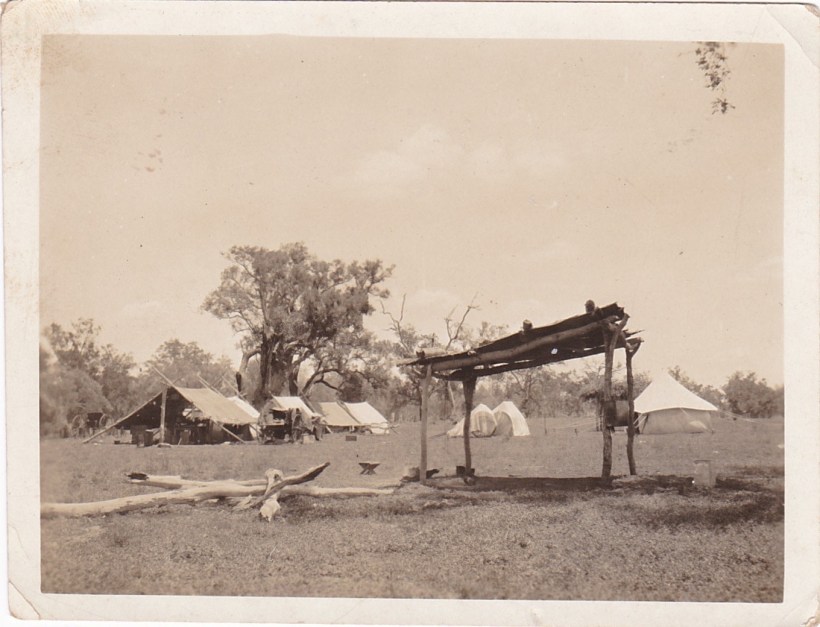
Boonal (pronounced B’nall as in shawl), Bogan Gate, Boggabilla, Berrigagama, Bogan River, Barcoo, Boggabri, Budgery…  These are names that swirled around my impressionable ears as the adults talked.  Hundreds of unlabelled, sepia photographs of horses, cows, lambs, droughts, farmhouses, buggies and early model cars show tantalising hints of my paternal grandmother’s life as a widow.

Ella and John
Ella and John Price on their wedding day

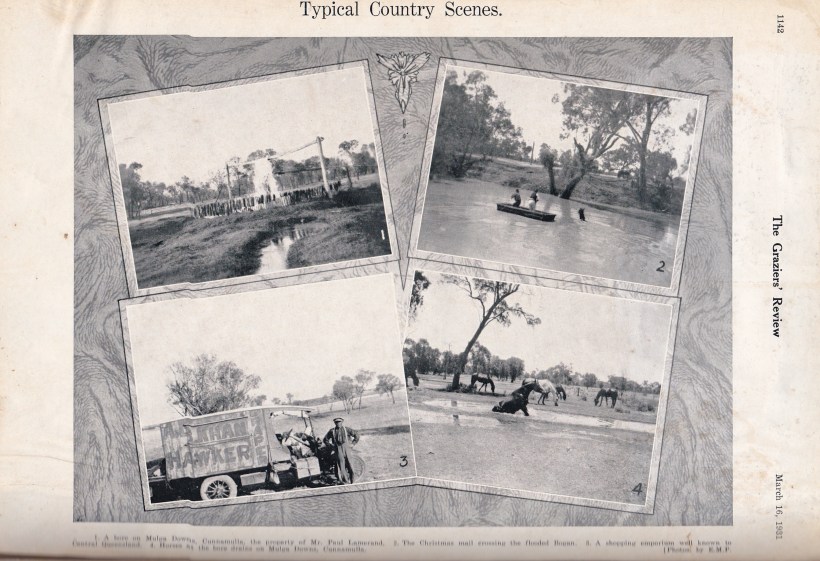
When my grandfather, the stationmaster, died suddenly, my father was only six years old.  Ella was 38 and had to make ends meet. Her photos published in the Grazier’s Review give a Rose Bay, Sydney,  address but they indicate she had travelled widely to stations all over NSW and Queensland.  She worked as housekeeper and station cook. Her published stories describe “The Station Woodhead” and “Drought in the Outback”.  She called herself Ixia and Ilex in various publications and wrote rather strict, moralistic articles on modern trends as well as descriptions of life in the bush.

So what happened between 1913 (when John Henry Price died in Bogan Gate) and 1930 when she appears at Boonal working for Mr Munro? I recently found a document in the NSW Will Book 1800-1952.  It seems that Ella and Linden moved to Marrickville, Sydney after the sudden death of her husband.  She may have been staying with relatives as her mother-in-law lived there.  It seems John Price didn’t make a will but she ended up with £504-4-6.  I wonder did she put aside this money for Linden’s education and then answer an advertisement for a job as housekeeper and cook for Mr Munro?  She may have worked for other people first but I am pretty sure when my father started Newington in 1918 she was in Mr Munro’s employ.

Boonal

An article I found on the internet entitled THE MUNRO’S OF WEEBOLLABOLLA by Judy, Jac, Jen, Sandy, Treen and Kirst, descendants of the pastoral family, mention my grandmother’s employer Alfred Munro, once:

Alfred (the second son) received 3,865 acres of Boonal on which he lived, unmarried until he died in 1974 at 100 years of age. 

This is incorrect because Alfred died in a Bundanoon Nursing Home at the age of 99.  I know because I visited him every second Sunday with my mother.  Also of interest in the article

Charles Alexander, a popular and capable man and the third of Alec’s sons, received 3,064 acres of Boonal. He established a Poll Shorthorn stud at Kondar, Goondiwindi with poll cows from the Goodar herd which he selected as part of his entitlement.

This might infer that Alfred was neither capable or popular.  In spite of this (or maybe because) Alfred seems to have moved about a lot, managing various stations, with my grandmother in tow.  Although she denied it, I wonder if he paid for my father to go to Newington?  My father told me that a position was found for him as a trainee wool classer when he left school and Mr Munro offered to pay for him to attend university in Scotland.  He turned down the university offer and left wool classing after deciding he wanted to be his own boss.  When my father met my mother her life became inextricably linked to Alfred Munro as well.

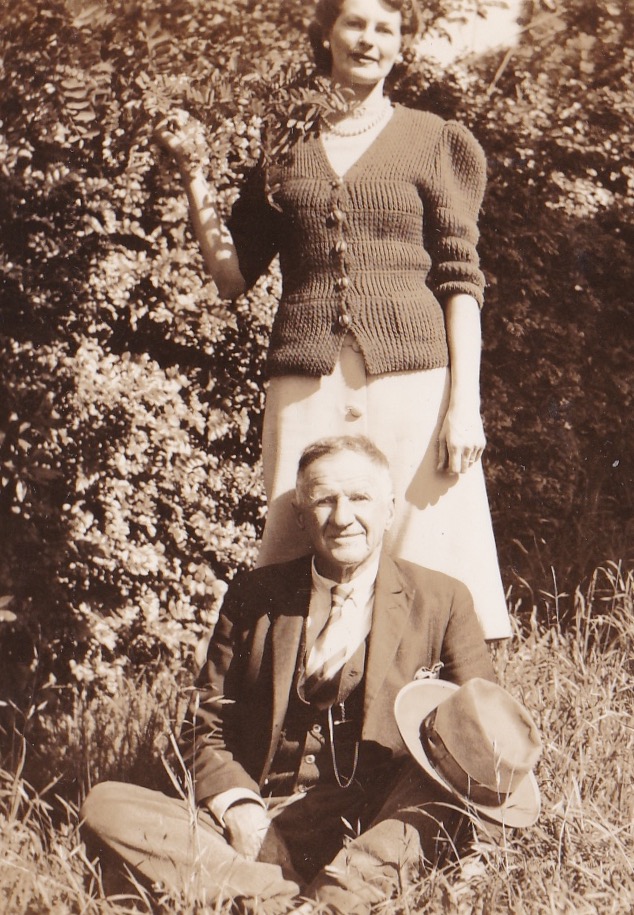
E and MrM
My mother Elsa (standing) and Alfred Munro (seated)

In 2013 an article appeared which showed Boonal was still a station although somewhat changed from the ‘20s and ‘30s.

Fifth-generation farmer Sandy Munro is taking advantage of renewed corporate interest in large rural operations, putting his family’s $30 million-plus Boonal ­station in northern NSW up for sale. The 9800-hectare Boonal station is in the Moree-Goondiwindi district, one of the wealthiest agricultural regions in Australia.

In order to find where my grandmother Ella lived between 1913 and 1930 I traced Alfred Munro’s whereabouts.  As a station manager his name appeared more often than my grandmother’s.

In 1913 he resided at Lignum Station, Yetman.  In Wikipedia it states, “The thick rabbit and prickly-pear-ridden scrub of the Brigalow and Belah country was reclaimed from expiring leases in the 1920s and the back-breaking work of rendering it fit for agriculture did not bear fruit until the 1950s when wheat-growing became and remains a highly successful enterprise”.

rabbit camp
Rabbiter’s Camp on the Gwyder, Warialda

It doesn’t sound like a desirable location at the time but  Alfred was there in 1913-1914, back to Boonal in 1915 and then in Lignum from 1916 to 1920.

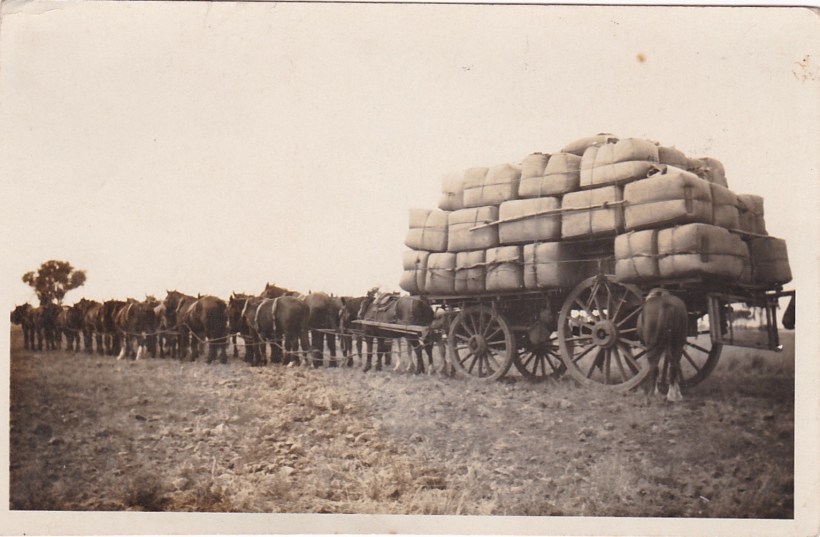
Wool Team
Wool Teams at Lignum, Boggabilla

In her published photographs Ella shows scenes from Mulga Downs, Cunnamulla in South West Queensland, the property of Mr Paul Lamerand.  In one of the pictures is the Christmas mail crossing the flooded Bogan.  I think it is the same square boat where my father and his “little friend” are photographed on the Bogan River in June 1914.

bogan river
The right hand photo at the top is the Christmas mail crossing the flooded Bogan River.
linden on bogan
My father and a friend on the Bogan River

Meanwhile I found my grandmother as a housekeeper in 1922 at Dirranbandi, which is in south west Queensland also. After searching through thousands of records this is where I am.  I know Ella and Alfred went to Norfolk Island during World War 2 and have hundreds of photos to prove  it, but that is another story.